

Medical AI SEO (Search Engine Optimization)
What is Medical SEO & Medical AI SEO from the perspective of a practice manager or a physician?
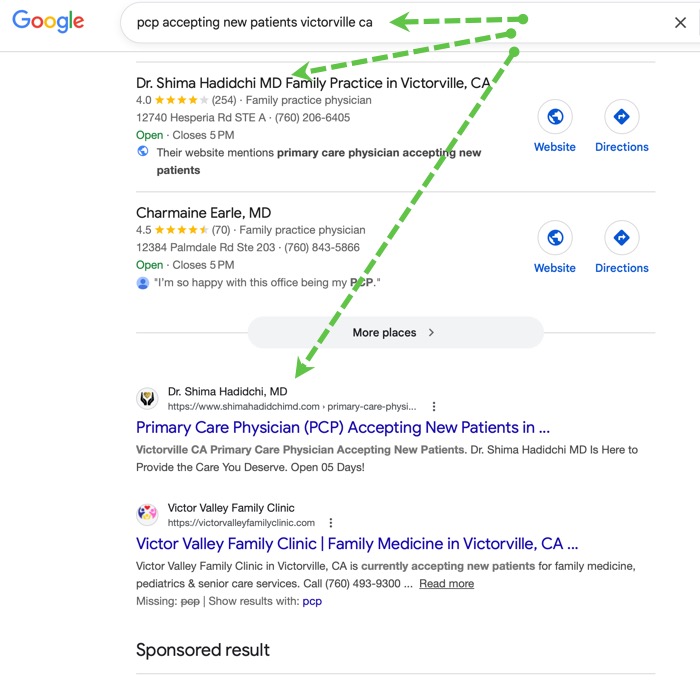
For a practice manager or a physician, Medical SEO is less about “keywords” and more about operational efficiency, patient acquisition, and reputation management. It is a strategic tool used to ensure the practice is the first choice for local patients while maintaining a professional, HIPAA compliant digital presence. Here is simple example: The practice manager wants to see more patients and serve existing patients. In the example below – its all about showing in the top area of Google when patients are looking for services offered by the practice. It is a simple ask.
What is Medical SEO (Search Engine Optimization): Table of Content
What is Medical SEO? a technical definition
Is Medical SEO important for my healthcare practice?
Why is medical SEO and medical AI SEO so difficult?
How Google AI (Artificial Intelligence Optimization) and ChatGPT Works for Medical SEO?
What are the key metrics to track for medical SEO ROI (return on investment):
Which one is better for a healthcare practice? ChatGPT mentions versus Google SEO For Doctors?
What are key areas to improve your medical SEO?
Example 1: Urgent care website SEO results – Patient searching for an urgent care near Disneyland.
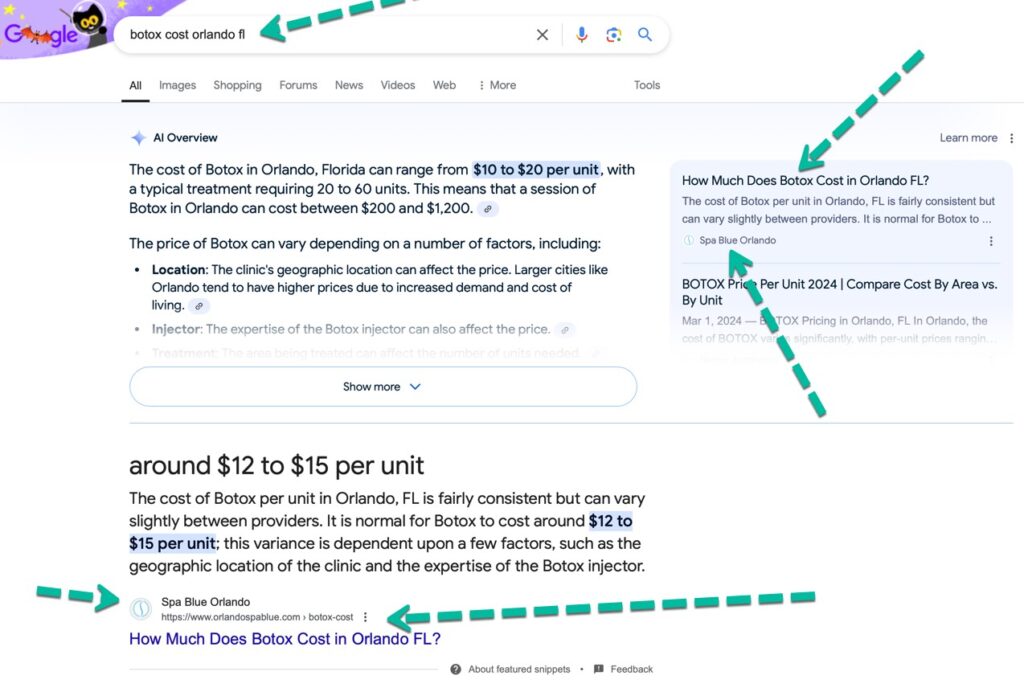
Example 2: Medical spa website SEO results – Patient searching for Botox cost in Orlando FL.
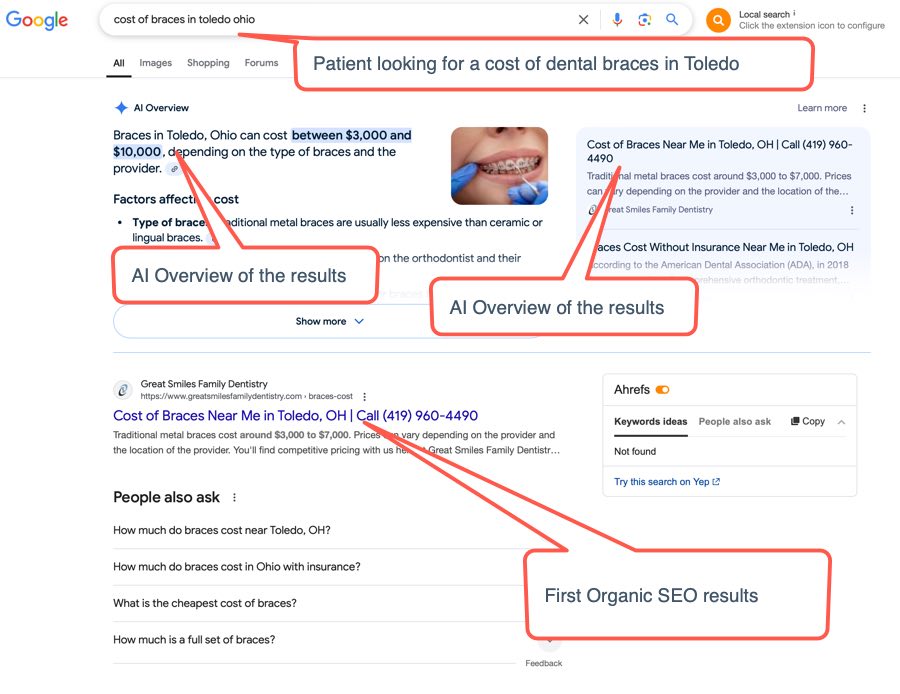
Example 3: Dental practice in Ohio website SEO results – Patient searching for cost of braces in Toledo OH
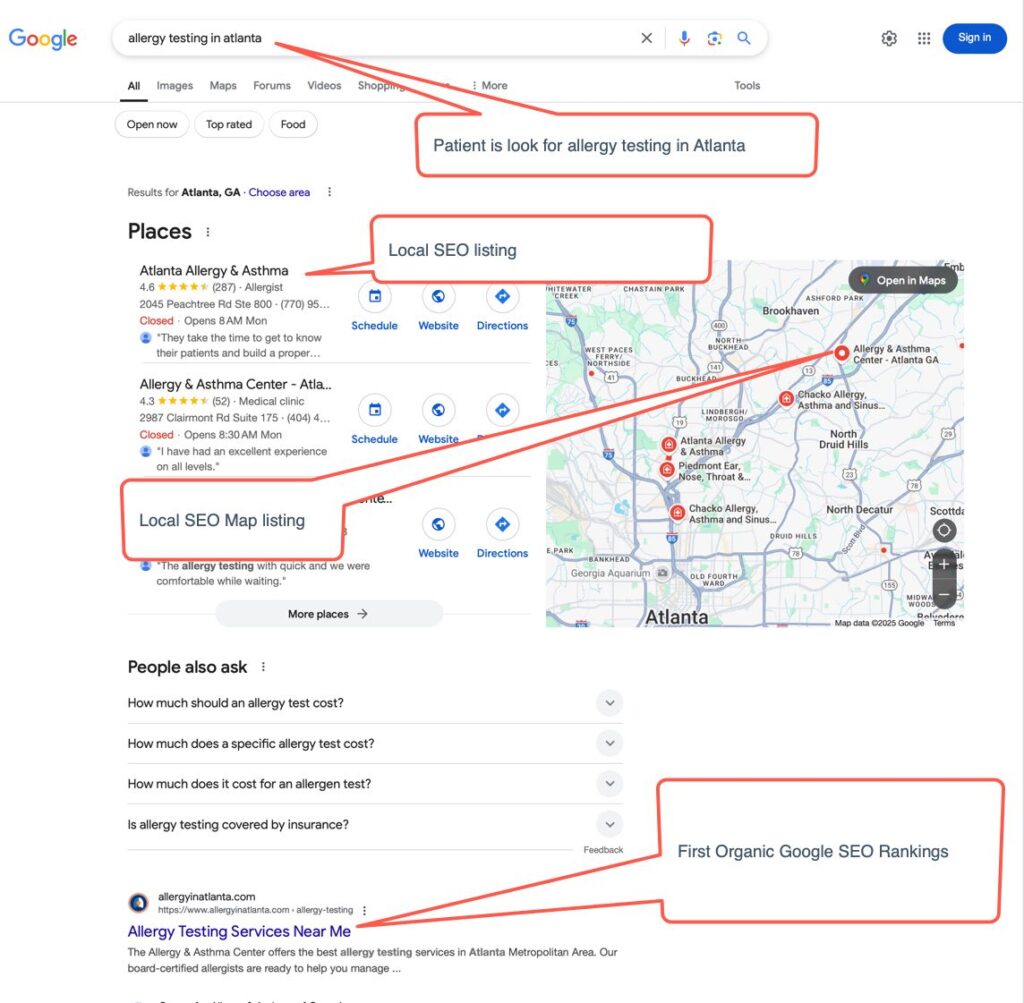
Example 4: Allergy practice in Georgia website SEO results – Patient searching for an allergy testing in Atlanta
51 Good medical SEO questions asked by providers and practice managers
Question No 1: Does SEO impact my clinic’s patient count?
Question No 2: How many patients search for my medical services?
Question No 3: Is medical SEO some type of “sinister magic” or is there a secret?
Question No 4: How much does it cost? I have heard that Medical SEO is free?
Question No 5: Is medical SEO and medical SEM (Search Engine Marketing) the same?
Question No 6: If a doctor has very good SEO rankings, should a doctor (healthcare provider – dentist etc)
Question No 7: If a healthcare practice has very nice looking website, do they need to do “SEO” every month?
Question No 8: What is medical SEO?
Question No 9: How long does it take for medical SEO to work?
Question No 10: Does my website speed impact my SEO rankings?
Question No 11: Some images on my website look “low quality” or “compressed”, what is the issue?
Question No 12: Does the hosting service matter for my practice’s SEO rankings?
Question No 13: I want to remove certain text from my website, will this impact my SEO?
Question No 14: My website is too wordy, why do I need so much content?
Question No 15: I have been approached by a Medical SEO expert company, that I need more “inbound links” for my website.
Question No 16: I have been approached by a Medical SEO expert company, that shows a report and indicates that my healthcare website’s SEO is very bad.
Question No 17: How is dental SEO different from medical SEO?
Question No 18: Is WordPress good for SEO?
Question No 19: If I have keywords in my domain name, will I get higher SEO?
Question No 20: Is SEO good for new patient marketing?
Question No 21: If I spend a lot of money on Google ads, will my SEO improve?
Question No 22: For best SEO results, do I need to add a lot of content once?
Question No 23: Is there any documented ROI for medical SEO VS medical SEM?
Question No 24: How much do you charge for medical SEO?
Question No 25: What is technical medical SEO?
Question No 26: What is structured data and do I need it?
Question No 27: Will videos increase SEO for medical practice website?
Question No 28: Do I need to learn technical stuff , like Schema and Javascript to improve the SEO of my healthcare website?
Question No 29: I have read on Facebook social media posts that too much content on my healthcare website
Question No 30: Is voice search important?
Question No 31: If SEO is so important, are there any courses for learning SEO?
Question No 32: Should I focus on the SEO of the practice or the provider (doctor, dentist, surgeon etc)?
Question No 33: If I have call tracking number on my healthcare website, will my SEO drop?
Question No 34: If I have a lot of images on my web pages, will my SEO increase and will it increase conversion?
Question No 35: I have been approached by a medical SEO expert who claims that my practice should be listed on dozens of directories
Question No 36: My medical’s SEO is decent, but I am hardly getting any new patient leads?
Question No 37: How can I improve my medical SEO?
Question No 38: I have been approached by “content writing” companies who claim that adding content will improve my medical SEO, is this correct?
Question No 39: Is there a website from Google that I can review to learn about SEO myself?
Question No 40: I have heard that Google is now “looking” at your website for page experience, what does this mean?
Question No 41: If I add Google posts every week, will this increase my local SEO?
Question No 42: My new website just went live, and I searched for my clinic name, but I am nowhere to be found?
Question No 43: What is domain authority and does it impact my SEO rankings?
Question No 44: Does the age of the website domain impact my SEO rankings?
Question No 45: What is E-E-A-T score and do I need to improve my website’s EAT score?
Question No 46: Why is the cost of medical SEO and website creation and management so different from company to company?
Question No 47: What is the difference between high-intent SEO versus low-intent SEO?
Question No 48: What is Schema and do I need to add to my website for higher SEO?
Question No 49: How can I “lock-in” my website’s medical SEO rankings or will they fluctuate?
Question No 50: Can I improve the SEO by obtaining a lot reviews from my patients?
Question No 51: How does medical SEO work?
5 important things to understand about how to gain high SEO and speech based SEO for your medical practice:
What is Medical SEO? a technical definition
From a technical standpoint, Medical SEO is the systemic optimization of a healthcare website’s underlying infrastructure, content, and data signals to satisfy high-stakes search engine algorithms—specifically Google’s YMYL (Your Money or Your Life) and E-E-A-T (Experience, Expertise, Authoritativeness, Trustworthiness) frameworks. Unlike general SEO, the technical definition emphasizes machine-readability, rigorous security, and topical mapping to ensure information accuracy and patient safety.
Is Medical SEO important for my healthcare practice?
Most providers and practice managers who contact us ask us: why is SEO important for healthcare practices? 77% of patients start their healthcare journey with a search engine, search engine optimization (SEO) has become a fundamental driver of growth for medical providers. It acts as a digital bridge, connecting high-intent patients who are actively searching for treatments and expertise with the providers who offer them.
SEO is critical for healthcare providers because it addresses several key business and patient needs:
1. Attracting High-Intent Patients
- Captures Intent: SEO targets “near me” and specific treatment searches (e.g., “knee surgery in Chicago”), which have grown significantly.
- Drives Targeted Traffic: By focusing on long-tail keywords, providers can attract patients looking for specific procedures rather than general, high-competition terms.
- Higher Conversion Rates: Patients finding a provider through organic search are often more motivated and ready to book an appointment.
2. Building Credibility and Trust (E-E-A-T)
- Digital “Bedside Manner”: Google evaluates healthcare content against strict E-E-A-T (Experience, Expertise, Authoritativeness, Trustworthiness) criteria. High-quality, medical-reviewed content demonstrates your professional authority before a patient ever walks through the door.
- Social Proof: Part of a strong SEO strategy involves managing online reviews on platforms like Google Business Profile, Healthgrades, which many of patients use to evaluate providers.
- Top-Page Authority: Patients frequently interpret high search rankings as a sign of industry leadership and reliability.
3. Sustainable and Cost-Effective Growth
- Long-Term Asset: Unlike paid ads (PPC), where traffic stops the moment you stop paying, SEO builds organic visibility that delivers compounding returns over time.
- Lower Acquisition Costs: Effective SEO reduces the total cost of acquiring each new patient compared to traditional advertising methods like print, TV, or radio.
4. Improving Patient Experience
- Mobile Accessibility: Nearly 70% of healthcare searches are performed on mobile devices. SEO ensures your site is mobile-responsive and fast, preventing patients from bouncing to a competitor.
- Educational Value: By providing clear answers to health questions through blogs and FAQs, you help patients make more informed decisions about their care.
5. Competing in a Crowded Market
- Voice Search Ready: One-third of the U.S. population uses voice search to find nearby care. SEO helps providers show up for conversational queries like “Where is the nearest urgent care?”.
- Local Dominance: Optimizing your Google Business Profile is essential for appearing in the Local 3-Pack, which captures 42% of local search clicks.
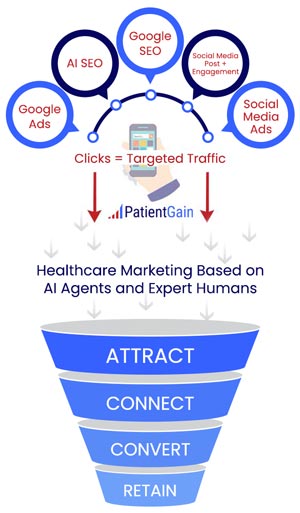
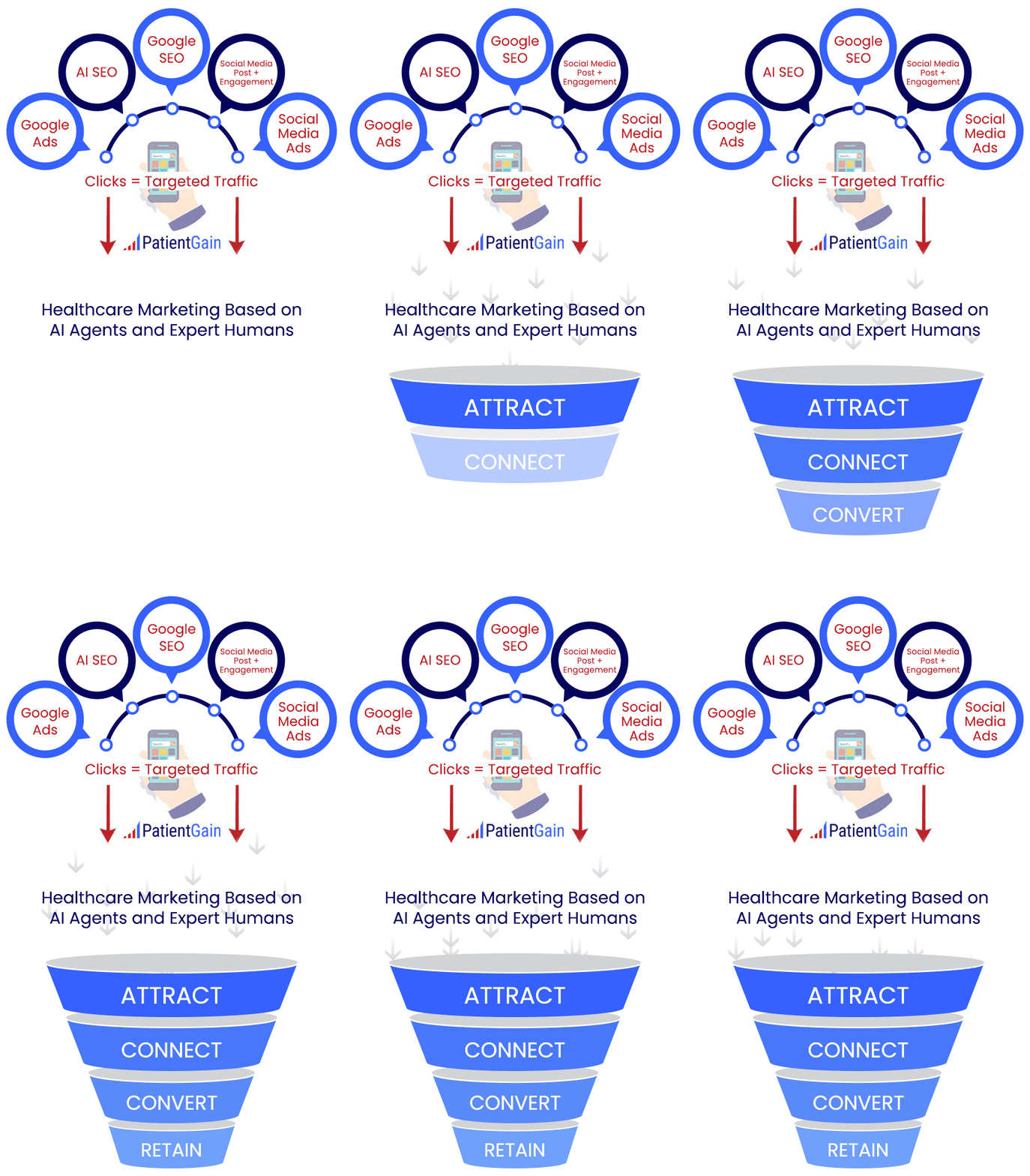
Why is medical SEO and medical AI SEO so difficult?
SEO for doctors is exceptionally difficult. It’s a common frustration for physicians who see marketing agencies produce great results for other industries but struggle with healthcare. SEO for doctors and medical practices is notoriously challenging due to the unique combination of high competition, strict regulations, and patient trust requirements. Unlike typical businesses, healthcare providers face specific obstacles that make ranking on Google particularly difficult.
How Google AI (Artificial Intelligence Optimization) and ChatGPT Works for Medical SEO?
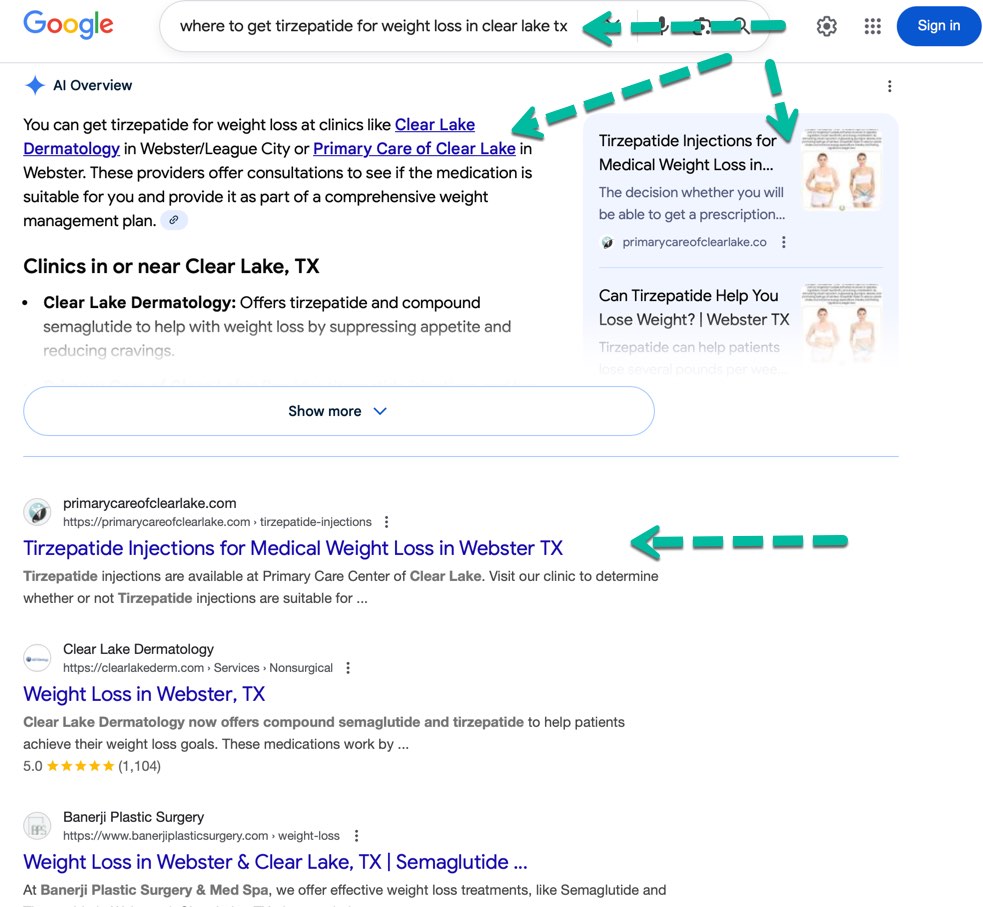
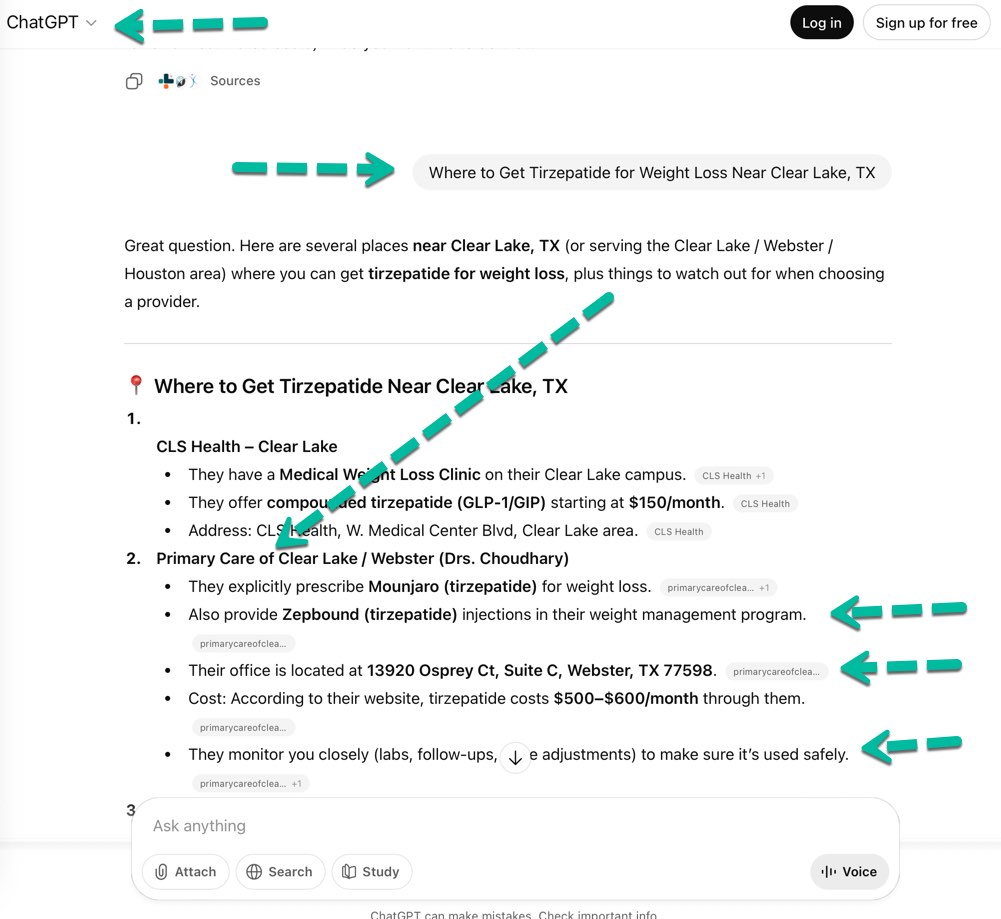
Google SEO is now leveraging AI-driven features and techniques to enhance the visibility and relevance of healthcare websites in Google’s search results, ultimately improving online patient acquisition and engagement. It is very similar to ChatGPT results. In the example below, a patient is looking for “Where to Get Tirzepatide for Weight Loss Near Clear Lake, TX”.
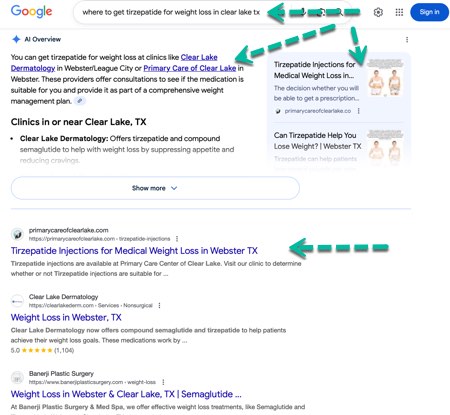
ChatGPT example: In the example below, a patient is looking for “Where to Get Tirzepatide for Weight Loss Near Clear Lake, TX”.
What are the key metrics to track for medical SEO ROI (return on investment):
There are many indicators that can help your medical practice to measure the ROI from SEO. If your website has the SPOC app (Single Point of Contact), you are see the results or lack of results from a single live dashboard.
- Organic Traffic: Track the number of visitors coming from organic search to measure the effectiveness of SEO.
- Conversion Rate: Monitor how many visitors turn into actual patients or leads (e.g., form submissions, phone calls, or bookings).
- Cost per Acquisition (CPA): Calculate the cost to acquire a new patient through SEO efforts and compare it with the patient lifetime value.
- Revenue Growth: Measure the increase in revenue that can be directly attributed to improved SEO performance.
- Lead Volume: Track the number of leads generated through SEO and how it impacts patient acquisition.
Which one is better for a healthcare practice? ChatGPT mentions versus Google SEO For Doctors?
Google SEO and AEO should be your primary focus for driving website traffic and local SEO in the healthcare industry. It offers measurable, long-term results for patient acquisition and helps you stay competitive in your local market. ChatGPT AEO can be a complementary strategy to improve how your practice appears in AI-driven queries and to enhance your patient engagement through interactive content and real-time answers. Both approaches are valuable, but for most practices, Google SEO is the foundation for online visibility. ChatGPT mentions add an additional layer to help with AI-driven patient interactions.

Majority of the patients turn to Google search page to look for healthcare services. Google’s search uses AI for many of the tasks. Bing search engine is the 2nd most used search engine in USA. It is also the default search engines for millions of new PCs sold.
As patients speak or type words (or speak to devices like Alexa, Google Assistant, Siri) into the search engine, there are 4 type of important result areas on the displayed page:
1) Typically the top area is Google ads (learn more about Google adwords)
2) AI results are being displayed on the right side (learn more about medical SEO based on AI) or sometimes even in the top spot replacing Google adwords. This is called Google AIO For Healthcare SEO.
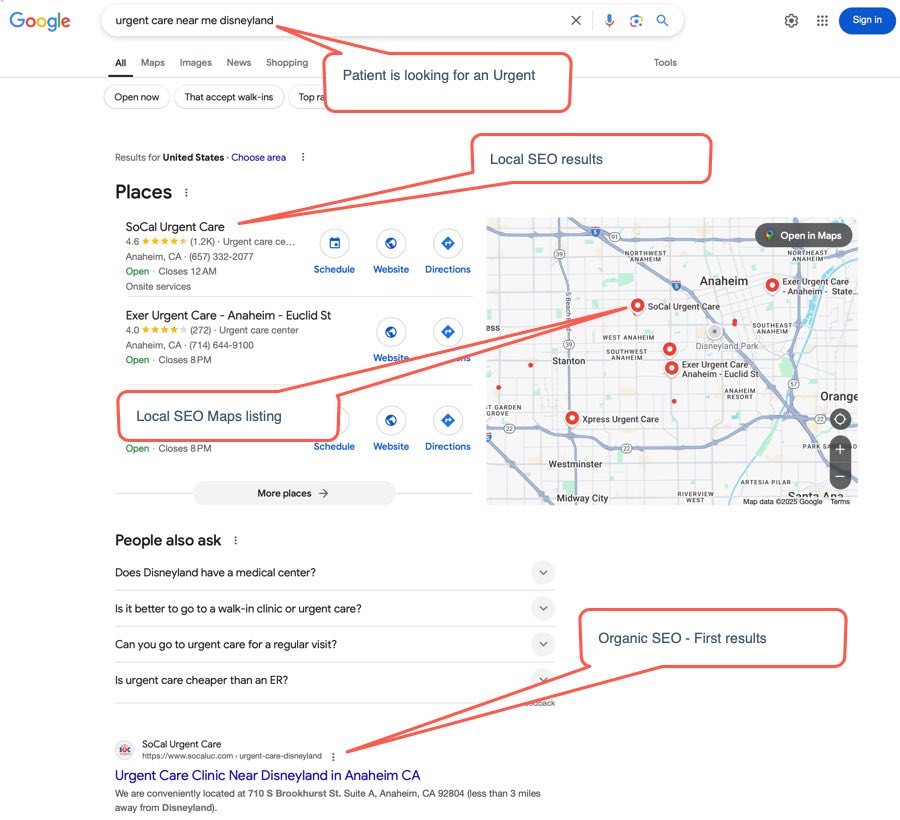
2) Middle area is Google local SEO results. This includes business listing, maps, review rankings. (learn more about local SEO)
3) Organic or Natural SEO results (learn more about SEO secret sauce)
All three of them are important, and your healthcare practice should ideally appear in all 3 areas. If you’re not ranked in the first three results, your potential patients are 78% less likely to find you. Hence, your strategy should be to appear in all these 3 areas, for all important search words. Medical SEO based on AI refers to utilizing artificial intelligence technology to optimize a healthcare website for search engines, allowing it to rank higher in search results by understanding user intent, generating relevant content, and tailoring it to specific medical queries, all while adhering to strict healthcare guidelines and prioritizing patient trust and credibility through factors like E-E-A-T (Experiences, Expertise, Authority, Trustworthiness)
What are key areas to improve your medical SEO?
There are a lot of areas of focus to improve your Medical SEO – however these are most important:
1) Content of your website (read more why content is important and should never be copied). Add minimum one new page of fresh content (at least one) every month, and submit to search engines – 3 to 4 pages is better. Medical website content should be about addressing patient concerns. Read more about medical SEO blogs and see real data. Simple rule of adding content is to try to help the reader (as opposed to selling), for example if you have page about “phantom limb pain syndrome” then your objective is to help the patient, reader about this condition. How provider treats this condition, what is the recovery time, and what to expect during and after the visit. Key question commonly asked by medical practices is “Why can’t I use ChatGpt or Google Gemini to generate content, and paste it into my website?” The answer is “with caution” .
2) Structure of your website (read more why the website structure is important)
3) Speed of your website (read more about the impact of page speed on medical SEO)
4) Links: inbound, outbound and within your medical and dental website
5) Age and E.E.A.T Score of the website domain. Domain name does not impact your SEO, anymore.
6) Over hundred additional factors – However if you focus on your patients and clients, existing and new, and understand that you are not “selling” you are “serving” your patients, your website will produce better return on investment (ROI) for your practice. Search algorithms look at many factors and signals, including the words of your query, relevance and usability of pages, expertise of sources, and your location and settings. For example your medical SEO content team for your website should also 1) understand your Unique Selling Proposition (USP) and 2) implement USP in your content for higher conversion rates.
Example 1: Urgent care website SEO results – Patient searching for an urgent care near Disneyland. Notice the rankings for Local SEO, Local SEO Maps and Organic SEO.
Example 2: Medical spa website SEO results – Patient searching for Botox cost in Orlando FL. Notice the AI based SEO results and Organic SEO results.
Example 3: Dental practice in Ohio website SEO results – Patient searching for cost of braces in Toledo OH
Example 4: Allergy practice in Georgia website SEO results – Patient searching for an allergy testing in Atlanta
51 Good medical SEO questions asked by providers and practice managers
Question No 1: Does SEO impact my clinic’s patient count?
Answer: Yes! by far the best investment you can make is in high quality marketing and advertising platform, with specific focus on medical SEO. Here is an example of new patient leads for a medical practice. This client is in a competitive area.
Use Case: After the initial launch, and 10 months, all ads on Google and Facebook, Instagram were stopped, as SEO was built and primary strategy is SEO. This means that majority, over 90 % of the new patient leads are from free SEO clicks. Patient acquisition cost has been reduced significantly.
Data from November after using medical marketing PLATINUM solution. 641 effective new patient leads.
Data from December after using medical marketing PLATINUM solution. 679 effective new patient leads.
Data from January after using medical marketing PLATINUM solution. 855 effective new patient leads.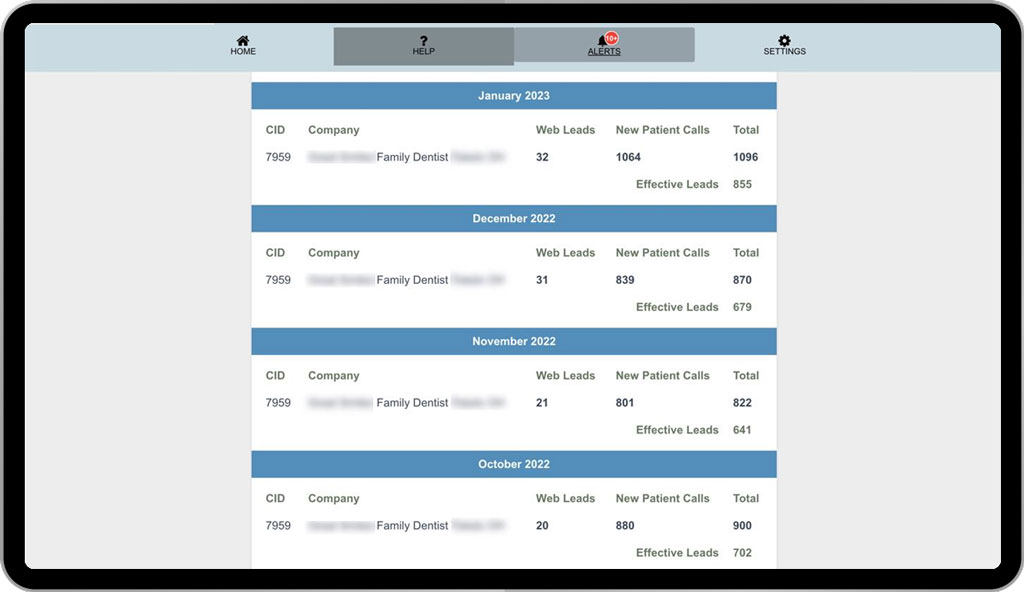
Question No 2: How many patients search for my medical services?
Answer: 85 percent of the patients check online before contacting a medical practice – majority of the searches occur on Google search engine. Other search engines are important, not as important as Google. Google has 96% of the search marketing for medical & dental patients. Example of a patient looking for an urgent care near disneyland.
Question No 3: Is medical SEO some type of “sinister magic” or is there a secret?
Answer: Medical SEO is not any “sinister magic” or some group of people sitting in Google buildings in Mountain View California. Medical SEO and SEO in general is a very complex ( but effective ) algorithms, written and managed by Google and improved upon for the last 20+ years. These algorithms “read” over 200 signals, to rank the results of search queries. The most important signal is your own content on your medical website.
Medical SEO (Search Engine Optimization) refers to the strategies and techniques used specifically in the healthcare industry to improve the visibility of medical websites in search engine results pages (SERPs). The goal is to attract more visitors to a site by ranking higher when users search for relevant medical services, conditions, treatments, and information. Here’s a detailed breakdown of what it involves:
1. Keyword Research
Identifying specific keywords and phrases that potential patients are searching for related to medical services, symptoms, treatments, and local healthcare options. Tools like Google Keyword Planner, SEMrush, or Ahrefs can help in this research.
2. On-Page SEO
Content Optimization: Creating high-quality, informative content that includes the targeted keywords naturally. This might include blog posts, articles, and patient guides about specific medical conditions and treatments.
Meta Tags: Optimizing title tags and meta descriptions to improve click-through rates and ensure they contain relevant keywords.
URL Structure: Ensuring URLs are concise and include relevant keywords to improve understanding and indexing by search engines.
Image SEO: Using relevant images and optimizing alt tags with appropriate keywords to improve page visibility and user engagement.
3. Technical SEO
Mobile Optimization: Ensuring the medical website is mobile-friendly, considering that many users access health information from their mobile devices.
Site Speed: Optimizing website speed to reduce bounce rates and improve user experience, which are factors in Google’s ranking algorithms.
Secure Website (HTTPS): Ensuring the website is secure, especially important for medical websites that may handle sensitive patient information.
4. Local SEO
Google My Business: Optimizing and regularly updating a Google My Business profile with accurate information, hours, photos, and services.
Local Citations: Building local citations by listing the practice on reputable directories like Yelp, Healthgrades, and local business directories.
Reviews: Encouraging patients to leave positive reviews and responding to reviews to improve trust and engagement.
5. Content Marketing
Developing a content strategy that addresses patient concerns, questions, and interests related to health. Regularly publishing valuable content can establish a practice as a thought leader in the medical field.
6. Backlink Building
Gaining backlinks from reputable sites in the healthcare industry and beyond to boost domain authority and improve search rankings.
7. User Experience (UX)
Enhancing the overall user experience on the website, including easy navigation, clear calls to action, and accessible contact information, which helps in retaining visitors and converting them into patients.
8. Compliance
Ensuring all SEO practices comply with HIPAA and other relevant regulations, particularly in how patient data is managed and privacy is maintained.
Medical SEO is a crucial part of digital marketing for healthcare providers because it drives organic traffic to a website, helping to attract more patients and establish the credibility of a medical practice or healthcare organization.
Medical SEO isn’t “sinister magic” or a hidden secret, but rather a strategic process of optimizing a medical website to rank higher in search engine results for relevant keywords. It involves several key areas, including keyword research, on-page optimization, technical SEO, and local SEO. While the principles are well-defined, achieving high rankings requires consistent effort and a deep understanding of both the technical and content aspects of SEO.
Read more about medical SEO secret sauce.
Question No 4: How much does it cost? I have heard that Medical SEO is free?
Answer: It takes a lot of time and effort (hence money) to build the medical SEO of your clinic’s website. Yes, it is free from Google’s perspective. When compared to Google search ads, medical SEO and local SEO for doctors, dentists and other type of practices is free. However there are 2 main ways to build your SEO over time. 1) Do it yourself 2) Hire a professional medical marketing company in US or Canada. We recommend hiring a professional company focused on healthcare only. Here is some pricing data from other companies. We recommend using GOLD or PLATINUM service, medial SEO is included – So you do not have to pay extra – as illustrated in the examples below: These are prices from many other companies in US.
Example 1 – Small size practice with 1 location, 3 exam rooms, 2 providers, 4 services
Setup fee $1000
Monthly fee $800 / month
Contract 12 months
SEO focus – top 30 keywords
Example 2 – Small-to-Medium size practice with 2 locations, 8 exam rooms, 5 providers, 10 services
Setup fee $1200
Monthly fee $1200 / month
Contract 12 months
SEO focus – top 50 keywords
Example 3 – Medium size practice with 6 locations, 34 exam rooms, 22 providers, 60 services
Setup fee $3000
Monthly fee $3000 / month
Contract 12 months
SEO focus – top 100 keywords
Example 4 – Medium+ size practice with 19 locations, 58 exam rooms, 51 providers, 79 services
Setup fee $8000
Monthly fee $6800 / month
Contract 12 months
SEO focus – top 200 keywords
Question No 5: Is medical SEO and medical SEM (Search Engine Marketing) the same?
Answer: Medical SEO is also referred as Healthcare SEO. It is different from Medical SEM. SEM refers to placing paid ads in response to searches by patients for valuable search terms. For example, a patient may be searching for “family dentist toledo oh” – in response to this search, Google PPC ads can be used to display your paid ads. This is called medical SEM or dental SEM, in this case.
Question No 6: If a doctor has very good SEO rankings, should a doctor (healthcare provider – dentist etc) still have an online advertising campaign like Google PPC ads or Facebook/Instagram ads?
Answer: Yes. Healthcare SEO does not replace SEM (Google PPC ads specifically). SEO and SEM compliment each other.
Question No 7: If a healthcare practice has very nice looking website, do they need to do “SEO” every month?
Answer: Yes. Having a nice website is a step 1 – If you are not improving the SEO on a monthly basis, you will be left behind. Majority of the leads come from online strategies. In addition, 78 % of your total online leads come from Google and Google related apps. Google healthcare SEO can be your best marketing asset.
Question No 8: What is medical SEO?
Answer: Medical SEO (Search Engine Optimization) is the process of optimizing a healthcare website to rank higher in search engine results, such as Google, Bing, and Yahoo, for medical-related searches. It helps doctors, clinics, hospitals, and medical practices attract more patients by improving their online visibility when people search for treatments, symptoms, or healthcare providers.
Unlike regular SEO, medical SEO focuses on healthcare-specific guidelines, local search optimization, patient engagement strategies, and compliance with HIPAA and Google’s E-E-A-T (Expertise, Authoritativeness, Trustworthiness) standards.
There are many steps required for optimizing a medical website to improve its visibility and ranking in search engine results pages for specific medical-related keywords and phrases. Over 90 % of the patients search on Google for healthcare services, disease information like COVID-19. Medical SEO is a complex process that involves website content, website speed, structure of the website, links, E-A-T score, so search engines can rank the website based on a patient’s intent of finding an accurate medical service, location of a medical clinic or detailed information about a medical condition. It also means that detailed knowledge about every medical service to be promoted, and website content, should be detailed and not plagiarized. The results from searches are NOT edited by some human sitting in a cubicle at Google, rather the results are based on algorithms and based on data science and artificial intelligence. It is a complex process and takes time. Watch this video from Google.
There are over 200 hundred signals used by the search engine algorithms (Google search engine). One of the most important factors is the content of your website. We recommend:
a) Content should never be copied from another website (do not plagiarize)
b) It should be written just for your website
c) Every service you provide should have specific content, and it should be unique
d) Content means text, images, videos, illustrations, references and links to useful information
e) Every provider should have a separate bio page
f) Every page should have headings, links and call to action
g) Every page should be created as if it is a landing page
h) Every page should load very quickly, less than 4 seconds
i) Use schema.org whenever possible
j) Update and refresh the content
k) Improve internal and external content linking
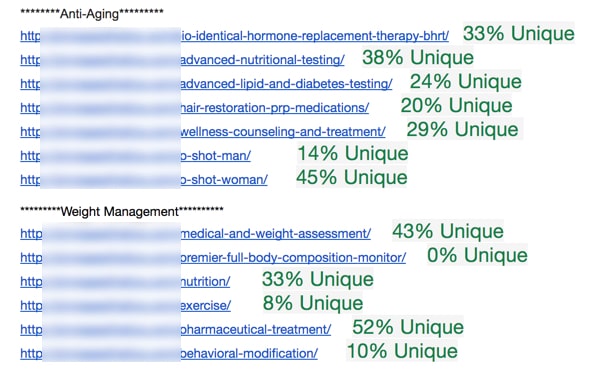
In the example below, you will see that this website offers anti-aging and medical weight loss services. You can see that the majority of the content is copied from another website. If you want to rank high, you should avoid
Question No 9: How long does it take for medical SEO to work?
Answer: According to Google SEO staff, medical marketing companies and agencies should set proper expectations for healthcare customers. It takes 4 months to 1 year to start seeing benefits of SEO and improvements in rankings. Time is shorter, if you already have an existing website. Read more about Google staff’s recommendations. However, there is no specific time for SEO to improve. These are just guidelines.
Use Case: New website, new URL – with no previous history.
We will divide medical practices website into three broad areas:
1) Low competition – will start seeing improved results in first 2 to 3 months.
2) Medium competition – will start seeing improved results in first 3 to 7 months.
3) High competition – will start seeing improved results in first 6 or more months.
Use Case: Existing website, existing URL – with previous history.
We will divide medical practices website into three broad areas:
1) Low competition – will start seeing improved results in first 1 to 2 months.
2) Medium competition – will start seeing improved results in first 1 to 3 months.
3) High competition – will start seeing improved results in first 2 to 4 months.
Use Case: Telemedicine practice – targeting large population areas.
Telemedicine practices generally do not have a specific location, like a city or locality, or a physical address. They typically target a large area. Like a complete state or multiple states. To build proper SEO strategy for a website like this, it will be a massive effort. And it will require many dozens of content pages, and constant attention to conversion data. Expect to see very slow progress and many, many months – even years for SEO to accomplish good results.
Every medical practice is different, so there is no tried and true answer to this question that will apply to every single location. Generally, we see results from our SEO work begin to appear within 4 to 12 months. Many factors can determine the time it takes for results. Your organic competition plays a significant role in this time span.
Additional factors include:
• The physical location of your practice
• Services you are offering
• The user experience of your website
• Links on your website and to your website
• Mobile experience
• Load speed
• Website structure
• Quality of content
Use these as guidelines, not as an accurate forecast. Most of our customers will see results fast than these, however, it is never a good idea to sugar-coat and provide less than a conservative estimate.
If you want same week results, you should consider online advertising for doctors. Both of these approaches and strategies compliment each other, they do not replace each other. Long term online success for your medical practice is based on excellent SEO rankings for your practice. It will take time and money, and it is not easy, anything else is very likely a sales pitch. Investing in medical SEO for your medical practice is very likely the best investment you will make in your medical practice. However, it is complex and is not easy. Here are some examples of ROI for Medical Marketing.
Question No 10: Does my website speed impact my SEO rankings?
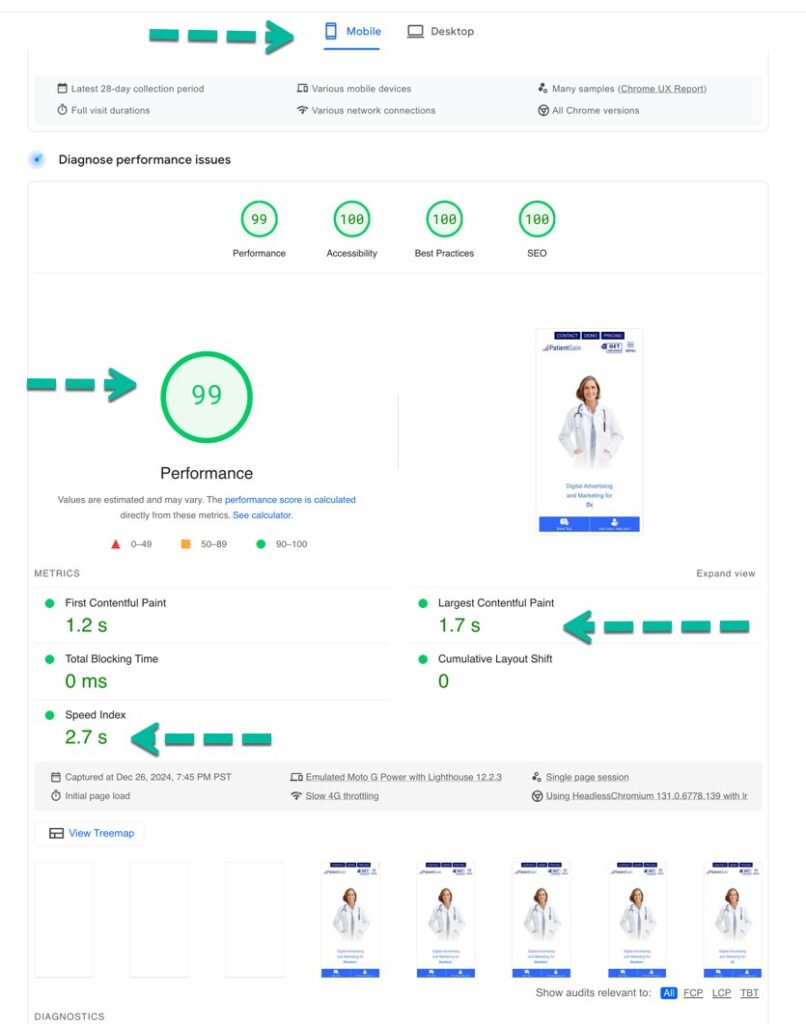
Answer: Yes. Your website speed, specifically on a mobile device, security, and mobile-friendliness are all ranking factors. According to Google SEO staff it does. There are many good website speed test sites (in addition to Google website speed test sites). This page covers in detail about SEO and medical website’s SEO. For example if you do a google search for “medical SEO” and “advertising for doctors”, you will see that PatientGain is on the top area of Google search. Now go to this page and see the website speed results on this detailed page. Our own tests show that there a very slight difference between a website that loads in 1.9 seconds, vs 2.9 seconds. Same is true for a website that loads in 2.5 seconds and in 3.9 seconds, however, if your mobile website takes longer than 4 seconds, you will start seeing SEO rankings drop. But it will be gradual process. Google’s search measurement website https://web.dev/measure/ and related sites like pagespeed, measure the performance over a period of time, and then it calculates an average, so the score you will see is an average over the last few weeks. Usually it is last 30 days, but this is subject to change by the google’s algorithms. . See more results of this page. However your goals should always be to load the site in under 4 seconds.
Example of good speed score from https://web.dev/measure/
Question No 11: Some images on my website look “low quality” or “compressed”, what is the issue?
Answer: Google search algorithms now rank the speed of the website and pages as one of the SEO factors. It is one of the important SEO signals and factors, however it is not the only factor. Actually, Google reads your mobile website first. So if you have very high quality images (non-compressed), the website page will load slowly. Hence as an SEO professional, your SEO team may have decided to use compressed or “low quality” images. Unfortunately, there is no set formula on what should be the size of each image. Your SEO team will decide on the image size. Also professional SEO teams will also have “lower quality” images for mobile sites and “regular quality” for desktop display of the website. This is a good page to learn from Google.
Question No 12: Does the hosting service matter for my practice’s SEO rankings?
Answer: Yes. If you are using cheap, in expensive hosting service, your website will load slowly. Hence it will impact your website’s SEO rankings. PatientGain recommends top google cloud platform for WordPress. We recommend Google cloud hosting and using specific type of servers. We use servers that cache the pages in memory, hence the pages are delivered faster. If you are hosting on a good platform (like Google Cloud), then you would be fine. You can see the difference in hosting services. If you are using an inexpensive website hosting, you are very likely hurting your own healthcare business.
Question No 13: I want to remove certain text from my website, will this impact my SEO?
Answer: Text is content, and every word, phrase, image and tag matters. For example, if you as a practice manager, want to remove specific words, consult with your SEO company first. For example if you have a primary care clinic and the most important keyword for your practice is “primary care near me“, your SEO specialist may have placed keywords in specific areas of your website for higher SEO rankings. Generally, it is not recommended to remove SEO based keywords from your website, without consultation with your medical website SEO specialist.
Question No 14: My website is too wordy, why do I need so much content?
Answer: Refer to question number 13 also. Text is content, and secret sauce of your medical seo is your content. The more useful, on-topic, original, non-copied content you will have, the higher the probability of showing up for specific useful searches. So if your website has a lot of good content, you will profit from it. There are many other factors, however, by far, high quality, on-topic, original, non-copied content will have the most positive impact on your business.
Question No 15: I have been approached by a Medical SEO expert company, that I need more “inbound links” for my website. Will this help my healthcare practices SEO?
Answer: It depends. Be very careful with buying unnatural “inbound links”. We only recommend natural links. Here is very good article to learn more about buying links. One rule of thumb is: Did the Medical SEO expert contact you? or did you seek them? If someone contacts you, they are in “sales mode” to sell you something. In this case, very likely, you are making a mistake. The main determining factor is if the links are seen as natural vs. paid or a deliberate attempt at trying to get backlinks. No doubt, the quality of the inbound links will help your medical SEO, but the real secret sauce is your own content, site structure, your unique original approach on how you help your patients, the way the page renders, and technical SEO of the website. Generally we do not recommend that you should hire a company to start building links for your practice.
Question No 16: I have been approached by a Medical SEO expert company, that shows a report and indicates that my healthcare website’s SEO is very bad. How do I determine if my SEO is doing OK?
Answer: First understand, it is a sales tactic, not a genuine SEO report. Your genuine SEO report is in your Google search console. 1) The first thing you should do is to check SEO of the company who is contacting you. Go to Google search for “medical seo”, “new patient marketing”, “advertising for doctors” and see the top SEO results. When looking for results on Google, ignore the Google ads, and review the first entire page. This will be very good starting point. 2) Did the Medical SEO expert contact you? or did you seek them? If someone contacts you, they are in “sales mode” to sell you something. In this case do your own research. These SEO reports are purposely created to show you how bad you are doing, to get your attention. These are typical SEO sales tactics.
Question No 17: How is dental SEO different from medical SEO?
Answer: The key difference is detailed domain knowledge about a dental practice’s services. Technical SEO is all the same for every type of healthcare practice. For example for a dentist, who offers implants and TMJ treatment, there should be detailed SEO pages for each of the services services. The same applies to a podiatrist, so if a podiatrist offers treatment for “Stress Fracture”, then there should be a dedicated SEO page for this service.
Question No 18: Is WordPress good for SEO?
Answer: In short, Yes. However there are other good content management systems (CMS). We have tried 8 different CMS systems and decided that WordPress is the best system. WordPress is the world’s most popular content management system powering 43% of all websites on the internet. On top of that: WordPress has a 60.8% market share in the CMS market. WordPress powers 14.7% of the world’s top websites.
Question No 19: If I have keywords in my domain name, will I get higher SEO?
Answer: No. This is no longer true. It used to be that Google’s algorithms would match the domain names – like “bestdentisthouston.com” etc. As smart marketing experts started using this type of domain name strategy, Google changed its algorithms. We highly recommend focusing on 2 simple strategies: 1) Think about your website visitor – provide valuable content to the reader (in your case, it is an existinting or a potential patient) 2) Focus on making it easier for the search engine software to read and understand your website page. If you make these your guiding principles, you will achieve high SEO ranking for your healthcare practice. However, it may take some time, depending on your competition.
Question No 20: Is SEO good for new patient marketing?
Answer: Yes. However building your medical seo does not guarantee that you will excel at new patient marketing and acquisition of new patients for your healthcare clinic. High SEO rankings will help your existing and potential new patients find you online. However once a patient lands on your website, they still need to be “converted”. This means that your healthcare website must be intelligent and designed for high conversion rates.
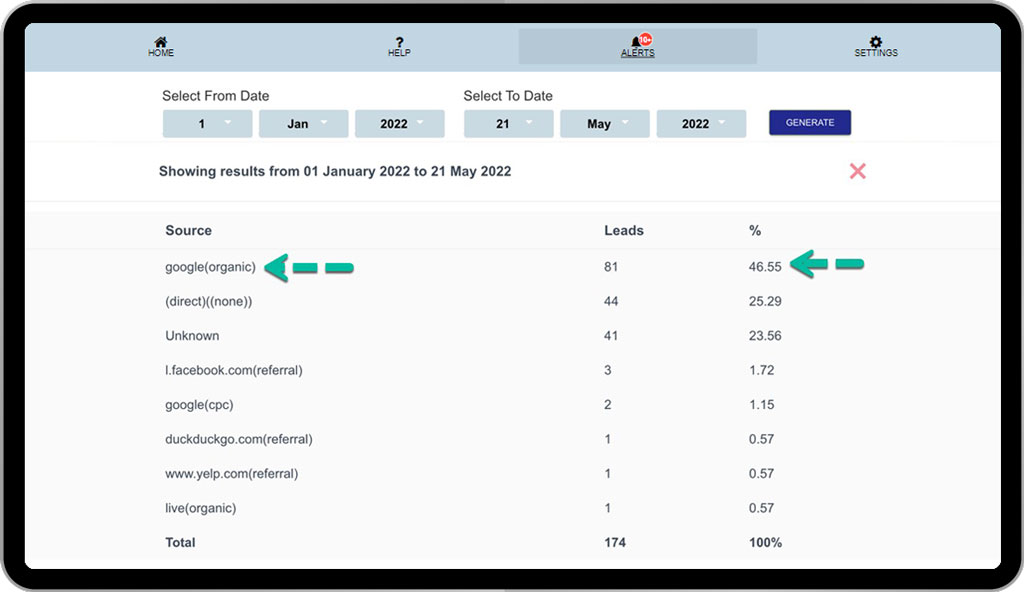
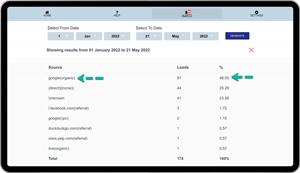
Medical SEO Use case – Primary care provider with 4 exam rooms, 2 providers, location is west coast, medium competition. Service used is GOLD service. See the data below: 46 percentage of the appointment and texting leads were acquired from Google SEO. 25 percentage came directly to the website, 23 percentage could not be tracked (very likely due to iPhones users being blocked for tracking) . Social media and other search engines are marginal, in this real customer example.
Question No 21: If I spend a lot of money on Google ads, will my SEO improve?
Answer: No. Google’s SEO algorithms are totally separate from Google’s paid advertising. Google ads typically consist of : 1) PPC ads 2) Retargeting ads 3) Display ads 4) Location based Waze ads 5) Video ads on YouTube. Each of this type advertising costs money. And it is separate from your SEO rankings. However we have found that many providers (doctors, dentists, physicians, surgeons etc) refer to “healthcare marketing” as “SEO” – So they may refer to “SEO” as paid advertising also.
Question No 22: For best SEO results, do I need to add a lot of content once?
Answer: For the best results, add fresh content to your website, every month. Content should focus on 1) Educating patients about your services 2) Promote your practice 3) Promote your providers. Since good SEO delivers excellent return on investment (ROI), everyone who competes with you for healthcare services, wants to be 1) On first page of Google search 2) and eventually be the number 1, 2 or 3. As you can imagine only 3 healthcare providers can occupy the top 3 positions for each specific keyword. Hence we recommend that you should always start with good quality content, and then 1) Every month a professional should look at your top keyword’s performance 2) Change/Update headings, tags, links and main subject content 3) Review the competitive landscape for important keywords 4) Add additional content for key services. This a 4 step process that should be repeated, and it does not stop. It continues, as long as you want to dominate the SEO and continue to build your healthcare business.
Question No 23: Is there any documented ROI for medical SEO VS medical SEM?
Answer: Yes, we have hundreds of examples. Even with top SEO rankings for your medical practice, SEO alone cannot replace online advertising, specially Google adwords (if done properly). Top SEO rankings do not replace online advertising, they complement each other. In the example, from a real customer. Location of the medical practice is suburban area outside major US city on the west coast, with medium competition. They have excellent medical SEO rankings for all of the major services, read details here.
Example of an OB/GYN- 2 Locations
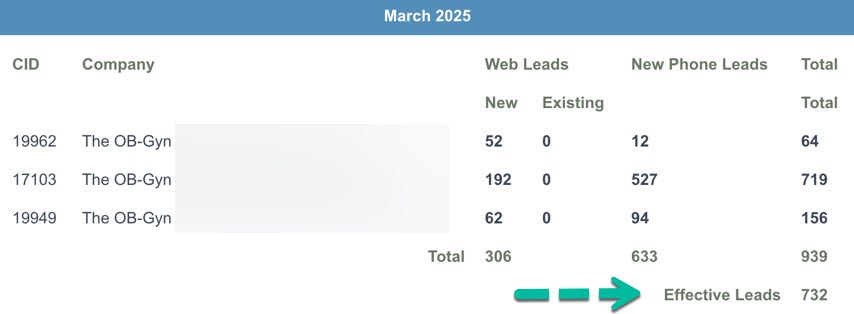
Urgent care located in Southern California (Orange County), in one of the most competitive areas of US. This OB/GYN has 2 locations, surrounded by 4 other OB/GYN practices within 15 mile radius. Using PLATINUM Service, for 3+ years, started with $4000/mon of Google ads. After 1.5 years, we stopped all paid ads, there are no ads, all new leads are coming from SEO and Local SEO optimizations, and the website conversion strategies – including the SPOC app. In the month of March, 939 new leads were recorded, and after subtracting sales calls and duplicate appointments from existing patients, 732 new leads are recorded. This practices have a total of 8 exam rooms and 3 full-time MDs and 2 mid-level providers.
Question No 24: How much do you charge for medical SEO?
Answer: We can provide custom services for medical SEO improvements or you have an option to use PLATINUM service, it includes medical SEO. If you are located in a competitive area then look at the PLATINUM+ service.
Question No 25: What is technical medical SEO?
Answer: Technical SEO is a subset of On-Page SEO, but this aspect does not focus on the content that is on your website but other essential factors that impact your organic rankings and overall website performance. Improving medical website SEO is not a simple task. Technical medical SEO has become more important this year as compared to last year. For example, according to Google, the mobile website’s load time has become an SEO factor. Google’s latest changes to measure the speed of your medical or dental website are located at https://web.dev/measure/ and https://developers.google.com/speed/pagespeed/insights/ . Pagespeed in not only good for SEO but also for user experience.
Question No 26: What is structured data and do I need it?
Answer: For your medical SEO to flourish, you need keep in mind that you have 2 main audiences 1) Potential and existing patients 2) Search engines – like Google, Bing and others. Structured is a standardized way of coding text and data, it should be included in your website pages for the search engines to easily learn about your website pages. For example you may want to include the “structured code and data” about how many patient reviews you have about your healthcare services. Every step you take to make it easier for the search engines to read about your website pages, is rewarded by higher SEO rankings.
Question No 27: Will videos increase SEO for medical practice website?
Answer: After you embed a video in your website page, you must use tags, title, description and useful information about the video. The actual video can be hosted on Youtube, Vimeo etc. Search engines can only understand the limited information about your video content, so they depend on meta-tags, description, tags and other structured information. Video title, video description, and if possible an abstract of the video in legible text format will help the search engine read and rank your page. For example, adding videos, without any of the items listed above, will not improve your SEO. Ask yourself, can the search engine algorithms read or understand the video content? If answer is yes, then it will impact your SEO.
Question No 28: Do I need to learn technical stuff , like Schema and Javascript to improve the SEO of my healthcare website?
Answer: No, you do not need to learn technical stuff as a healthcare provider or a practice manager. But the person or company who is tasked to improve the SEO of your medical website, has to master the schema structure, javascript, page-speed, html, server configuration, load-balancing, browser compatibility, and dozens of additional areas.
Question No 29: I have read on Facebook social media posts that too much content on my healthcare website, would be “Spamming” the search engines, is this correct?
Answer: No, this is not correct. If you have good content, non-plagiarized, on topic, designed to add value to the reader (in your case, a current or a future patient), it will help your SEO rankings not hurt or “spam” the search engines. Also you should be very careful about what you read on social media. Social media, typically does not have useful information to help you make sound business decisions.
Question No 30: Is voice search important?
Answer: Yes. Voice search in search engines and digital personal assistants are constantly being refined to provide results based on various data signals and data points. They are often looking beyond their database of knowledge but how the results of similar queries played out in the personal data of the searcher and the geolocation of that voice search. These data points and signals flavor the search results, giving a truly personalized response to a voice search user. Today, more than ever, an increasing number of devices are connected to the internet. These devices can provide data signals to voice search engines based on how you interact with them. The more you interact with these connected devices, the more a search engine will understand your behavior, preferences, patterns, and the context of your words with them. Ideally, voice search should, over time, anticipate your needs and understand the intent of the user. As it becomes more predictive, it will be even more helpful to a user.
Question No 31: If SEO is so important, are there any courses for learning SEO?
Answer: Yes, there are hundreds of courses available. Infact University of California, offers such a course. See More PHD programs in search algorithms are being offered by many universities in US and many other countries.
Question No 32: Should I focus on the SEO of the practice or the provider (doctor, dentist, surgeon etc)?
Answer: There are 3 important aspects of your medical SEO building 1) Focus on your services 2) focus on your brand, name 3) focus on your provider’s bio page. All three are important.
Question No 33: If I have call tracking number on my healthcare website, will my SEO drop?
Answer: No, this is not accurate. Call tracking numbers or software swapping numbers (based on patient origin, keyword etc) does not impact your SEO. Even Google’s ads algorithms use call tracking numbers. Search engines are very smart, and they can determine that the phone number on the website is a tracking number or your practice number. We have found no difference in SEO rankings if you add or replace or remove a call tracking number. Key issue is that you should not have duplicate websites and duplicate content.
Question No 34: If I have a lot of images on my web pages, will my SEO increase and will it increase conversion?
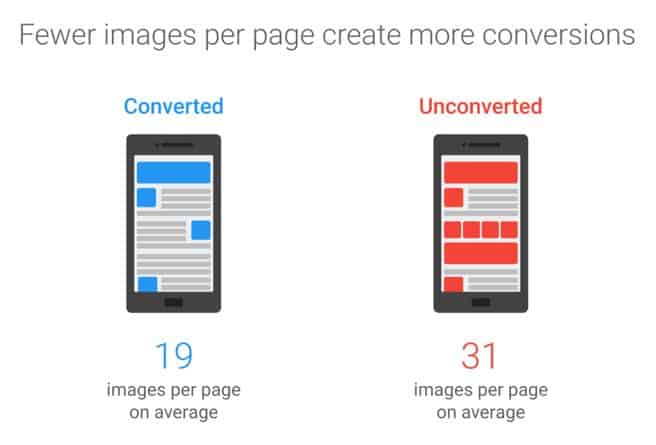
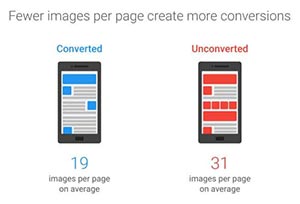
Answer: No, this can actually hurt you 2 different ways. 1) images will cause the pages to load slower, hence can impact your SEO 2) your conversion may drop, see data from Google’s A/B testing below: In this test, you will see that a page with 19 images has higher conversions than a page with 31 images per page. In case of images, if you have useful images, first you should convert them to lower quality ( like this example below, this image is less than 11KB ) and then add the images when it will help yo make a point and help the reader.
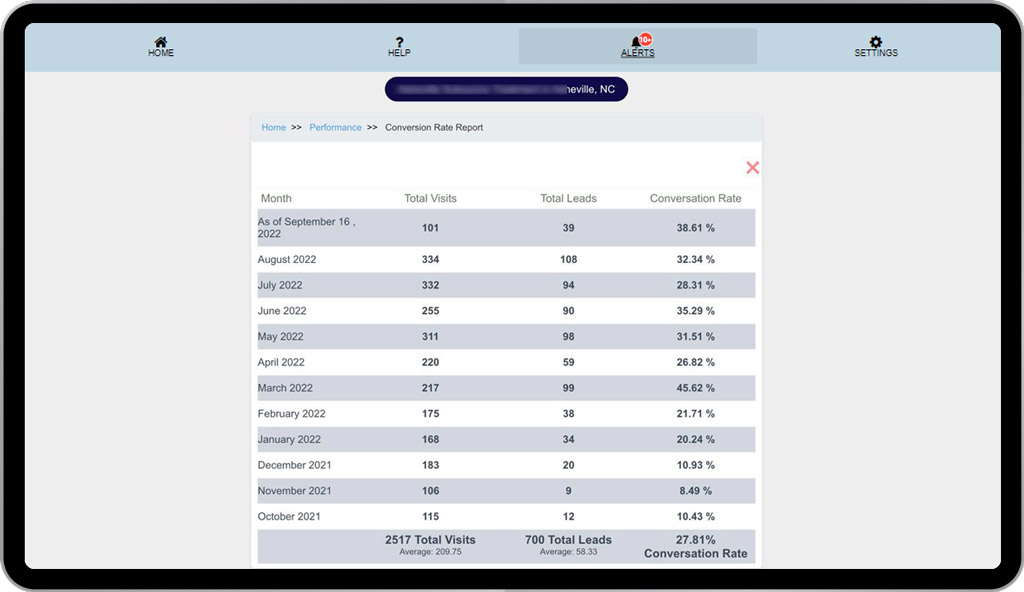
Conversion from your website should be extremely important concern for any medical marketing manager. Conversion tracking means how many actual patients contact you or take an action from your website. In the example below. you will that in the month of July, 332 potential patients visited the website of this particular medical practice. 94 new patients contacted the practice. This means the conversion rate is 28.31 %. Which is an excellent conversion rate.
Question No 35: I have been approached by a medical SEO expert who claims that my practice should be listed on dozens of directories – most of them, I have not even heard of?
Answer: We do not recommend listing your practice on dozens of low-value directories for the following reasons 1) If you start receiving negative reviews from a past employee on dozens of directories, it will become a nightmare for you. 2) Low value directories do not provide SEO value to your practice. 3) Focus on the following strategy:
Create business listings on several essential websites with direct links back to your site. The most important directories to create a business listing on are:
Google – Add your clinic listing on Google my business
Bing – Add your clinic listing on Bing places
Yelp – Add your clinic listing on Yelp
Facebook – Add your clinic listing on Facebook
Foursquare – Add your clinic listing on Foursquare
Apple Maps – Add your clinic listing on Apple Maps
Websites related to your profession – these are referred to as Editorial links. For example, if you are an allergy and immunology practice in Atlanta. One of your colleagues is a primary care physician and provides a link to your website will have a positive impact. Another important link would be from https://www.jacionline.org/ or https://www.aaaai.org/ to your website, as these websites provide specific information related to your profession and specialty, allergy and immunology. These type links are very difficult to acquire.
Secondary websites : Like Healthgrades, WebMD and any other places where it is relevant.
As these listings are created, you would want to “manage” them also. It is not enough to just create them once. And this is where it will become more time intensive. Learn more about local SEO for doctors & dental websites on this page.
Question No 36: My medical’s SEO is decent, but I am hardly getting any new patient leads?
Answer: This is a common problem. Each website is different, so there is no general answer. However most cases fall into these areas:
Website speed – If your mobile website does not load in less than 4 seconds, you will have a high bounce rate.
Content – If the content of the landing page is not relevant, the patient will leave, and hence higher bounce rate
Intelligence – If your website does not offer multi-channel conversion apps on the website, you will have a lower conversion rate
Question No 37: How can I improve my medical SEO?
Answer: Very common question. We get this every day. Unfortunately it is not simple answer, but here are specific things you should address in order to be on the first page of Google search results for local search results and organic. Simple answer is : Add fresh content to your website, every month. Content should focus on 1) Educating patients about your services 2) Promote your practice 3) Promote your providers.
Appearing on Google’s first page should be the most important long term strategy for any medical or dental practice. How is this achieved? There are specific shortcut SEO steps you can take today to start improving the medical SEO of your website.
Question No 38: I have been approached by “content writing” companies who claim that adding content will improve my medical SEO, is this correct?
Answer: Generally yes. Content of your website is the most important ranking component of your website. However, “any” content will not help. Content has to be on topic, unique, cannot be plagiarized, and should provide value to the
Question No 39: Is there a website from Google that I can review to learn about SEO myself?
Answer: Yes, Google has a very good blog. https://developers.google.com/search/blog
Question No 40: I have heard that Google is now “looking” at your website for page experience, what does this mean?
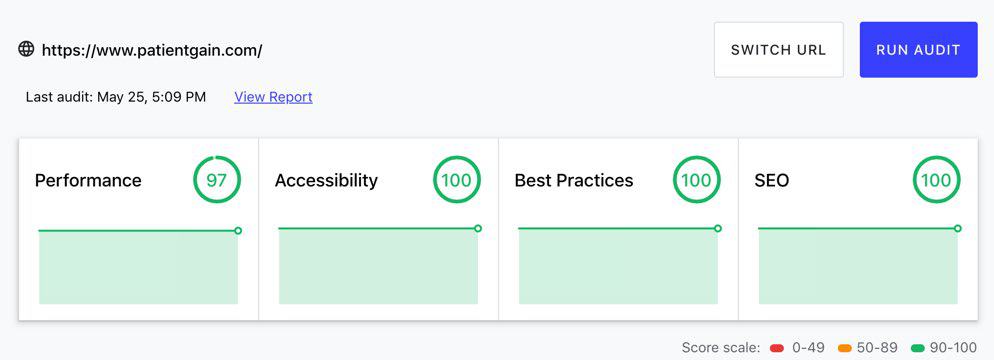
Answer: Google’s page experience algorithm is designed to reward you for fast loading mobile websites. You can check the performance of your website, or any page at https://web.dev/measure/. It covers 4 major areas: 1) performance 2) accessibility 3) best practices 4) SEO. So as a best practice, your strategy should be to be “green” in all of these areas. When you run tests on https://web.dev/measure/ , enter your website URL, and run it 4-6 times. Then take an average. Remember that this is a tool provided by Google, as a simulator that is close to what Google’s actual search algorithms’ see. So our view is that it is a very good way of evaluating a website. Here is the data from PatientGain’s website:
Question No 41: If I add Google posts every week, will this increase my local SEO?
Answer: Yes, we see a correlation between Google posts and your local SEO rankings. Best results seen are when your Google posts highlight a service that you offer, and the same service has a landing page with unique, non-plagiarized content. Read more about local SEO for doctors and dentists, scroll to the bottom of the page to see an example.
Question No 42: My new website just went live, and I searched for my clinic name, but I am nowhere to be found?
Answer: If you have a new website, new practice, and you did not have a website and domain for the same practice, then you should expect that you will not be listed on Google’s first page right away, SEO takes time. There are 3 main sections of a Google search results page. 1) Top section is usually Google paid ads. 2) Mid area is Local SEO 3) Bottom area is Organic SEO. It takes time for SEO. It is a process and may take many months (according to Google 4 months to a year). This is normal. If you want to have results immediately, then Google paid ads, also known as PPC ads is a good solution. However, PPC ads cost $$ and depending on your competition, the cost per click can be anywhere from $2 per click to $9 per click. But also understand that your Google PPC ads do not appear “all time time”. For example, if your budget is to allocate and spend $40/day on PPC ads, and on average it costs $4/click, that means you can get 10 clicks in a given day. So after someone clicks on your ads, the advertising algorithm will pause your campaign to calculate how much budget is left for the day. So if it is 2 PM and if you have already spent $32 on clicks, there are only 2 more possible clicks left. So the PPC engine will “spread” your 2 clicks over several hours. What this means is that you have a “low budget”, and hence your ads will not appear all the time when someone searches. FAQs About Google Adwords For Doctors.
Question No 43: What is domain authority and does it impact my SEO rankings?
Answer: Google maintains a score about the quality of information on your website. For example, if you are an allergy and asthma practice in Lawrenceville GA, do you have specific pages on your website about many conditions local patients may suffer from local allergies in Atlanta area? If you have useful content on your website, and you truly want to help anyone who visits your website, by providing useful content, your overall domain authority will increase. You can check your domain authority here. What should be the ideal score? using this tool from ahrefs we recommend that a score of 30 or above is considered good for a medical practice.
Question No 44: Does the age of the website domain impact my SEO rankings?
Answer: Generally, yes the website content and the domain age can impact your SEO rankings. For example lets consider 2 use cases: A) if you have an allergy and asthma practice for 10 years, and you have been using the same domain ABCallergy.com. B) You are opening a brand new practice XYZallergy.com. It would be much easier to build the SEO rankings for ABCallergy.com compared to XYZallergy.com. So based on our experience, the domain age + website age allows you to improve the SEO rankings quicker. It does not mean the XYZallergy.com can never compete with ABCallergy.com, it simply means XYZallergy.com will take longer to achieve the same or higher SEO rankings. This is a good page to read about How long does it take to improve medical SEO.
Question No 45: What is E-E-A-T score and do I need to improve my website’s EAT score?
Google rates your website for 1) Expertise. 2) Authoritativeness and 3) Trustworthiness – the three most important aspects of a website that Google uses to evaluate its quality. EAT impacts search and topics in a special category of queries called YMYL or Your Money or Your Life. These searches are on topics that, compared to others, can have a significant impact on a person’s life and future. With that in mind, the results returned to these types of searches must contain accurate information. Some topics in YMYL searches include Safety, Health, Happiness, and Financial Stability. For medical practices, EAT is vital because many issues and topics on a site fall under YMYL searches. This page goes into details on how to improve the EAT for your medical website SEO.
Question No 46: Why is the cost of medical SEO and website creation and management so different from company to company? I have been quoted $2000 one time fee, to $11,000 one time fee, plus monthly management fees for my 4 location practice?
Answer: Very good question and it gets asked every day also. The short answer is to dig deeper and see what is included in each pricing. You can read more here about details as to why the costs are so different.
First understand there are 7 areas you are paying for :
1. Website design and aesthetics and your branding, images and overall look and feel of the website
2. Website structure of the website, this means quality of the code running your website
3. Website content for SEO, pages of useful, high quality non-plagiarized, unique content
4. Website intelligence, conversion apps, lead capture apps, automation
5. Website hosting, hosting on cheap servers, results in high bounce rates, and lost revenue
6. Website A/B testing, one of most crucial requirements, and less than 4% of the healthcare websites go through this process.
7. Collections of data from the website forms into a HIPAA compliant database
In addition – you probably will need additional help and services
1. Advertising (social media advertising, Google advertising)
2. Email marketing
3. Social media posting
4. Texting/SMS with patients, while they are still on your website
5. Patient Chat*Bot app
6. Monthly SEO services
7. Online payments app
Question No 47: What is the difference between high-intent SEO versus low-intent SEO?
Answer: Once you are able to show on the first page of Google SEO for your main healthcare services, then your focus should turn to in high-intent SEO keywords. This area is difficult to achieve and will take A/B testing, data from hundreds of similar campaigns and experimenting with different heading 1, SEO meta tags. Generally high-intent SEO keywords equate to long-tail keywords, however it is not entirely correct. For example we found that patients in Houston TX area, searching for “pain doctor near me” is a high-intent SEO keyword – just as “pain management clinics in houston texas”
Some examples of high-intent SEO keywords VS low-intent SEO keyword
Urgent care near me VS. Urgent care
doctors sarasota fl VS. back pain doctors sarasota fl
child covid testing near me VS. pediatric urgent care near me
immigration physical exam fresno, ca. VS. immigration exam fresno, ca
So generally the more detailed content you have, the more likely you are to increase your medical SEO. However, you cannot simply copy and paste content. Content must be original and it should be at-least 96% unique.
Question No 48: What is Schema and do I need to add to my website for higher SEO?
Answer: Schema.org is a non-profit organization focused on making the internet and specifically HTML ( which is the foundation of your medical or dental website) more structured. Schema.org is an initiative by Bing, Google and Yahoo search engines. Structure allows better understanding of content of a website. Hence by definition, if you have a website with structured data, and you are following other best practices of SEO improvement, it is very likely that you will see higher SEO rankings for your medical or dental website. Read more about Schema.org here.
Question No 49: How can I “lock-in” my website’s medical SEO rankings or will they fluctuate?
Answer: Your website’s medical SEO rankings will fluctuate. It is normal. They are changing on a daily basis. There is no way to simply “lock-in” your rankings.
Question No 50: Can I improve the SEO by obtaining a lot reviews from my patients?
Answer: If you have a lot of reviews on GMB (Google My Business), it will impact your Local SEO (See this page for Local SEO). And the content of the actual reviews is the main source. For example if a patient adds a review that says “Very good urgent care , I received my X-Ray results in 4 hours”. The text that patient writes “X-Ray results in 4 hours” is the most important part of the review. The algorithms read this text “X-Ray results in 4 hours“. Then it reads your website, algorithm will also “read” your website to make a co-relation if you have a content page about “X-Ray services offered at Urgent Care ABC“. If you have a separate page about “X-Ray services“, your quality score is increased. Higher quality score means higher SEO rankings.
And let’s suppose another patient searches for “Urgent care with quick X-Ray results“, the GMB algorithm is more likely to show your website in the local SEO section. So for higher SEO rankings, most important factor is the content of your own website. Think about it, if your own website is not designed for your audience no amount “other” techniques will work. Your audience is 1) Existing patients 2) Potential new patients 3) Search engines. There are other entities that are also important, like other providers etc.
So focusing of providing useful content (cannot be copied content) on your website is the most important step no 1. Other areas are :
1) Content of your website (read more why content is important and should never be copied). Add one new page of fresh content (at least one) every month, and submit to search engines. Read more about medical SEO blogs and see real data.
2) Structure of your website (read more why the website structure is important)
3) Speed of your website (read more about the impact of page speed on medical SEO)
4) Links: inbound, outbound and within your website
5) Age and E.A.T Score of the website domain
6) Over hundred additional factors – However if you focus on your patients and clients, existing and new, and understand that you are not “selling” you are “serving” your patients, your website will produce better return on investment (ROI) for your practice. Search algorithms look at many factors and signals, including the words of your query, relevance and usability of pages, expertise of sources, and your location and settings.
Question No 51: How does medical SEO work?
Answer: This question gets asked everyday by doctors & clinic owners! Long answer. So read on below.
This is important because 82 percent of the patients check online before contacting a doctor or a clinic. Even 47 percent of existing patients look for additional, related services online on your own website or your competitor’s websites. Majority of patients are looking for your services using mobile devices and they are “Speaking” to their Mobile Devices like Siri – So Speech Based SEO is becoming extremely important for your Medical Website’s SEO. Speech Based SEO – New Emerging Area – As more patients are “speaking” to devices.
Let’s face it, as a medical practice owner, it becomes difficult to learn technology and run your business at the same time, it is time consuming and takes you away from your core focus of taking care of your patients and running your medical practice. According to Google’s CEO Sundar Pichai, there are over 200 signals that Google considers in ranking your website. Here are some important ones. However these are certain signals and techniques that are extremely important for your rankings. Starting with your own content, this is the single most important aspect of your SEO rankings. So it all starts with your our website, with good quality content. Usability is another key area that’s often overlooked by “custom websites”. Usability has 2 targets 1) Patients (existing and future ) 2) Search engines. Both of them go hand-in-hand. Search engine (Google) usability requirements are not mutually exclusive. Write as if you are explaining a complex subject to a teenager with attention span of 30 seconds. If your content does not deliver anything of value to the reader, they have the right to leave and skip your website.
5 important things to understand about how to gain high SEO and speech based SEO for your medical practice:
1) It Takes Money and It’s Hard
2) It Takes Time & Patience, But It’s Important
3) It Is Difficult – Google Changes Algorithms Regularly
4) It Is A Multi-Step Complex Process Rather Than One Time “Task”
5) A Professional Team Will Produce Better Results Than D.I.Y (and Much Quicker)
If you want same week results, you should consider online advertising for doctors. Both of these approaches and strategies compliment each other, they do not replace each other. Long term online success for your medical practice is based on excellent SEO rankings for your practice. It will take time and money, and it is not easy, anything else is very likely a sales pitch. Investing in medical SEO for your medical practice is very likely the best investment you will make in your medical practice. However, it is complex and is not easy. Here are some examples of ROI for Medical Marketing. 96% of the search traffic goes to page 1 of Google search. As a medical or dental practice, your strategy should be to be on the first page of Google search for all important healthcare services. Focusing on content based on specific keywords used by patients, results in high SEO rankings. Using AI to get ahead is highly recommended, however AI does not replace the human oversight. The process of making your medical services and practice appear higher in search engine results, primarily in the top area of the search results is called SEO for doctors. Once a potential patient visits your medical website, the next most important step is “conversion”. Average conversion rate of medical websites is 4.2 %. However, if your medical website’s conversion rate is more than 5%, you are doing good. 7% to 10% very good. Over 10% is exceptional. If you have younger patients/clients, then you also have to focus on ease-of-use on mobile and offer HIPAA compliant texting directly from your website. If your medical or dental website loads slowly, it hurts you in 2 ways 1) Lower SEO rankings 2) Lower conversion rates. AI based reverse search engine is used by PatientGain to improve your patient conversions. The reverse search engine strategy also improves the Medical SEO results and AI based results. See examples of AI based search results and how reverse search engine works. Medical and dental websites optimized for AI have higher chances of appearing in featured snippets or knowledge panels, offering quick answers to queries like “Cost of botox in Orlando?” without needing to click through.
PatientGain.com has created several products and offerings to help you achieve great SEO – Search Engine Optimization for your medical practice. Focus is on results which means new patients, this means top Google rankings, with significant focus on mobile search results and mobile marketing. Google search engine is the most accurate search engine with the best algorithms for search results. Majority of the world searches on Google. According to Google, over 200 “signals” are used to rank medical websites. The most important factor is your own content. There are at least 200 hundred other factors, including link-building, mobile website load time, but there is nothing more important than your own quality content. So for medical SEO for doctors, you must focus on Google first, and start with adding Unique, High Quality Content – This means Non-Copied, Non-Plagiarized Content.
Achieving top SEO rankings for doctors and medical practices is a process and not a simple one-time setup. It is time-intensive, requires deep knowledge about your own business and Search Engine technology, costs both money and time to get real results, and it never stops for your business.
Medical SEO, also known as healthcare SEO, is the practice of optimizing a medical website to rank higher in search engine results pages (SERPs) for relevant keywords and phrases, and it is very difficult, and takes time. This helps potential and existing patients easily find your practice website when they’re searching for medical services, doctors, or information about specific conditions. Improving the medical website SEO in 2026 requires that you embrace the AI changes to SEO algorithms, called Answer Engine Optimization (AEO) for medical and dental websites, rise of AI agents like Gemini & ChatGpt.
For developing SEO for your medical website the main change is the importance of E-E-A-T algorithm. However these principles still apply: 1) you think like a client/patient, who is looking for your services 2) provide reliable information on your website 3) content should be fresh 4) take advantage of AI (Artificial Intelligence) changes in search engine algorithms 5) expert & detailed knowledge of how Google’s algorithms work. 6) Content should be based on ethical standards, as there are also strict rules related to medical content.
 Send Text
 How may I help you?