

Healthcare Digital Marketing Solutions: Risk Analysis Custom Solution VS PLATINUM Solution
Example of a specialty practice with 8 locations – Recently decided to revamp their digital presence and take advantage of AI based marketing in healthcare. After reviewing PatientGain’s PLATINUM-PLUS solution compared it to building an in-house “Platinum-alike” solution for 8 locations.
However here is a comparison that involves a comparison- It is a significant shift from a managed service model to an infrastructure and compliance ownership model.
Financial Risk & Cost Analysis
Transitioning to an in-house build requires high upfront capital compared to the predictable monthly subscription of PatientGain.
- Upfront Investment: Building a HIPAA-compliant multi-location platform typically costs between $50,000 and $200,000. A custom multi-location website alone can start at $50,000.
- Ongoing Maintenance: You must account for specialized staff or high-end contractors for SEO, server maintenance, and security updates. PatientGain’s PLATINUM for multi-location (approx. $500 to $800/location/month plus the base fee) includes these as a managed service.
- Opportunity Cost: Development cycles for complex healthcare software take 10 to 12 months. During this time, your marketing may stagnate compared to the 30-day “go-live” typical of the PLATINUM service.
Operational & Compliance Risks
The “Platinum” solution integrates over 20 apps (CRM, Chatbots, SMS, SEO) into one HIPAA-compliant dashboard.
- “HIPAA Leakage”: Using fragmented third-party tools (e.g., standard Google Analytics or non-secure forms) increases the risk of unauthorized PHI exposure. Penalties for uncorrected neglect can reach over $2 million annually.
- Vendor Sprawl: An in-house solution often relies on a “piecemeal” assembly of vendors for texting, reputation management, and hosting. This creates multiple points of failure and requires managing 5-8 separate Business Associate Agreements (BAAs).
- Conversion Performance: PatientGain uses A/B tested, data-driven website designs optimized over 10+ years. In-house builds often prioritize aesthetics (“digital brochures”) over “conversion engines,”. Statistically custom designs are proven to produce lower your ROI on increase ad spend.
Comparison Summary for 8 Locations
| Risk Factor | In-House “Platinum-Alike” | PatientGain PLATINUM |
|---|---|---|
| Initial Cost | High ($50k–$200k+) | Low/No setup (with contract) |
| Deployment | Slow (6–12 months) | Fast (~30 days) |
| HIPAA Risk | High (due to “leakage” between tools) | Very Low (single integrated BAA) |
| Control | Total creative/structural control | Limited (uses proven designs and workflows for conversions) |
| Maintenance | Requires in-house team/contractors | Managed service included |
| Support | Multiple technology vendors, multiple support companies, multiple issues likely to be pointed to each other | Single vendor support system. A technical lead and a project manager is assigned to each customer. This team is backed by SME (Subject Matter Experts) and AI Agents. Engineering team in-house that builds and tests all apps and workflows. |
| Healthcare Domain Knowledge | Since you are dealing with multiple service providers and technology apps, you are very likely to receive very low healthcare domain knowledge to implement your patient acquisition strategy | Deep expertise in over 42 healthcare verticals. |
Decision Support: Choose the in-house build if your 8 locations have highly specialized, non-standard functional requirements that a A/B tested platform cannot meet and you have a $50k+ development budget. Select PatientGain.com’s PLATINUM or PLATINUM-PLUS if your priority is high ROI, HIPAA security, and a “hands-off” managed marketing stack.
Detailed breakdown of the compliance requirements for building a HIPAA-compliant marketing solution like PatientGain’s PLATINUM
Building a HIPAA-compliant marketing platform like PatientGain’s PLATINUM requires a rigorous framework that spans legal, technical, and administrative domains. Because marketing naturally involves the public-facing disclosure of information, the standard for compliance is significantly higher than for internal clinical systems.
1. Legal & Regulatory Framework
The foundation of any compliant marketing solution is the legal agreement that defines the relationship between the software provider and the healthcare practice.
- Business Associate Agreement (BAA): As a marketing solution provider, you are a “Business Associate.” You must sign a BAA with every client, legally assuming liability for protecting their patients’ Protected Health Information (PHI).
- Written Patient Authorizations: Unlike standard healthcare operations (like appointment reminders), “marketing” typically requires explicit, written patient authorization before PHI can be used. Your platform must include features to capture and store these specific authorizations.
- “Minimum Necessary” Standard: The system must be designed to only collect and disclose the absolute minimum amount of PHI required for a specific marketing task.
2. Technical Safeguards (The “Software” Layer)
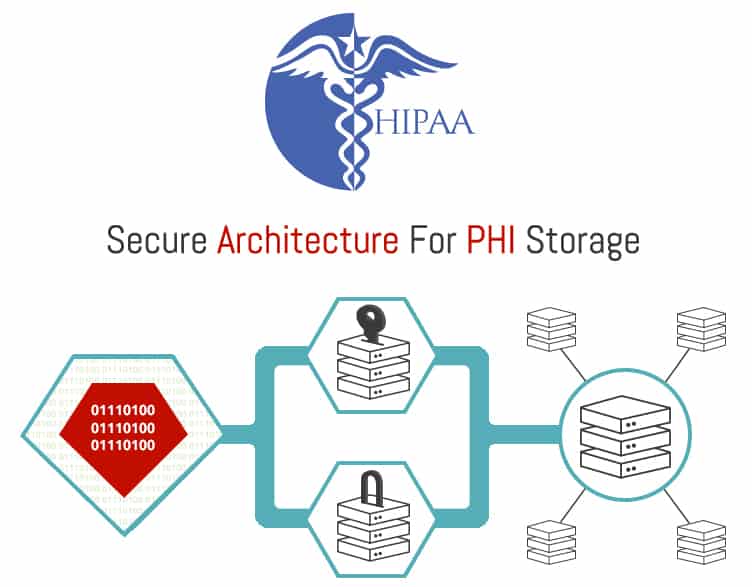
To prevent “HIPAA leakage”—the invisible exposure of data between disconnected systems—your solution should integrate these controls directly into its architecture.
- End-to-End Encryption (E2EE): Data must be encrypted using standards like AES-256 at rest (on servers/databases) and TLS 1.3 in transit (between the user and the platform).
- Immutable Audit Logging: The system must record every time a user views, creates, or deletes a record containing PHI. These logs should be “immutable” (cannot be tampered with) and retained for at least six years.
- Role-Based Access Control (RBAC): Access must be strictly limited based on job function. For example, a marketing coordinator may see lead numbers but not specific medical history details found in a patient’s file.
- Multi-Factor Authentication (MFA): To prevent unauthorized access via stolen credentials, MFA must be enforced for all user logins.
3. Application-Specific Compliance Features
Marketing platforms like PLATINUM provide specific tools that must each meet unique HIPAA requirements.
- Secure Web Forms: Standard website forms are often insecure. Compliant versions must encrypt data immediately upon submission and store it in a secure CRM rather than sending it via standard, unencrypted email.
- Compliant Email & SMS Marketing: You cannot send PHI through standard email or SMS. A compliant solution uses secure, encrypted portals or specialized healthcare-specific gateways.
- Tracking Pixel Management: You must be able to disable or “sanitize” tracking pixels (like those from Meta or Google) on pages where PHI might be captured to avoid illegal data transmission to third-party ad networks.
- De-identification Tools: For advanced analytics or “look-alike” audience targeting, the platform should have built-in tools to “obfuscate” or remove 18 specific identifiers to convert PHI into non-regulated data.
4. Administrative Safeguards
Compliance is a continuous process, not just a set of software features.
- Annual Risk Assessments: You must conduct and document annual assessments to identify new vulnerabilities in your infrastructure.
- Workforce Training: All employees who might touch patient data (including marketing and support staff) must undergo annual HIPAA training.
- Incident Response Plan: You must have a documented plan for responding to potential breaches, including a protocol for notifying clients and the Department of Health and Human Services (HHS).
To build a solution equivalent to PatientGain’s PLATINUM, your development team must address specific technical safeguards while your legal team formalizes a Business Associate Agreement (BAA).
1. Developer Security Checklist
This checklist focuses on the Technical Safeguards (45 CFR § 164.312) required for software that handles electronic Protected Health Information (ePHI).
- Encryption Standards:
- At Rest: Use AES-256 encryption for all storage containing PHI, including databases, backups, and log volumes.
- In Transit: Enforce TLS 1.2 or 1.3 across all network layers (load balancers, database connections, and internal services).
- Access & Identity Management:
- Unique User IDs: Every person must have a unique identifier; strictly prohibit shared accounts.
- Multi-Factor Authentication (MFA): Enforce MFA for all user and administrative access paths, including VPNs and dashboards.
- Automatic Logoff: Implement session timeouts (e.g., xx minutes of inactivity).
- Integrity & Audit Controls:
- Immutable Audit Logs: Record who accessed PHI, when, and what action was taken. Logs must be protected from deletion or modification and retained for at least 6 years.
- Emergency Access: Document a “break-glass” procedure for authorized personnel to access PHI if primary systems fail.
- Infrastructure Isolation:
- Environment Separation: Separate development, staging, and production environments; never use real PHI for testing.
- Private Networking: PHI workloads should not be directly internet-accessible; use private subnets with controlled ingress.
2. Business Associate Agreement (BAA) Core Components
A BAA is a legally required contract between a “Covered Entity” (the healthcare practice) and a “Business Associate” (your marketing platform). You can find official model BAA provisions on the HHS website.
- Permitted Uses: Clearly define that PHI is used only for specific marketing or CRM purposes and prohibit the sale or unauthorized disclosure of data.
- Breach Notification: Specify that the Business Associate must report any unauthorized use or disclosure within a tight timeframe (often 24–72 hours for initial notice, with a legal limit of 60 days).
- Subcontractor Flow-down: Ensure any third-party services you use (like AWS or Google Cloud) are also bound by a BAA and the same security standards.
- Data Destruction: Detail how PHI will be returned or securely destroyed once the contract ends.
- Minimum Necessary: Commit to only accessing the “minimum necessary” PHI required to perform the marketing service.
Risk Analysis Custom Solution VS PLATINUM Solution
The primary difference between a Custom Healthcare Marketing Solution and the PatientGain PLATINUM Solution lies in the trade-off between absolute flexibility and data-driven performance. While a custom solution is built from the ground up to your exact specifications, the PatientGain PLATINUM Service is a pre-optimized, HIPAA-compliant platform designed for immediate ROI.
Side-by-Side Comparison
| Feature | Custom Healthcare Marketing Solution | PatientGain PLATINUM Solution |
|---|---|---|
| Development | Built from scratch; tailored to unique needs. | A/B tested, proven performance infrastructure, apps, service + support is included. |
| Timeline | Extended development; often takes months. | Fast deployment; typically automated functionality. Typical go-live is 30 days, assuming no delays from customers. |
| HIPAA Security | Risk of “HIPAA Leakage” between separate plugins. | Fully integrated “all-in-one” HIPAA-compliant platform. |
| Conversion Rate | Typically lower (2%–4%) due to “gut-feel” design, subjective feedback from stake holders | Higher (10%–15%+) due to data-driven optimization. Based on data from last 10+ years and hundreds of practices from 42+ different healthcare disciplines. |
| Initial Cost | High upfront fees ($6,000–$25,000+). | Zero upfront setup fees (with 12-month contract). |
Risk and Compliance Differences
- Security Gaps: Custom solutions often involve 5–8 separate vendors (SEO, chat, CRM, etc.), which increases the risk of unauthorized data exposure in the gaps between non-integrated software.
- A/B Testing: Most custom builds are subjective and never undergo A/B testing. PatientGain uses design layouts scientifically proven to convert visitors into patients.
- BAA Availability: PatientGain provides a standard Business Associate Agreement (BAA) for subscription services, while custom BAAs are typically reserved for their high-tier custom service plans.
Which Should You Choose?
- Choose a Custom Solution if you have a very large budget, unique technical requirements not met by standard platforms, and the need for complete control over every design element.
- Choose PatientGain PLATINUM if you are a healthcare practice focused on high ROI, want to avoid “vendor sprawl,” and need a reliable, HIPAA-compliant system that works out of the box. Support and best practices are included.
 Send Text
 How may I help you?