

HIPAA Compliant WordPress + Complete Healthcare Marketing is $1699/mon
PatientGain offers a tiered, subscription-based pricing model for its HIPAA-compliant healthcare marketing platforms, with monthly rates typically ranging from $899 to $2,499+. PatientGain offers three primary contract options: no upfront fees with a 12-month contract, a setup fee with a month-to-month contract, or custom-tailored solutions based on a specific budget.
Core Subscription Tiers Or Custom Packages
The following tiers include a HIPAA Compliant WordPress + Healthcare Marketing, A/B-tested medical website, a signed Business Associate Agreement (BAA), and varying levels of marketing automation.
- GOLD Service ($899/month): Best for practices in low-competition areas. It includes a foundational HIPAA-compliant website, essential SEO, and approximately 10 core apps for patient acquisition, lead capture, and basic CRM. HIPAA Compliant WordPress + Healthcare Marketing.
- PLATINUM Service ($1,699/month): The most popular choice, designed for medium-competition markets. It adds monthly SEO content creation, approximately 20 total apps, and enhanced patient engagement tools like AI chatbots and a centralized communication inbox. HIPAA Compliant WordPress + Healthcare Marketing.
- PLATINUM PLUS Service ($2,499/month): Aimed at high-competition markets or telemedicine providers. It includes aggressive SEO strategies, voice AI, a missed-call texting app, and double the monthly service-based content. HIPAA Compliant WordPress + Healthcare Marketing.
Other Specialized Services
- Silver & Silver Plus ($1,699 to $2,499/month): For practices that already have a high-performing website but want to integrate PatientGain’s marketing apps and SEO content.
- Multi-Location Services ($500/month per location): Specifically designed for franchises or multi-site medical groups to manage all locations from a single dashboard.
- Enterprise Service (Starting at $5,000/month): A comprehensive solution for large healthcare organizations requiring advanced automation and multi-location management.
- Custom Website Development: One-time setup fees for a custom WordPress-based site typically range from $8,000+, which excludes ongoing monthly marketing fees.
How can PatientGain achieve Zero PHI Footprint in Standard WordPress?
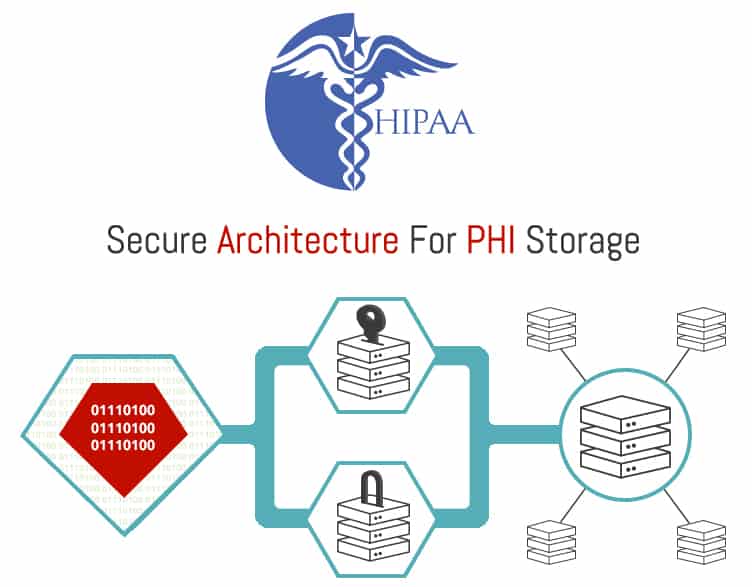
PatientGain.com achieves a “Zero PHI” footprint in WordPress by using a decoupled architecture where WordPress acts only as a visual “shell” or presentation layer. Any Protected Health Information (PHI) entered on the site bypasses the standard WordPress database entirely and is funneled directly into a separate, secure, and encrypted environment.
How the “Zero PHI” Architecture Works
- Bypassing the WordPress Database: When a patient fills out a form, sends an SMS, or requests an appointment, the data is routed away from the local WordPress tables. Standard WordPress databases are often unencrypted and are frequent targets for hackers.
- External “Data Vault”: All captured PHI is sent instantly to a secure, HIPAA-compliant “data vault” or CRM hosted on Amazon Web Services (AWS). Even the website itself is hosted on extremely fast Google Cloud’s compute-optimized C3D servers for their high-performance, HIPAA-compliant WordPress hosting. These C3D instances, powered by 4th Generation AMD EPYC™ processors, offer high per-core performance, faster loading speeds, and enhanced security for medical practice websites
- Proprietary Apps vs. Plugins: Instead of using third-party WordPress plugins (which are known to have have security vulnerabilities), PatientGain uses its own suite of over 20 medical-specific, HIPAA-compliant applications. These apps do not store data locally within the WordPress site.
- “Air Gap” Approach: This strategy ensures that even if the WordPress site itself is compromised, there is no patient information stored within it for a hacker to find or “scrape”.
Key Security Safeguards
- Encryption: Data is protected with 128-bit or 256-bit encryption both at rest (in the data vault) and in transit (during submission).
- Role-Based Access Control (RBAC): Access to the secure data vault is strictly limited based on staff roles, and shared logins are prohibited to maintain a clear audit trail. When customers create users, they may not create users with shared logins, like frontdesk@ABCmedicalclinic.com.
- Business Associate Agreement (BAA): PatientGain provides a signed BAA for healthcare providers, legally binding them to protect the PHI they process through their secure infrastructure.
- Audit Logs: Non-editable logs track exactly who accessed what data and when, providing the documentation necessary for regulatory reviews.
Service Tiers & Pricing
PatientGain typically includes these HIPAA-compliant features as part of their managed marketing packages:
- Standalone Hosting: Approximately $199/month for healthcare-grade infrastructure.
- Gold Package: Starts at $799/month and includes SEO, website management, and integrated apps.
- Platinum Package: Ranges from $1,399 to $1,999/month, offering full integration with AI-based marketing, automated PHI consent management, and the full suite of compliant apps.


Details of PatientGain WordPress Strategy
To achieve a Zero PHI Footprint, PatientGain uses a “decoupled” architecture that fundamentally changes how WordPress handles data. Instead of patient information being saved to the local WordPress database—which is the standard behavior for most contact form plugins—it is instantly routed to a secure external environment.
1. Decoupled Data Flow (The “Air Gap”)
The primary technical mechanism is the removal of the WordPress database from the PHI lifecycle.
- Bypassing the Local Database: When a patient submits a form or interacts with a chatbot, the data is not stored in the
wp_postsorwp_postmetatables. - Encrypted Tunneling: Data is tunneled using SSL/TLS 1.3 directly to PatientGain’s “Data Vault”.
- Secure Redundancy: The vault is mirrored across AWS and Google Cloud (C3D high-performance instances) for maximum uptime and redundancy.
2. Proprietary App Ecosystem
PatientGain replaces standard, potentially vulnerable WordPress plugins with over 20 healthcare-specific applications.
- No Third-Party Plugins: Most standard plugins (like Gravity Forms or Contact Form 7) store data locally by default. PatientGain’s apps are built to communicate exclusively with their HIPAA-compliant CRM.
- Single Point of Conversion (SPOC): This central app acts as the exclusive gateway for all incoming website inquiries, 2-way SMS, and calls, centralizing them in a dashboard outside of WordPress.
- QuickSend App: Is the other side of the central response system, consisting of template based and AI based responses. Hence every lead from SPOC is captured and responded.
- AI-Powered Safeguards: These apps often include automated data obfuscation, making information unreadable to unauthorized parties even within the secure dashboard. Leads funnel app is obfuscated by default.
3. Hardened Technical Infrastructure
The Zero PHI approach is supported by a backend managed entirely by PatientGain’s compliance team.
- Role-Based Access Control (RBAC): Access is strictly limited based on job function; generic logins like “frontdesk” or “admin” are prohibited to ensure a clear audit trail.
- Non-Editable Audit Logs: Every interaction with PHI is recorded in logs that cannot be modified by staff, meeting the strict “integrity” requirements of HIPAA.
- Regular Human Audits: Beyond automated security, PatientGain staff manually review and verify security logs daily.
Summary of Differences
| Feature | Standard WordPress | PatientGain “Zero PHI” |
|---|---|---|
| Data Storage | Local MySQL Database | Secure AWS/Google Cloud Vault |
| Plugin Risk | High (third-party vulnerabilities) | Low (proprietary HIPAA apps only) |
| Encryption | Often missing at rest | 128/256-bit AES at rest and in transit |
| Liability | Provider (Covered Entity) | Shared via signed BAA |
Business Associate Agreement (BAA)
A signed Business Associate Agreement (BAA) with PatientGain is the legal document that binds PatientGain and the healthcare practice to protect patient data and outlines the specific safeguards they must maintain.
Technical Safeguards
- Dual-Cloud Encryption: ePHI is protected using 128-bit or 256-bit AES encryptionboth “at rest” (on servers) and “in transit” (moving between users and the vault).
- Access Control: Implements Role-Based Access Control (RBAC), ensuring staff can only see data necessary for their specific job functions.
- Prohibition of Shared Logins: Generic accounts (e.g., “frontdesk” or “admin”) are strictly forbidden to ensure individual accountability.
- Secure Infrastructure: Data is hosted on HIPAA-compliant instances within Amazon Web Services (AWS) and Google Cloud Platform for redundancy.
Administrative Safeguards
- Human-Verified Audit Logs: Unlike systems that rely solely on automated bots, PatientGain uses a two-person verification process for security logs. One staff member reviews the logs and creates a record, while a second human reviewer verifies those files daily.
- Workforce Clearances: All PatientGain staff undergo mandatory background checks and regular HIPAA security and privacy training.
- Breach Notification: The agreement specifies protocols for notifying you “without unreasonable delay” in the event of a security incident or breach
Important Legal Caveat
While PatientGain provides a Standard BAA for its subscription services (like GOLD or PLATINUM), they also offer Custom BAAs for clients on their high-tier custom service plans. It is also explicitly stated that if a customer does not follow HIPAA guidelines themselves, they may not be eligible for BAA protection. BAA is offered to customers on “shared responsibility model”.
 Send Text
 How may I help you?