
How New Patients Contact Doctors & Medical Practices?
New patients typically contact medical practices through a mix of traditional and digital methods, with telephone calls remaining dominant for new patient leads or inquiries. While text messaging, Appointment apps, AI based Voice agents, online patient portals, and, less commonly, email are used for convenience and administrative tasks. Many offices use automated systems for scheduling, but patients often prefer direct contact. PatientGain tracks patient’s preferences in real life using its SPOC app. Specifically for new patient inquiries or sometime s called “leads” still come from telephone calls.
Key take away – You can put 10 apps on your website, AI chabots, Book Now, etc – But they are still going to call you !!
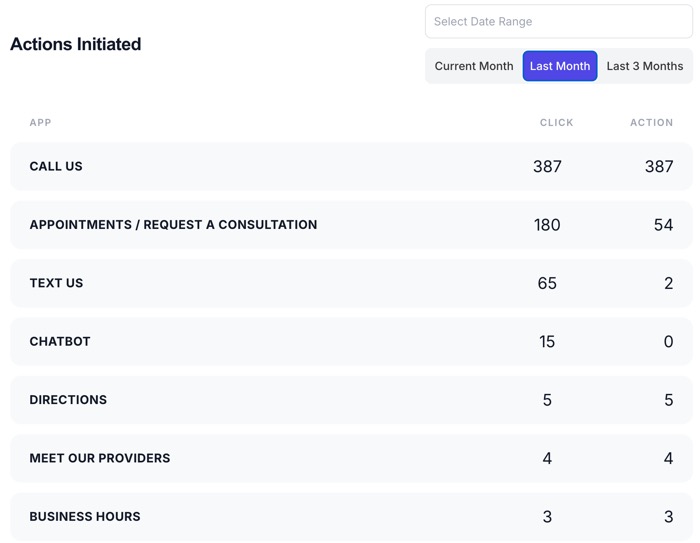
Example 1: Primary care practice data is from one month in 2026 – they received 387 new patient calls, 180 new patient appoint requests, 65 text messages and 15 AI ChatBots. You can also see that all 387 phone calls went through, meaning either someone picked up the phone or went to a messaging/voice mail. For appointments 180 started the appoint process but only 54 completed. 65 initiated a text message, but only 2 completed. This data is from only 1 location. However the pattern is the same, we have hundreds of examples. One important observation is that since majority of the patients are on mobile devices (approximately 71% for this practice), if you prompt too many questions for appointments, text messages, AI Chatbots, they will not “complete” the process – they are more likely to stop. And in many cases, our app tracked that the same IP address initiates a phone call. Which means is that they feel that answering too many questions is not acceptable to new patients.
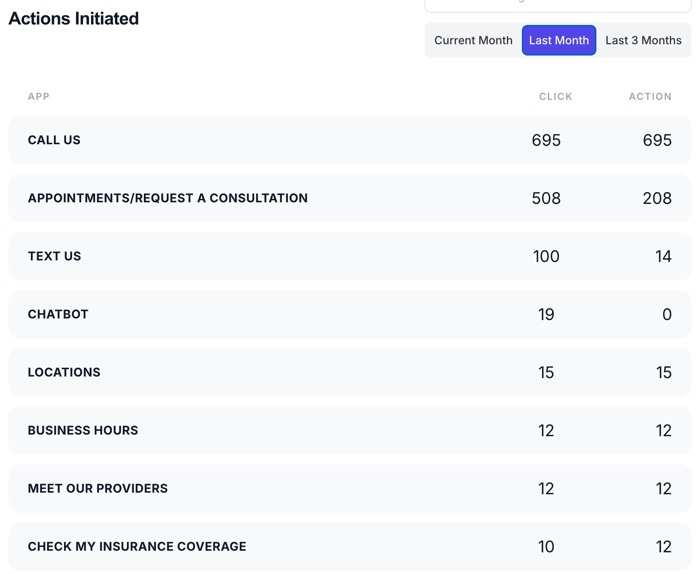
Example 2: Extremely and successful OBGYN practice data is from one month in 2026 – they received 695 new patient calls, 508 new patient appointment requests, 100 text messages and 19 AI ChatBots. You can also see that all 695 phone calls went through, meaning either someone picked up the phone or went to a messaging/voice mail. For appointments 508 started the appointment process but only 208 completed. 100 initiated a text message, but only 14 completed. This data is from only 1 location. However the pattern is the same, we have hundreds of examples. One important observation is that since majority of the patients are on mobile devices (approximately 78%), if you prompt too many questions for appointments, text messages, AI Chatbots, they will not “complete” the process – they are more likely to stop. And in many cases, our app tracked that the same IP address initiates a phone call. Which means is that they feel that answering too many questions is not acceptable to new patients.
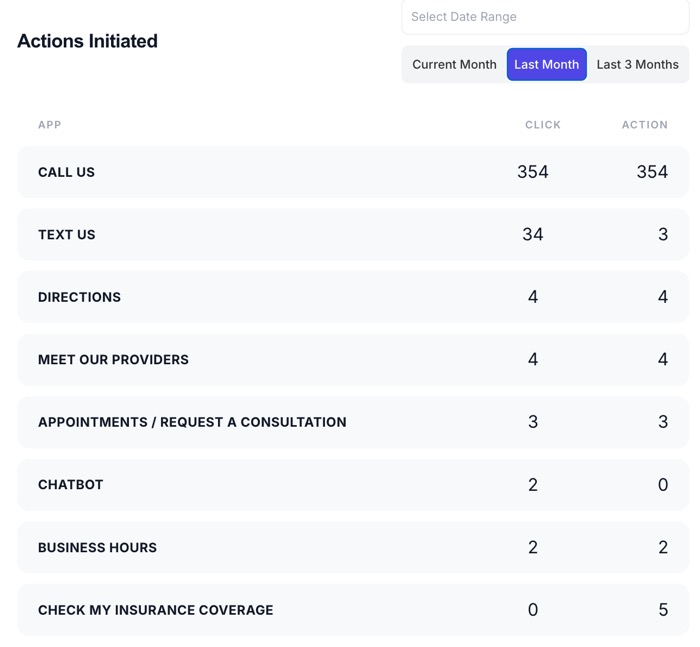
Example 3: Established Cardiology practice data is from one month in 2026 – they received 354 new patient calls, 3 new patient appointment requests, 34 text messages and 2 AI ChatBots. You can also see that all 354 phone calls went through, meaning either someone picked up the phone or went to a messaging/voice mail. For appointments 3 started the appointment process all 3 completed. 34 initiated a text message, but only 3 completed. This data is from only 1 location. However the pattern is the same, we have hundreds of examples. One important observation is that since majority of the patients are on mobile devices (approximately 62% for this practice ), if you prompt too many questions for appointments, text messages, AI Chatbots, they will not “complete” the process – they are more likely to stop. And in many cases, our app tracked that the same IP address initiates a phone call. Which means is that they feel that answering too many questions is not acceptable to new patients.
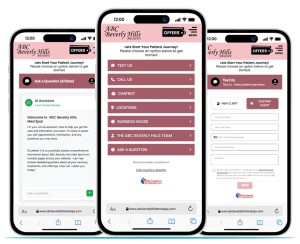
Example of a SPOC app – This all allows patients to decide on how they prefer to contact your practice. Rather than giving them a phone number to call – or to book an appointment. By providing multi-channel options to contact a healthcare practice, PatientGain’s data shows increase in conversions.
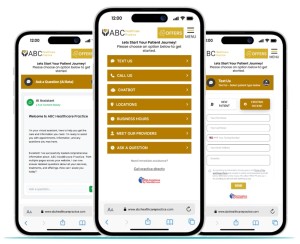

If your practice offers complex treatments, like pain management, medspa treatments, medical weight loss treatments, patients are more likely to “call you”. For primary care, urgent care type of practices our data shows that patients use other digital methods also. However, phone is still the number 1 way to contact the practice. Hence there are 2 apps that are extremely important for any healthcare practice. A) Tracking of new patient calls (Within HIPAA Guidelines) B) Missed Call App.
- Telephone (76% preference): Remains the primary method for scheduling, asking quick questions, and discussing sensitive or urgent issues.
- Text Messaging (SMS): Increasingly popular for quick communication, such as appointment confirmations, reminders, and non-emergency inquiries. If your website offers an app that allows patients to “Send A Text” (within HIPAA guidelines) then it can add to higher conversions.
- Online Scheduling: AI-driven tools and websites are used for 24/7 access to booking, reducing wait times on the phone. This option primarily has 2 type setups. A) Booking and appointment B) Requesting an appointment – The 2nd method has higher conversion rates, as you are never saying “NO” to patient requests.
- Patient Portals: Secure, official platforms used for viewing lab results, non-urgent messaging, and scheduling, which improve efficiency and reduce “phone tag”.
- AI Agents: Used less frequently for patient communication, and often requires specific, secure, or preferred setups to ensure HIPAA compliance.
- Email / Contact forms: Used less frequently for patient communication, and often requires specific, secure, or preferred setups to ensure HIPAA compliance.
Effective practices often use a, centralized communication system to manage these various channels—calls, texts, and portal messages—in one place for better efficiency.
How does PatientGain.com’s SPOC help healthcare practices with patient conversion?
PatientGain.com’s Single Point of Contact (SPOC) or Single Point of Conversion app is an AI-driven system designed to unify all patient inquiries into one dashboard to prevent lead loss and improve conversion rates. The platform offers 24/7 automated engagement, centralized communication management, accelerated lead triage, and streamlined intake and booking processes.
PatientGain.com’s SPOC (Single Point of Contact or Single Point of Conversion) is an AI-powered, HIPAA-compliant “Unified Inbox” designed to centralize and automate patient acquisition for medical and dental practices.
It helps healthcare practices increase patient conversion through several key mechanisms:
1. Minimizing “Lead Leakage”
- Centralization: It funnels all inquiries—including phone calls, website forms, text messages, and chatbots—into a single, secure dashboard.
- No Missed Leads: By logging 100% of incoming inquiries in real-time, it prevents potential patients from falling through the cracks due to busy phone lines or overlooked emails.
2. Enhancing Response Speed & 24/7 Engagement
- AI Automation: The AI Intelli*Connect agent provides instant, automated responses to routine questions (e.g., insurance, hours, availability) 24/7, ensuring high-intent patients are engaged immediately.
- Rapid Triage: The system identifies high-intent leads and alerts staff for immediate follow-up, helping practices respond faster than competitors.
3. Streamlining the Patient Journey
- Frictionless Booking: Staff can send secure appointment links or intake forms directly from the dashboard via the QuickSend Text App.
- Channel Flexibility: Patients can communicate via their preferred method (SMS, chat, or web form), while staff manages everything from one “Gmail-like” interface that requires minimal training.
4. Data-Driven Optimization
- Accurate Attribution: SPOC logs the source of every lead (e.g., Google Ads, SEO, Social Media), allowing practices to identify which marketing channels are actually converting and shift budget accordingly.
- Staff Accountability: Every interaction is time-stamped and logged, creating an audit trail that helps managers monitor response times and conversion rates by staff member.
ROI and Efficiency
- Conversion Impact: Practices using the SPOC app often see lead-to-patient conversion rates exceeding 10% to 22%.
- Staff Savings: By replacing 6+ disconnected tools, the app can save front-desk staff an estimated 6 to 14 hours per month in administrative time.

 Send Text
 How may I help you?