

How To Improve Mobile Website Speed of Healthcare Websites
Why Use GCP C4D Servers For Healthcare Websites? They are very expensive and very difficult to setup and manage for hundreds of healthcare websites !!
Simple reason: Improve the load speed of mobile websites of healthcare websites. Fast loading healthcare practice mobile websites = MORE PATIENTS. Speed of your practice’s mobile websites improves the SEO and conversions of medical and dental websites. Majority of the patients visit your healthcare practice website using a mobile phone, like iPhone or Android. If the mobile version of your healthcare practice website loads in more than 4 seconds, your conversion will go down, as documented by many studies from PatientGain and Google.
Simple answer is that GCP C4D Servers are among the best for fast loading WordPress websites. In the world hosting companies, you can start with free to inexpensive hosting. However if your goal is run a profitable healthcare practice, cheap hosting for your medical or dental website are mutually exclusive.
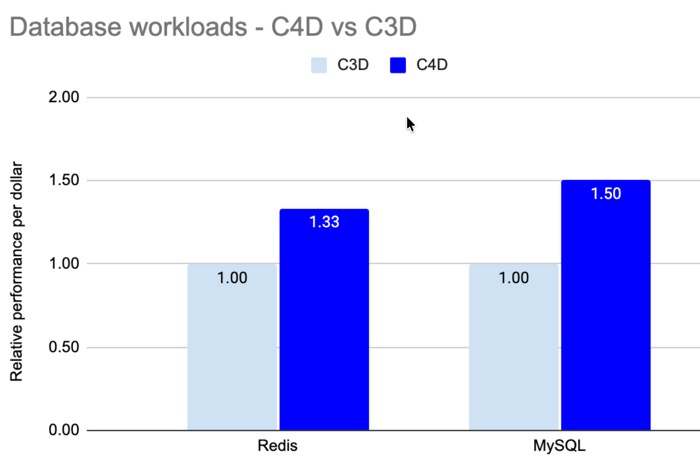
Why does PatientGain.com’s PLATINUM service uses websites that are hosted on extremely fast GCP C4D servers?
PatientGain.com’s PLATINUM service utilizes high-performance Google Cloud Platform (GCP) C4D servers primarily to ensure ultra-fast website loading speeds, which directly impact patient conversion rates and search engine rankings. These servers are designed for demanding, compute-intensive WordPress environments, allowing for rapid, secure, and AI-driven healthcare marketing, according to PatientGain.com. Fast loading healthcare websites increase your medical or dental SEO results.
Key reasons for using GCP C4D servers include:
- Improved Conversion Rates & User Experience: Data shows that if a mobile medical website takes longer than 4 seconds to load, there is a dramatic decrease in conversions. The high-speed servers, combined with optimized WordPress templates, ensure fast loading to retain potential patients.
- Handling High-Intensity Workloads: C4D VMs (powered by 4th Gen AMD EPYC processors) offer superior performance for web servers and databases, providing up to 54% better performance than previous generations for NGINX and 62% for MySQL. This supports the “heavy” functionality of the PLATINUM service, which includes over 20 integrated apps.
- Security and HIPAA Compliance: The servers provide a secure infrastructure for managing patient data (PHI). While WordPress itself is not inherently HIPAA compliant, PatientGain uses these secure, high-speed, managed environments to ensure data security and prevent violations.
- AI and Real-Time Functionality: The PLATINUM service includes AI-driven chatbots and the Single Point of Conversion (SPOC) app, which require robust, low-latency computing to process patient communications (calls, chats, forms) instantly.
- Scalability for Growth: As medical practices grow, these servers allow for increased traffic and functionality without requiring additional vendors or sacrificing performance
Note: PatientGain also uses of Google Cloud’s compute-optimized C2 VMs for their high-speed WordPress hosting. C4D represent top-tier, fast-loading infrastructure.
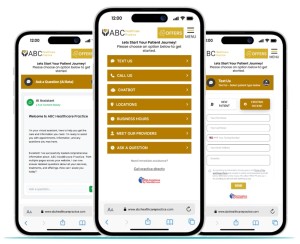

Why does speed of mobile website matter for healthcare SEO?
Speed on mobile websites directly affects healthcare SEO because over 70% of healthcare searches occur on mobile devices. Google strictly evaluates mobile loading speeds through Core Web Vitals. Slow sites trigger high bounce rates, signaling a poor user experience which causes Google to penalize rankings.
Google’s Algorithmic Requirements
- Mobile-First Indexing: Google exclusively uses the mobile version of your website for indexing and ranking content. A fast desktop site will not save your rankings if the mobile experience lags.
- Core Web Vitals: Google uses speed metrics—like Largest Contentful Paint (LCP) and Interaction to Next Paint (INP)—as direct ranking signals.
- JavaScript Hindrances: Many medical sites use heavy JavaScript for interactive patient portals or scheduling widgets. If these scripts delay the initial HTML response, search bots may fail to index your content entirely.
Patient Behavior & UX Impact
- High Bounce Rates: Studies show that 53% of mobile users leave a webpage if it takes longer than 3 seconds to load.
- Urgency and Intent: Patients looking up emergency rooms, urgent care centers, or immediate symptoms expect instant answers. Delays drive them to click back to search results.
- Negative Brand Perception: A lagging mobile website makes a medical practice appear outdated or inefficient. Patients often equate a broken digital experience with a poor standard of physical medical care.
Local SEO and Patient Conversion
- The Map Pack: Most mobile healthcare searches have strong local intent (e.g., “pediatrician near me”). Google ranks fast, responsive sites higher in local search results and map packages.
- Conversion Drop-offs: Even a two-second delay can drop appointment conversions by 7%. Fast loading speeds ensure that once a patient finds your site, they can smoothly complete high-value actions like clicking to call or booking an online appointment.
How to Test and Improve Your Speed
- Run Diagnostics: Use free platform tools like Google PageSpeed Insights or Lighthouse to evaluate your real-world mobile load speeds.
- Optimize Media: Compress heavy medical diagrams, provider headshots, and facility photos.
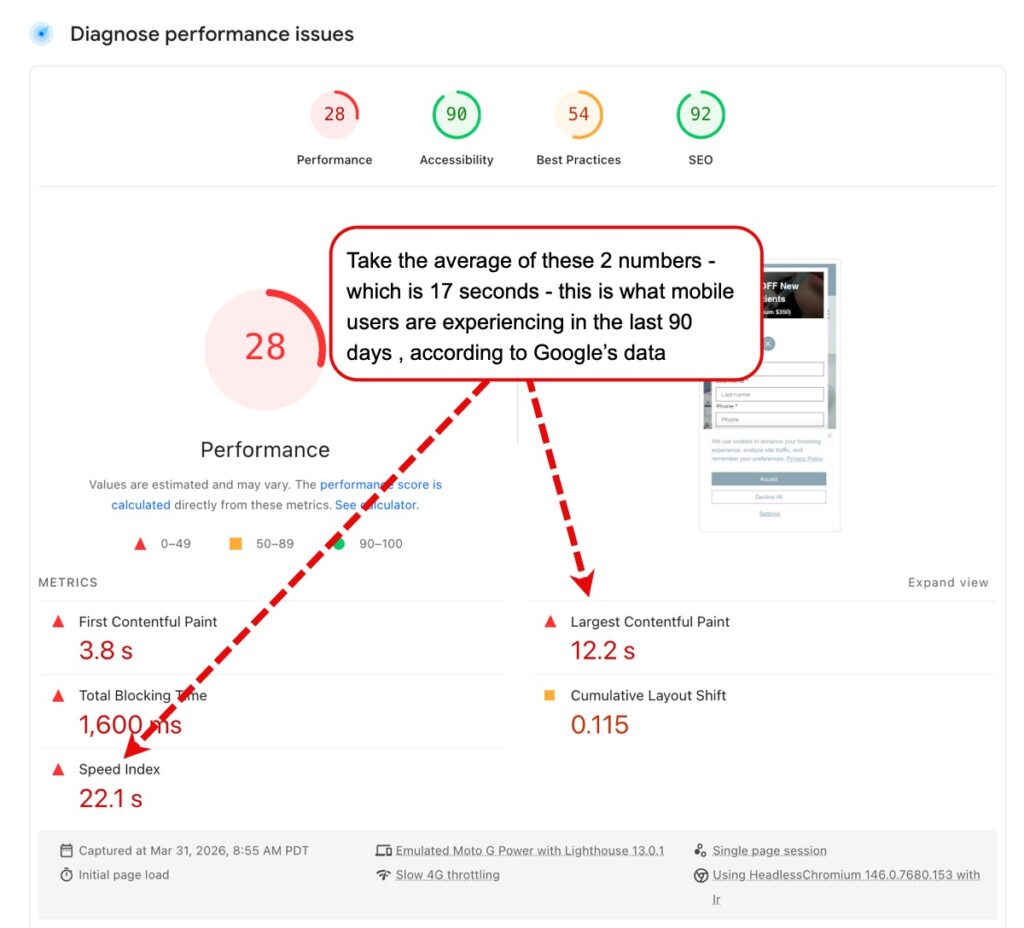
Example of a beautiful website but loads slow on mobile device: From the Google’s data, this site loads in 17.0 seconds on mobile devices.
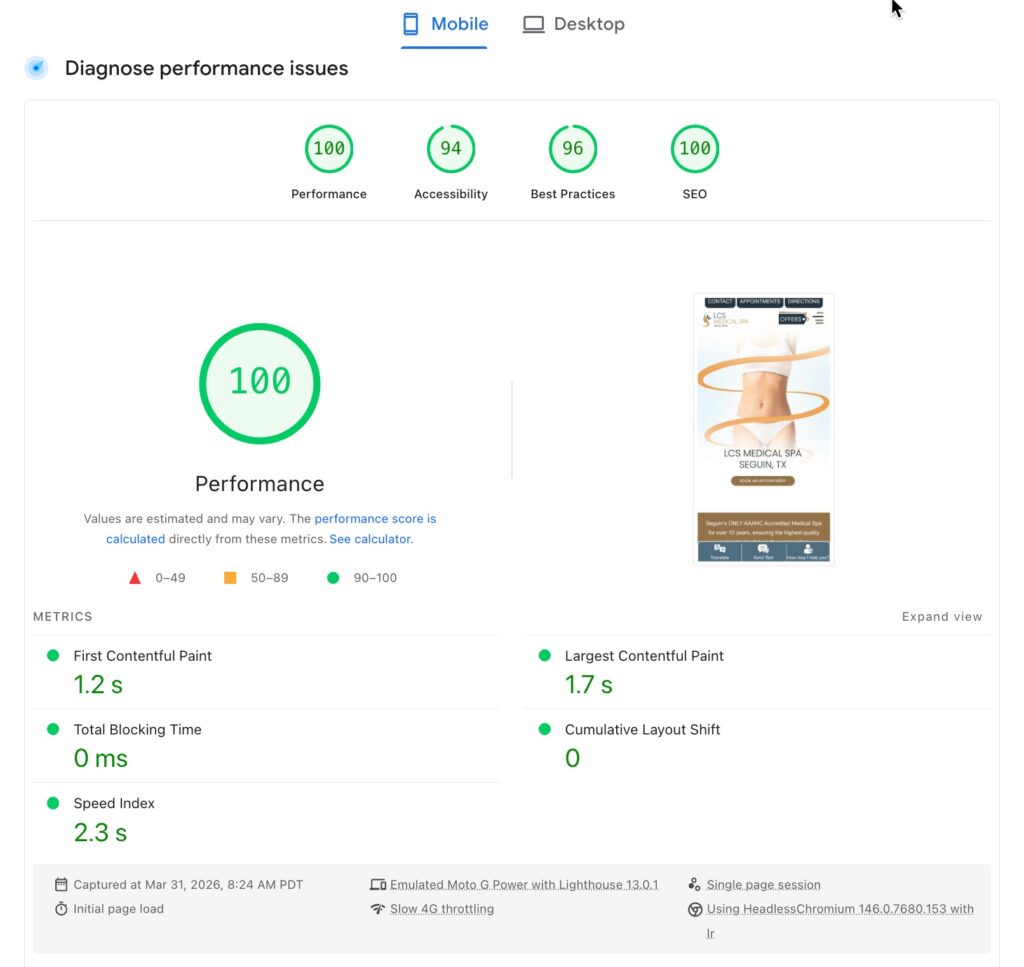
Example of a beautiful website but loads fast on mobile device: This healthcare website is using PatientGain’s PLATINUM Plus service. From the Google’s data, this site loads in 2.0 seconds on mobile devices.
PatientGain Fast WordPress Hosting is built specifically for healthcare providers to ensure lightning-fast, mobile-optimized sites while maintaining strict regulatory standards. Clinics use it to convert more web traffic into booked appointments without compromising security.
Key benefits of using PatientGain for your healthcare website include:
- Built-In HIPAA Compliance: Standard WordPress is not HIPAA-compliant by default. PatientGain ensures safety by storing no Protected Health Information (PHI) in the standard site database; all sensitive data is securely routed through AWS or Google Cloud with a signed Business Associate Agreement (BAA).
- Superior Speed & Performance: Utilizing modern, compute-intensive cloud infrastructure, these sites load fast on mobile devices. Because the average patient attention span is short, fast loading times are vital for reducing bounce rates and increasing appointment conversions.
- Healthcare-Specific Apps: The hosting serves as an ecosystem that bundles over 20 built-in, conversion-focused tools, including automated chatbots, secure two-way texting, lead funnels, and reputation management.
- Vendor Consolidation: By combining hosting, CRM, SEO, and engagement tools into one managed platform, clinics save the hassle and expense of managing multiple third-party vendors.
Common question from practice managers and practice owners: How can PatientGain.com’s PLATINUM service?
PatientGain.com’s PLATINUM service replaces 5 to 8 disconnected vendors by consolidating over 20 integrated marketing applications into a single, HIPAA-compliant platform. Instead of managing separate contracts for web developers, SEO agencies, Advertising companies, HIPAA compliance experts, Email marketing apps, Texting apps, CRM providers, and communication tools, practices use one unified “digital clinic” designed for patient conversion.
Core Consolidation Features
The PLATINUM service bundles functions that typically require multiple providers:
- Healthcare Website Development and Management: Includes design and build of medical, mental health, dental websites.
- Website & Hosting: Includes a fast, mobile-optimized, A/B-tested website hosted on extremely fast C4D Google Cloud. Google Cloud Platform (GCP) Compute-Optimized C4D servers for hosting healthcare WordPress websites. These servers are powered by 4th Generation AMD EPYC™ processors, providing improved performance, lower latency, and faster load times required for medical marketing websites and embedded applications.
- Centralized Communication (SPOC App): Replaces separate texting, Voice AI, Emailing clinic, and call-tracking vendors by funneling all phone calls, texts, ChatBots, Checking insurance coverage, Requesting prescription re-fill, Voice AI, web forms, and website inquiries into a single “unified inbox” dashboard.
- HIPAA-Compliant Leads Funnel and CRM: Replaces third-party CRMs with a built-in system that captures and tracks 100% of leads from phone calls, texts, ChatBots, Checking insurance coverage, Requesting prescription re-fill, Voice AI, web forms, and website.
- SEO & Content Marketing: Replaces manual SEO agencies with a “reverse search engine” strategy that automatically adds fresh, condition-focused content every month. The content goes through proven 6 step process 1)Reverse Search Engine feeds the SEO engine 2) SEO Engine creates the first AI Based draft 3) Human corrects it 4) Plagiarism checker gives it a score 5) Human project manager (has to be a native English speaker), finally checks it 6) Content added and customer is informed.
- Social Media Automation: Replaces social media managers by automatically creating and posting up to 20 updates per month to Google, Facebook, and Instagram.
- Patient Engagement Apps and Work Flows: Includes built-in AI chatbots, online appointment scheduling, digital intake forms, and automated email marketing.
Operational & Financial Impact
| Metric | Impact of PLATINUM Service |
|---|---|
| Vendor Management | Reduces 5–8 separate vendors down to 1. |
| Annual Savings | Estimated $18,000/year in software fees and administrative opportunity costs. |
| Staff Efficiency | Saves an average of 32 hours of staff time per month by automating repetitive tasks. |
| Conversion Rate | PLATINUM websites typically achieve 10%–15%+ conversion, versus 2%–4% for standard custom builds. |
| Risk Mitigation | Eliminates “HIPAA Leakage” caused by data transfers between disconnected, non-compliant third-party tools. |
Specialized Support
Unlike “do-it-yourself” platforms, the PLATINUM service is a managed model. Every practice is assigned a dedicated Project Manager and Technical Lead. This team manages the technology on the practice’s behalf, ensuring that the AI agents, advertising campaigns, and SEO strategies are optimized without requiring the practice owner to be a marketing expert.
 Send Text
 How may I help you?