

HIPAA Compliant PatientReel is a Patient Video Testimonial App from PatientGain
New Customer Pricing $499/mon – Existing Customers $200/mon add-on to PLATINUM service
A patient video testimonial app, like PatientReel app, is a specialized AI app designed to help healthcare practices securely collect, edit, and publish video reviews from satisfied patients, with HIPAA compliance and a BAA . Instead of hiring an expensive camera crew or forcing patients to navigate confusing file-sharing links, these apps streamline the entire process through smartphones, desktops or tablets. This app strictly enforces that testimonials are from real human patients, and no AI generated videos are allowed.
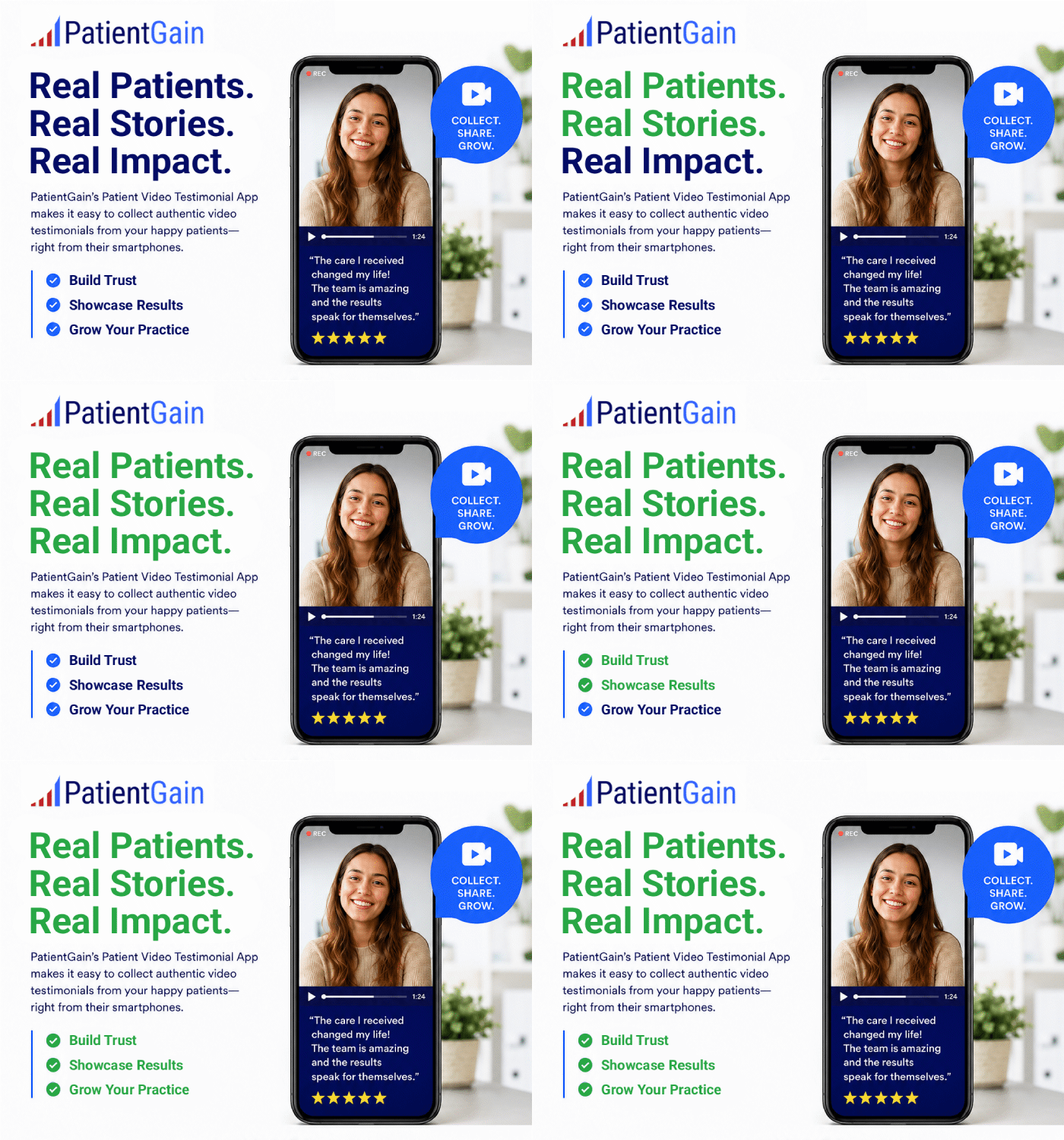
Because medical and dental marketing must abide by strict privacy laws, these apps handle everything from recording to legal clearance in one automated workflow.
How does this app work?
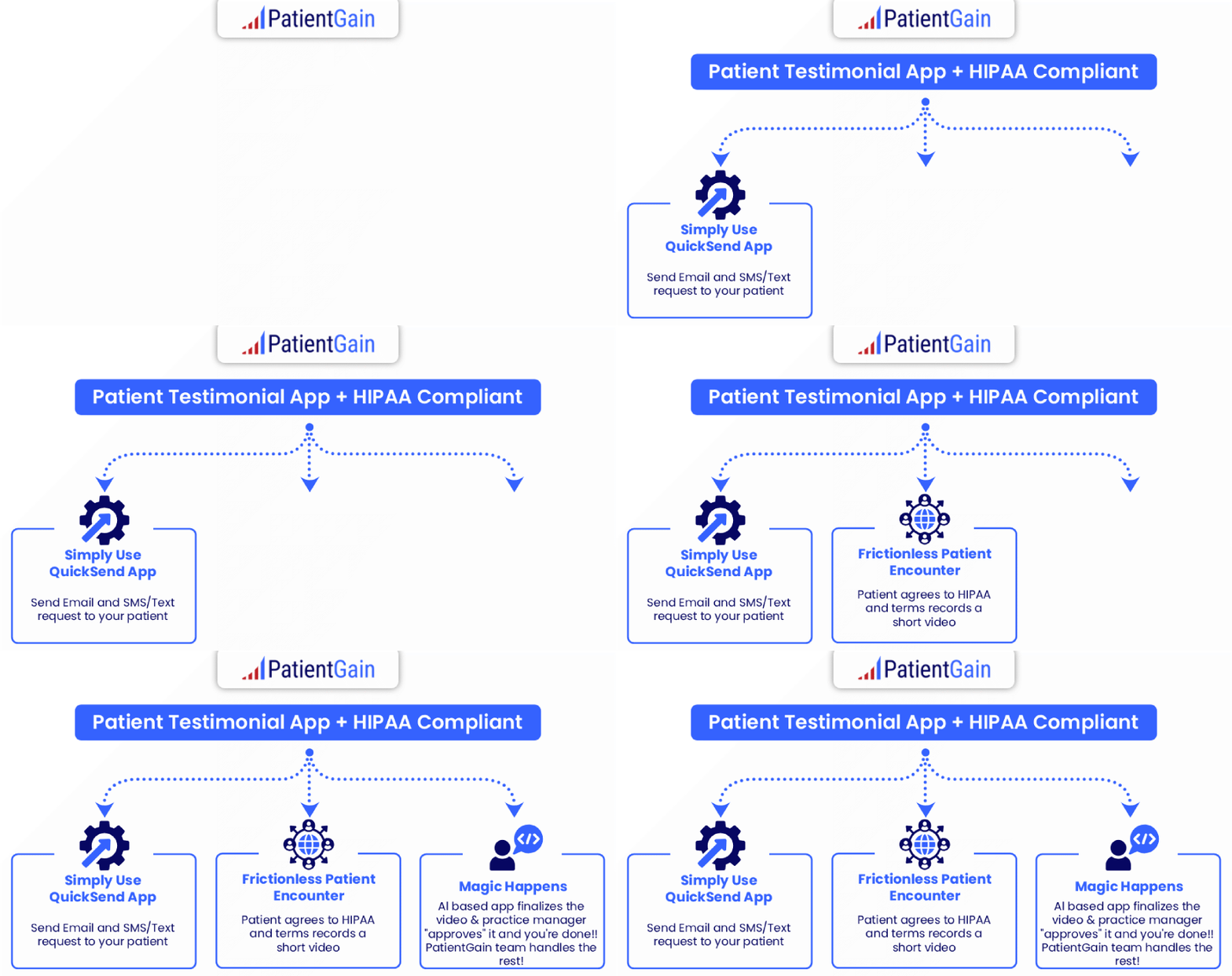
Step 1 – Login to your QuickSend App (PatientGain provides this app)
Step 2 – Select the patient (From the Leads Funnel- CRM)
Step 3 – Click on Send – “Ask for patient video testimonial” All this is setup for you. PatientGain sets up the entire app, HIPAA settings, and guides you on how to get the most from this service.
Your are done. You will start getting alerts as video testimonials are provided.
You have 2 options – Approve the testimonials or turn on “auto-approval”
PatientGain’s HITL agent takes care of the details with the help of your assigned project manager from PatientGain. Basically you have to identify which patients are likely to provide you with a video testimonial. Every happy patient is not going to provide you with a video testimonial, it is expected.
Patient testimonials can be posted on the website, social media and GBP. PatientGain team takes care of this.
Contact PatientGain for a demo.
Is PatientReel a HIPAA Compliant Video Recording App?
Yes, PatientReel is a HIPAA-compliant app designed specifically for healthcare marketing and patient video testimonials. It protects patient privacy through data encryption and a signed Business Associate Agreement (BAA).
HIPAA Compliance Features
PatientReel safeguards Protected Health Information (PHI) through several built-in mechanisms:
- Signed BAA: PatientGain issues a Business Associate Agreement to legal entities using the software.
- Data Encryption: All recorded video footage and data are encrypted during transit and storage.
- Consent Management: The system automatically captures and logs digital media releases and marketing consent before any patient footage can be published.
- Secure Portal: Patients upload their testimonials through a secure, restricted portal rather than using unencrypted file-sharing links.
- Staff Approval Dashboard: Healthcare staff must review and approve videos to ensure no accidental PHI is disclosed before publishing.
How the Recording Process Works
The app is engineered to remove the friction of gathering video reviews while ensuring legal and medical privacy laws are met:
- The Request: The practice triggers a text or email invite through the system.
- The Capture: The patient clicks the link and records their 30-to-60-second video on their smartphone or web camera.
- The Approval: The video routes directly to the Single Point of Conversion (SPOC) dashboard for provider review.
- The Syndication: Approved videos can be embedded onto your site or pushed to social channels like Google, Instagram, and Facebook.
If you plan to use this for your practice, make sure you explicitly request the signed Business Associate Agreement (BAA) from PatientGain during your onboarding process to ensure full regulatory compliance.
How Patient Video Testimonial Apps Work
- The Request: The practice sends a personalized link to a patient via text or email. Often triggered automatically after a successful procedure, or by selection as every patient is not a good target for a testimonial video. In fact even if you remind 100 patients, only 11 will provide testimonial videos. This is normal.
- Frictionless Recording: The patient clicks the link on their phone or desktop or tablet. Without needing to download a separate app or create an account, they answer a few guided on-screen prompts (e.g., “What problem were you facing before visiting our clinic?”).
- Legal Compliance and Consent: Before submitting the video, the app requires the patient to digitally sign a built-in legal release form. This provides documented permission to use their media for marketing.
- Automated Editing & Publishing: The app automatically adds your practice’s logo, stitches the clips together, adds subtitles, and uploads it to your dashboard. From there, you can push it straight to social media or embed a “Wall of Love” gallery directly onto your website.
- PatientGain provides this app standalone.
Compare the PatientGain video testimonial automated workflow against manual collection methods. Analyze the differences in time-to-publish, potential HIPAA-compliance pitfalls
Comparing the HIPAA Compliant PatientGain Video Testimonial AI Agent Automated Workflow Against Manual Collection Methods. Time-to-publish, HIPAA-Compliance Pitfalls. Collecting patient video testimonials in healthcare is notoriously difficult. While video is arguably the most powerful tool for building trust and driving conversions, the friction of manually recording patients—combined with the severe legal risks of HIPAA—causes most practices to abandon the effort entirely.
The PatientGain Video Testimonial App shifts this process from a manual, high-risk chore to an automated, “walled garden” workflow. Here is a direct comparison of the two methods across speed, compliance, and marketing ROI.
1. Time-to-Publish: Friction vs. Automation
In marketing, friction kills volume. The traditional manual method is so labor-intensive that most clinics collect only a handful of videos per year. PatientGain automates the bottlenecks.
| Metric | Manual Collection Method | PatientGain Automated Workflow |
| The Ask | Staff asks patient in person, hands them a physical clipboard to sign. | Triggered automatically post-visit, or sent via a text/email link in 3 clicks from the QuickSend App. |
| The Recording | Filmed on a clinic iPad or a staff member’s personal smartphone. | Patient clicks the link and records on a browser, and video file is saved securely on HIPAA Compliant GCP Cloud Servers or HIPAA Compliant AWS Cloud Servers. (no app download needed). |
| Post-Production | Raw video is manually downloaded, sent to a freelance editor for branding/subtitles, and sent back. | AI Agent automatically stitches clips, adds your clinic’s logo, and generates subtitles. |
| Publishing | Marketing manager manually uploads the video to YouTube, Instagram, and the website. | Video enters the dashboard for 1-click approval (or auto-approval) and pushes directly the website using HIPAA Compliant iFrame app. |
| Time-to-Publish | Weeks | Minutes to Hours |
| HIPAA Compliance | Potential leaks | Covered by BAA |
2. HIPAA Compliance: The Legal Pitfalls
This is where manual collection routinely fails. Healthcare marketing is heavily scrutinized by the FTC and the Office for Civil Rights (OCR). If a healthcare practice is using PLATINUM Service, BAA is provided for the service, apps, and website.
The Pitfalls of Manual Collection:
- Invalid Consent Forms: A standard, generic “photo release” PDF or paper form is legally insufficient in healthcare. HIPAA requires explicit, granular consent detailing exactly how the patient’s story will be used.
- The “iCloud” Data Breach: If a staff member films a patient on their personal phone or an unmanaged clinic iPad, that video (which is Protected Health Information, or PHI) often auto-syncs to consumer cloud services like Apple iCloud or Google Photos. This is a massive, reportable HIPAA violation.
- Revocation Nightmares: HIPAA grants patients the right to revoke their consent at any time. If a patient calls a year later asking to be removed from your marketing, manually hunting down their paper consent form and scrubbing their video from the internet is a logistical nightmare.
How PatientGain Mitigates the Risk: BAA provided by PatientGain
- The Digital Gatekeeper: The PatientGain workflow forces the patient to sign a highly specific, OCR-compliant digital release form before the camera even turns on.
- Tamper-Proof Audit Trails: Every signature logs the patient’s IP address, device info, and an exact timestamp, instantly routing it to a secure CRM. If you are ever audited, you have a flawless paper trail.
- Walled Garden Storage: Because the patient records through a secure web link, the video file is encrypted in transit and at rest. It never touches a staff member’s personal camera roll or consumer cloud storage.
- Instant Revocation: The app features patient privacy opt-out management. If a patient revokes consent, the system logs it and alerts the clinic to immediately pull the asset.
3. Impact on Clinic Marketing ROI
Even with an automated system, data shows that every patient asked for a video testimonial, not provide a video testimonial. Because the yield is naturally low, volume is everything. If you rely on manual collection, the actual conversion rate means you will virtually never build a strong video library.
By removing the friction of paper forms and in-clinic filming, PatientGain allows you to systemize “the ask” via text message and Email with personal message, asking for permission first, then AI automation guides the patient. This scale allows a practice to rapidly build a “Wall of Love” on their website. From an ROI perspective, authentic patient video is the ultimate form of social proof—it drastically lowers patient anxiety, increases trust, and mathematically drives higher conversion rates from your paid ads and organic search traffic.
 Send Text
 How may I help you?