

Affordable Healthcare Website Firms with HIPAA and BAA
If you have healthcare practice, medical, dental of any of these 42 different type of practices, you are subject to HIPAA and protecting PHI and making sure that you have BAA in place with the service providers.
What Happens Without a BAA?
Without a signed Business Associate Agreement (BAA), the technical security of a vendor’s software does not matter. Even if a platform uses military-grade encryption, the absence of a signed BAA means your healthcare practice is in immediate, direct violation of federal HIPAA law. The Office for Civil Rights (OCR) treats operating without a BAA as an automatic compliance failure, which triggers severe legal, financial, and reputational consequences.
1. Automatic Legal Liability (Willful Neglect)
Federal regulators do not need to prove that a hacker stole patient records to fine you. The mere act of transmitting Protected Health Information (PHI) through a third-party vendor without a BAA in place is considered “willful neglect” under HIPAA. The law places the ultimate burden of compliance on the healthcare provider, not the software company.
2. Mandatory Federal Listing
If patient data is exposed through an uncontracted vendor, you are legally required to report the breach to the Department of Health and Human Services (HHS). If the breach affects 500 or more individuals, your practice is publicly listed on the HHS “Wall of Shame” (the federal breach portal), which remains searchable by the public indefinitely.
3. Crippling Financial Penalties
HIPAA tier-based penalty structures are adjusted annually for inflation. For violations rooted in willful neglect where the practice failed to correct the issue, the consequences include:
- Minimum penalties starting at thousands of dollars per day, per violation.
- Maximum statutory caps reaching over $2 million per calendar year for identical violations.
- For a multi-location practice, these fines compound exponentially if non-compliant forms or tracking scripts have been running across multiple site domains for months or years.
4. Severe Reputational & Operational Damage
When an uncontracted vendor leaks data, federal law forces you to take drastic public actions:
- You must mail formal data-breach notification letters to every single affected patient across your provider network.
- You are legally required to notify prominent media outlets in your local areas about the security failure.
- The resulting loss of patient trust frequently leads to a dramatic drop in patient retention and local search rankings.
5. Multi-Million Dollar Class-Action Lawsuits
In recent years, plaintiff attorneys have filed massive class-action lawsuits against healthcare groups utilizing standard tracking tools (like standard Google Analytics or the Meta/Facebook Pixel) without a BAA. These civil privacy lawsuits often result in multi-million dollar settlements completely separate from federal HIPAA fines.
Does my healthcare website needs to look attractive, pretty and represent my brand?
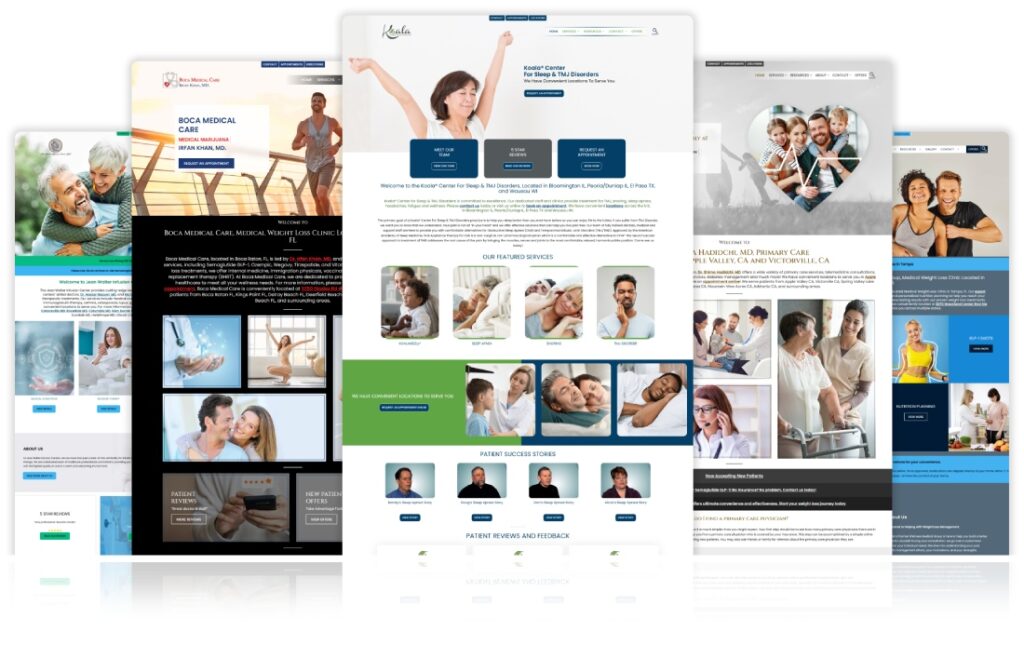
Yes, your healthcare website must look professional, represent your brand, and be visually clean. However, in the healthcare industry, “attractive” means something very different than it does for a fashion or lifestyle brand. For a medical website, visual appeal is directly tied to trust, accessibility, and credibility.
1. First Impressions Build Trust
Patients are often stressed, anxious, or looking for urgent answers when they visit your site.
- Credibility: A outdated or messy website makes your practice look unprofessional or poorly managed.
- Calming Aesthetics: Clean layouts, professional photography, and soothing color palettes (like blues, greens, and neutrals) help lower patient anxiety.
2. Branding Reflects Your Care Style
Your brand is not just a logo; it is the personality of your practice.
- Consistency: Your website should match the physical environment of your clinic. If your clinic is modern and high-tech, your website should feel the same.
- Target Audience: A pediatrician’s website should look warm and family-friendly, while a high-end cosmetic surgery clinic might focus on sleek, minimalist luxury.
3. “Pretty” Must Equal Functional (UX)
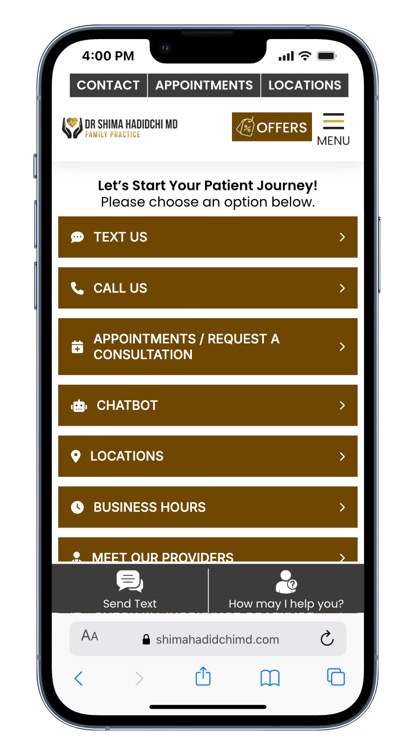
An attractive website is useless if a patient cannot easily contact you – it means 1) Contact You 2) Directions 3) Appointments

- Accessibility (ADA Compliance): Fonts must be large enough to read, and colors must have high contrast so visually impaired or elderly patients can navigate easily.
- Mobile Website Speed: Many patients will not wait more than 4 seconds if you healthcare website loads in more than 4 seconds. Ideally it should be 1.5 to 2.5 seconds.
- Mobile Optimization: Many patients look for doctors on their smartphones. If the mobile site looks broken, they will leave.
- Clear Navigation: The layout must guide users seamlessly to patient portals, services, location details, and contact forms.
Example Use Case – Single location primary care with some walk-in-medicals services (Like urgent care)
Question – We have small single location medical practice – primary care and urgent care service. The website was built by a freelancer on free wordpress. There are contact forms that send us an Email for new leads. We run my own PPC Max ads on Google, and some times run promotions on Meta. We also track website stats on Google analytics. We use mailchimp email marketing, and an SEO person from India (Manages website, SEO, plugins, forms), what is the issue with this setup?
This setup contains multiple critical HIPAA and Business Associate Agreement (BAA) violations across your web host, lead collection, marketing tools, and vendor access. Transmitting or storing prospective patient data across these unencrypted services exposes your practice to severe regulatory liability and enforcement penalties. The issue is not that you are a small practice or that you built things inexpensively; the problem is that patient/lead information may pass through several vendors that either do not offer a BAA, should not receive PHI, or have not been configured for healthcare use.
A BAA also does not magically make an entire marketing stack HIPAA compliant. You have to look at the actual data flow: Patient → website → form → hosting/plugin → email → analytics/ad trackers → marketing platform → outside contractors. HHS says that when an outside service creates, receives, maintains, or transmits PHI on behalf of a covered entity, a business-associate relationship and appropriate BAA are generally required.
| Your setup | Risk | Main issue |
|---|---|---|
| Free WordPress website | 🔴 High/depends | Hosting (GoDaddy), plugins, backups and forms may touch PHI without BAAs |
| Website contact forms → email | 🔴 High | Patient inquiries can contain PHI and may pass through several vendors |
| Google Analytics | 🔴 High | Google does not offer a BAA for Google Analytics |
| Google Performance Max | 🟠 Medium–High | Ads are possible, but conversion/remarketing/customer data can create PHI disclosure issues |
| Meta promotions | 🔴 High if Pixel/CAPI used | Health-related visitor/event information should not be sent to Meta |
| Mailchimp | 🔴 High for patient lists | Patient/lead lists can themselves reveal a healthcare relationship |
| Freelancer | 🟠 Depends | BAA/access controls needed if the freelancer can access PHI – Every person who works for you as a vendor (And potentially has access to PHI) must have a BAA signed with your practice. |
| SEO person overseas | 🟠 Depends | Location isn’t the core problem; access to PHI, forms, analytics, accounts or databases is. If there is a breach, enforcing BAA on a foreign national or company is very risky. If they have access to the site, analytics, email accounts, or admin panels, they may be handling PHI. You need role based access and a formal BAA contract if they can see PHI. An you should have a audit-trail. |
1. Contact Forms and Unsecure Email
- The Issue: When prospective patients submit lead forms (name, phone number, care needs, or appointment requests), that data becomes electronic Protected Health Information (ePHI).
- The Violation: Standard contact forms on free WordPress sites typically store form entries in plain text on the database and send notifications via standard, unencrypted email (SMTP), violating the HIPAA Security Rule.
2. Google Analytics and Meta Ad Pixels
- The Issue: Meta Pixels and Google Analytics (GA4) run scripts that track visitor IP addresses, device IDs, and page paths (e.g., landing on an urgent care or primary care request page).
- The Violation: Department of Health and Human Services (HHS) guidance explicitly prohibits transmitting user-identifiable data from healthcare sites to third parties without a signed BAA. Neither Google (for GA4) nor Meta will sign a BAA for their tracking tools.
3. Mailchimp Marketing
- The Issue: Importing lead contact lists or patient emails into Mailchimp for promotional campaigns.
- The Violation: Mailchimp’s terms strictly prohibit handling PHI, and the company does not sign BAAs. Associating an individual’s name/email with a specific medical practice’s promotional list constitutes ePHI.
4. Freelancer and Offshore SEO Access
- The Issue: Granting backend website or database access to external contractors (your freelance developer and SEO specialist in India).
- The Violation: Any contractor who has access to systems containing or processing ePHI qualifies as a Business Associate under HIPAA. You are legally required to have a signed BAA with them before granting access. Furthermore, enforcing U.S. BAA contracts with offshore individuals in non-US jurisdictions adds significant compliance risk.
5. WordPress Hosting
- The Issue: Hosting a medical site on WordPress infrastructure like GoDaddy is not secure.
- The Violation: WordPress infrastructure like GoDaddy hosting platforms do not offer BAAs, lack mandated administrative audit logs, and fail to provide HIPAA-grade server security safeguards.
Example Use Case – 6 location wellness and med spa services services (Includes botox, medical weight loss, hormone therapy, Ketamine therapy)
Question – We have 6 location medical practice – wellness and medusa services service (Includes botox, medical weight loss, hormone therapy, Ketamine therapy). The website was built using extremely beautiful software, we paid $11000 for the website. There is contest app that allows patient to “spin a wheel” and we collect contact forms that send us an Email for new leads. We have an agency that run our Google PPC ads and Meta ads. We have pixels and free version of Google analytics. , and sometimes run promotions on a texting platform (we do not have a BAA) . We also track website stats on Google analytics. We use mailchimp email marketing and intuit connected billing for patients. Our SEO and plugins are managed by an IT person from Ukraine (Manages website, SEO, plugins, forms), what is the issue with this setup?
Your $11,000 website may look stunning, but the underlying tech stack is a minefield of critical HIPAA violations, TCPA liability, and security risks that expose your 6-location practice to massive regulatory fines and data breaches. Because you offer specialized medical treatments like Ketamine therapy, HRT, and medical weight loss, any user interaction tied to these services constitutes Electronic Protected Health Information (ePHI).
Critical HIPAA & Legal Violations
- Google Analytics & Meta Pixels: Standard Meta Pixels and free Google Analytics (GA4) log IP addresses and tracking parameters alongside user behavior on specific medical pages. Under HHS/OCR guidance, pairing network identifiers with healthcare search intent (e.g., viewing a Ketamine or HRT page) creates ePHI. Neither Meta nor Google will sign a Business Associate Agreement (BAA) for standard tracking tools.
- Mailchimp Email Marketing: Intuit/Mailchimp explicitly refuses to sign BAAs and prohibits storing or transmitting PHI in its terms of service. Uploading leads or patient lists derived from medical service inquiries into Mailchimp is a direct HIPAA violation.
- Unsecured Texting Platform: Running SMS promotions without a signed BAA violates HIPAA privacy rules. Furthermore, texting prospective or current patients without documented, explicit opt-in consent exposes your practice to Telephone Consumer Protection Act (TCPA) penalties of $500 to $1,500 per unauthorized message.
- Intuit Patient Billing: Intuit does not execute BAAs for standard QuickBooks or Intuit Billing products. Invoicing patients for itemized medical treatments through standard Intuit software exposes identifiable financial and health data without mandatory legal safeguards.
- Unencrypted Lead Capture (“Spin the Wheel”): Capturing contact details tied to medical discounts and emailing lead submissions via standard, unencrypted email breaches ePHI transmission rules and lacks required HIPAA audit trails.
Operational & Vendor Risks
- Offshore IT Access: Granting an overseas contractor full administrative access to your website database, plugins, and form submissions containing patient leads—without a signed BAA, strict role-based access controls, and audit logging—creates severe regulatory liability and cyber-attack vulnerability.
- Ad Account Policy Risks: Google and Meta strictly regulate advertisements for controlled substances like Ketamine. Running PPC ads for Ketamine therapy without proper ad policy approvals or LegitScript certification can result in immediate, permanent ad account suspension.
If I replace my current setup with PatientGain’s PLATINUM or GROWTH service, will this address my issues?
Switching to PatientGain’s PLATINUM solution will resolve the vast majority of your practice’s core HIPAA violations and digital security risks by consolidating your website, tracking, and marketing software under a single Business Associate Agreement (BAA). However, it does not automatically fix your patient billing or ad policy restrictions.
The largest benefit is consolidation: PatientGain says Growth can replace 5–8 marketing/technology providers under one BAA, while PLATINUM provides a similar integrated stack with website, CRM, analytics, forms, texting, SEO, email marketing and other applications.
For your six-location Botox, medical weight loss, hormone therapy and ketamine practice, I would look at it this way:
| Your current problem | With PatientGain | Result |
|---|---|---|
| Website/hosting of uncertain HIPAA status | PatientGain healthcare website + BAA-backed hosting | ✅ Addresses |
| Website forms emailing PHI | Secure forms → PatientGain CRM/SPOC | ✅ Addresses |
| Spin-the-wheel third-party app | PatientGain Promotions app or secure promotion workflow | ✅ PLATINUM explicitly offers this |
| Free Google Analytics | PatientGain HIPAA-oriented analytics | ✅ Can replace |
| Meta Pixel / Google tags | PatientGain says it uses server-side/obfuscated tracking | ✅ Major improvement |
| Separate PPC agency | PatientGain can manage Google/Meta advertising | ✅ Can consolidate |
| Text platform with no BAA | PatientGain 2-way SMS under its integrated environment | ✅ Addresses |
| Mailchimp | PatientGain email marketing + CRM | ✅ Can replace |
| Separate SEO person | PatientGain manages SEO/content | ✅ Can replace |
| Website plugins | PatientGain integrated applications | ✅ Greatly reduces plugin dependency |
| Lead databases scattered everywhere | Central HIPAA CRM / SPOC | ✅ Major improvement |
| Six different locations | Multi-location dashboard/access controls | ✅ Designed for this |
| Intuit/QuickBooks billing | Not automatically fixed merely by adopting PatientGain | ⚠️ Separate decision |
| EHR | Remains your EHR | ⚠️ Separate BAA |
| Staff HIPAA procedures | Still your responsibility | ⚠️ Not replaced |
What does VaultDocSites include for HIPAA Compliance?
VaultDocSites from PatientGain includes a comprehensive Business Associate Agreement (BAA), enterprise-grade infrastructure security hosted on platforms like Google Cloud Platform (GCP) or AWS, and a secure, HIPAA-compliant dashboard for front desk staff to manage patient inquiries safely.
Key Features Included for HIPAA Compliance
- Comprehensive Business Associate Agreement (BAA): Formal legal documentation provided by PatientGain to ensure shared regulatory responsibility under HIPAA guidelines for handling protected health information (PHI).
- Enterprise-Grade Infrastructure: Secure hosting built on high-performance cloud networks (such as GCP compute-optimized servers or AWS) designed to isolate and protect patient data.
- HIPAA-Compliant Front Desk Dashboard: A secure administrative portal allowing clinic staff and front desk teams to review, track, and manage patient inquiries and leads without exposing data.
- Integrated Security Protocols: Built with standard technical safeguards—including HTTPS encryption and secure data pathways—to prevent unauthorized intercept of electronic protected health information (ePHI).
What is RBAC Access as used in VaultDocSites?
In VaultDocSites™ from PatientGain, Role-Based Access Control (RBAC) is a built-in security feature that restricts dashboard and data access based strictly on an employee’s specific job role. Because VaultDocSites are secure, HIPAA-compliant medical website platforms designed to handle sensitive patient intake and lead data, RBAC ensures that staff members only see the electronic Protected Health Information (ePHI) necessary to perform their immediate tasks.
How RBAC Works within PatientGain’s VaultDocSites
- Job-Specific Access: Instead of giving every staff member master administrator rights, administrators assign predefined roles (such as “Administrator” or “Operator”) to individual unique user accounts. Generic shared accounts (like
frontdesk@clinic.com) are banned to maintain security. - App-Level Restrictions: Access is segmented by application. For instance, a front-desk staff member assigned as an “Operator” may only have permission to view the Appointments app to manage patient scheduling. They are automatically blocked from seeing broader financial data or marketing campaign analytics.
- Data Obfuscation Integration: To add a layer of protection beyond standard encryption, PatientGain combines its RBAC rules with data obfuscation. This masks sensitive patient records and user activity from unauthorized dashboard viewers.
- Tamper-Proof Audit Logging: Every time a user logs in, views, or modifies a patient record, the system logs the action alongside their specific role and timestamp. Because RBAC forces unique logins, clinic owners have a reliable, audit-ready trail required to satisfy strict HIPAA compliance evaluations.
 Send Text
 How may I help you?