

The Best Reputation For Doctors & Dentists in Not 5.0 on Google
Excellent online rating (ideally 4.5 to 4.9 stars), built on a high volume of positive reviews across platforms like Google, Healthgrades, and Yelp, combined with active engagement by responding professionally to feedback. Patients heavily filter for 4 stars or higher, so aiming for the top end of the scale with numerous reviews demonstrates trust and significantly influences new patient decisions, making it the benchmark for top-tier medical reputation management. However, if you have 5.0 rankings and lets say 200+ reviews, patients do not believe it. So if you have dental or a medical practice with less than 5.0, but greater than 4.5 rankings on Google, you are doing just fine.
Which website is most important for medical or dental practices for 5.0 reviews?
The most important website for your medical or dental practice is Google reviews, GBP (Google Business Profile)
All others are secondary for reputation management. So PatientGain highly recommends that any medical or dental practice should always focus on Google reviews, GBP (Google Business Profile) first. Get to minimum of 100+ reviews and ratings of anywhere from 4.5 to 4.9.
Why patients do not believe reputation management score of 5.0 for doctors
Patients often express skepticism towards a 5.0 reputation management score for doctors for several key reasons, primarily centering on the perception that a flawless rating is indicative of a manipulated or incomplete review system rather than an accurate reflection of a doctor’s true performance.
Common factors driving this disbelief include:
- Perfection is Unrealistic The general consensus among patients is that no doctor, or human service provider, is perfect all the time. Healthcare experiences are inherently complex and can involve miscommunications, long wait times, or differing opinions on treatment plans, even when the clinical care is excellent. A 5.0 suggests an absence of any negative or even neutral experiences, which feels improbable.
- Suspicion of Censorship Patients often suspect that a perfect score means negative reviews have been removed, filtered, or hidden by the provider or the review platform itself. This manipulation undermines trust in the authenticity and transparency of the ratings system.
- Incentivized Reviews There is a concern that only the most satisfied patients (often those who had a very quick or minor issue resolved) are encouraged to leave a review, or that patients have been explicitly incentivized (e.g., offered gift cards or discounts) to leave a positive rating. This practice creates a skewed and unrepresentative sample of all patient experiences.
- Lack of Credible Volume A 5.0 score with only a handful of reviews is not considered statistically significant or credible. Patients put more stock in an average rating (like a 4.5 or 4.7) derived from hundreds of diverse, detailed reviews, which better reflects a typical patient population, basically 4.5 to 4.9 is the best ranking.
- Absence of Constructive Feedback A flawless score lacks the presence of constructive criticism. Patients value seeing minor complaints (e.g., “wait times are long,” “receptionist was a bit curt”) because it provides a more balanced and realistic picture of what to expect, and demonstrates that the doctor is willing to display and potentially address minor shortcomings.
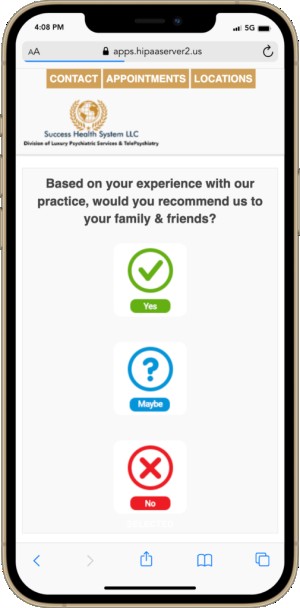
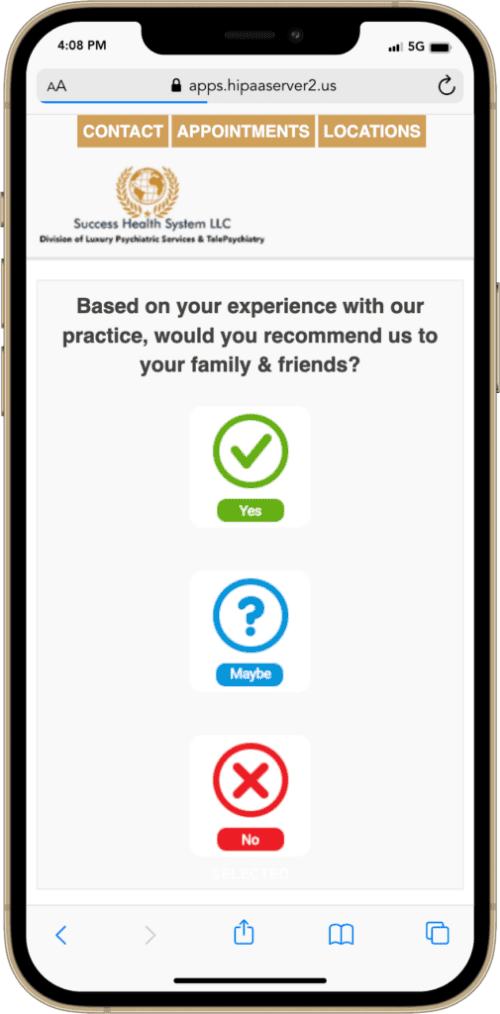
- Review Gating Some sophisticated “reputation management” tactics involve directing patients who report a positive experience to public review sites, while directing those with a negative experience to a private feedback form. Patients are increasingly aware of these practices and view the resulting perfect scores as disingenuous.
Ultimately, patients perceive a slightly lower score with a higher volume of authentic, varied reviews as more reliable, trustworthy, and human, which makes them feel more confident in their choice of physician. Extensive patient research and healthcare-specific studies from multiple companies, including PatientGain, support the “too good to be true” skepticism regarding perfect 5.0 scores.
1. The “Trust Zone” Data (4.2 – 4.9 Stars)
Research conducted by Northwestern University’s Spiegel Research Center and PowerReviews consistently shows that purchase likelihood does not peak at a perfect 5.0.
- Peak Conversion: Consumer trust and the probability of “buying” (choosing a doctor) actually peak when a rating is between 4.5 and 4.9 stars.
- Still Very Good: Rating between 4.1 and 4.5, are still very good.
- Not So Good: Below 4.0 is not considered good by patients. Patients are likely to skip pass your practice.
2. High Skepticism Toward “Flawless” Profiles – The 5.0 “too good to be true”
Data from multiple companies highlights that a lack of negative feedback is a major red flag for modern patients:
- 95% of consumers suspect censored or fake reviews if they do not see any negative comments at all.
- 68% of consumers will not believe reviews are legitimate without some level of critical feedback.
- 82% of shoppers specifically seek out negative reviews to establish the credibility of the positive ones.
3. Review Volume vs. Score
A perfect score is often viewed as a statistical anomaly or “managed” if it is not backed by a large volume of reviews:
- 46% of consumers stated that a small handful of 5-star ratings is not enough to convince them.
- Specialist Bias: Studies in the Journal of Medical Internet Research found that nearly 90% of physicians in certain specialties are rated above 4 stars, making a 5.0 feel even suspicious rather than elite.
- Detection of Management: Research indicates that doctors with an unusually high number of reviews (e.g., 100+) and a near-perfect score are often flagged by patients as using aggressive reputation management services rather than providing authentic care.
4. Impact of AI and “Fake” Reviews
Patients are increasingly wary of artificial influence:
- 30% of online reviews are estimated to be fake, leading to heightened scrutiny of perfect profiles.
- 62% of consumers are concerned that AI is being used to impersonate patients and leave fabricated 5-star reviews
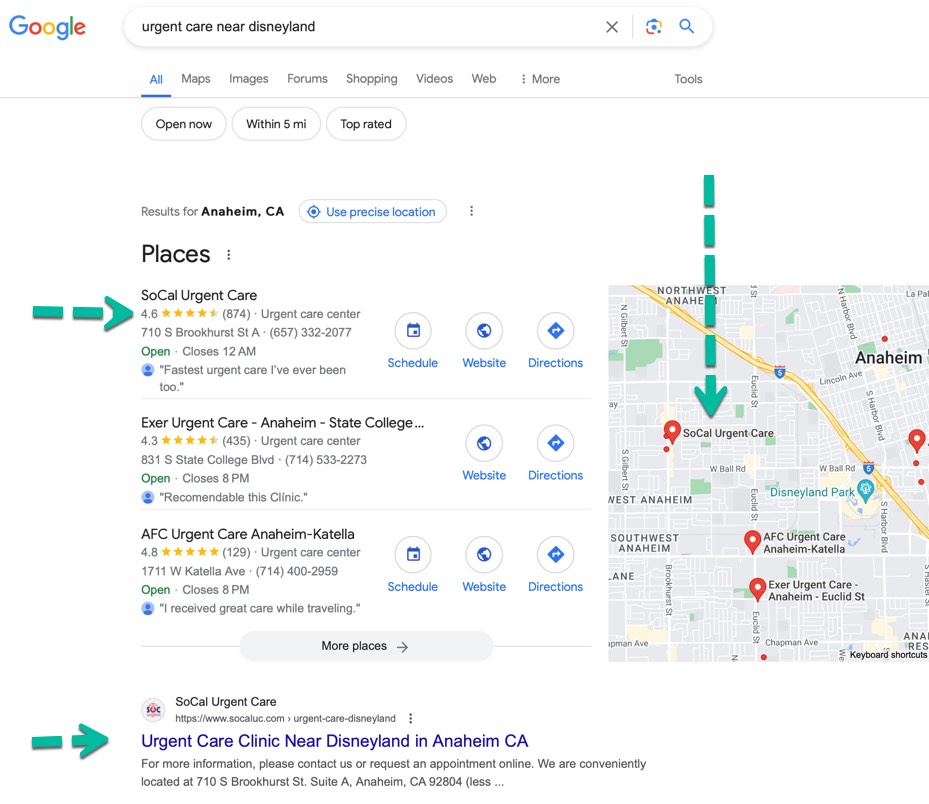
Example of a good reputation management – Using PatientGain’s App. You will see that the first listing on Google My Business reviews has 4.6 reviews and 874 total reviews.
 Send Text
 How may I help you?