

Why Is Location Convenience a Major Factor For Patients?
Location convenience is a major factor for patients because it directly affects accessibility, time, and willingness to seek care. For healthcare practices, especially urgent care clinics, dental offices, MedSpas, and primary care practices, being nearby can significantly influence patient decisions.
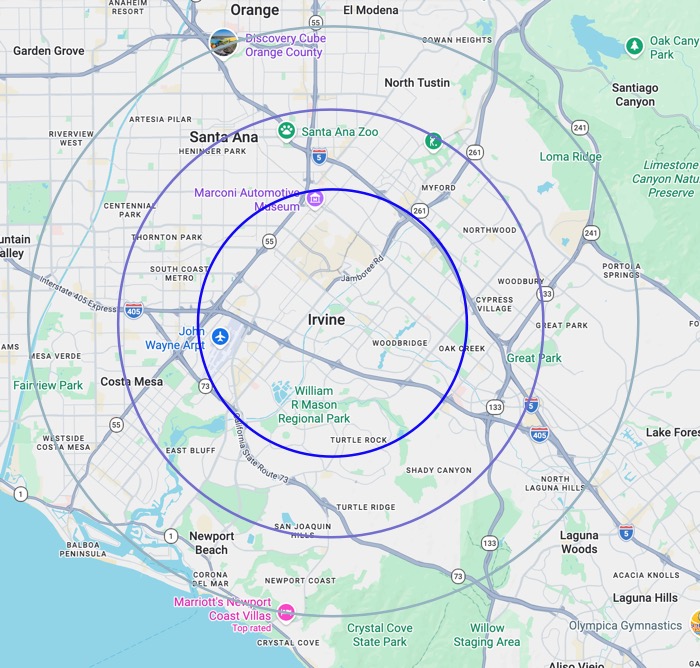
1. Reduced Travel Stress and Friction
Long commutes create immediate barriers to care. Patients frequently experience anxiety regarding traffic, parking availability, and navigation. Proximity minimizes these hurdles, making it psychologically easier to attend appointments regularly.
2. Time Poverty and Modern Schedules
Most patients balance work, family, and personal commitments. A medical appointment further away requires taking half-days or full days off work. Local clinics allow patients to utilize lunch breaks or short windows before or after their shifts.
3. Financial Cost of Distance
Traveling long distances adds a direct financial burden to healthcare. Patients must calculate the costs of 1) Fuel and vehicle wear-and-tear. 2) Public transit fares or rideshare fees. 3) Hospital parking garage rates.
4. Dependency on Others for Transit
Many vulnerable patient demographics—such as the elderly, disabled, or low-income individuals—do not drive. Faraway appointments require coordinating with specialized medical transport. Alternatively, patients must rely on family members to miss work to drive them. Local care allows for walking, brief public transit trips, or easier coordination with caregivers.
5. Increased Adherence to Care Plans
When a clinic is conveniently located, patients are significantly less likely to cancel or skip appointments. This proximity directly drives: Higher compliance with chronic disease management (e.g., physical therapy, dialysis). Prompt attendance for preventive screenings. Better long-term health outcomes due to consistent monitoring.
In the example below, you will see that a patient is specifically looking for a pain management specialist in a specific location in Texas. These type searches on Google tend to have a very high conversion rates. It implies that location convenience a major factor for patients.
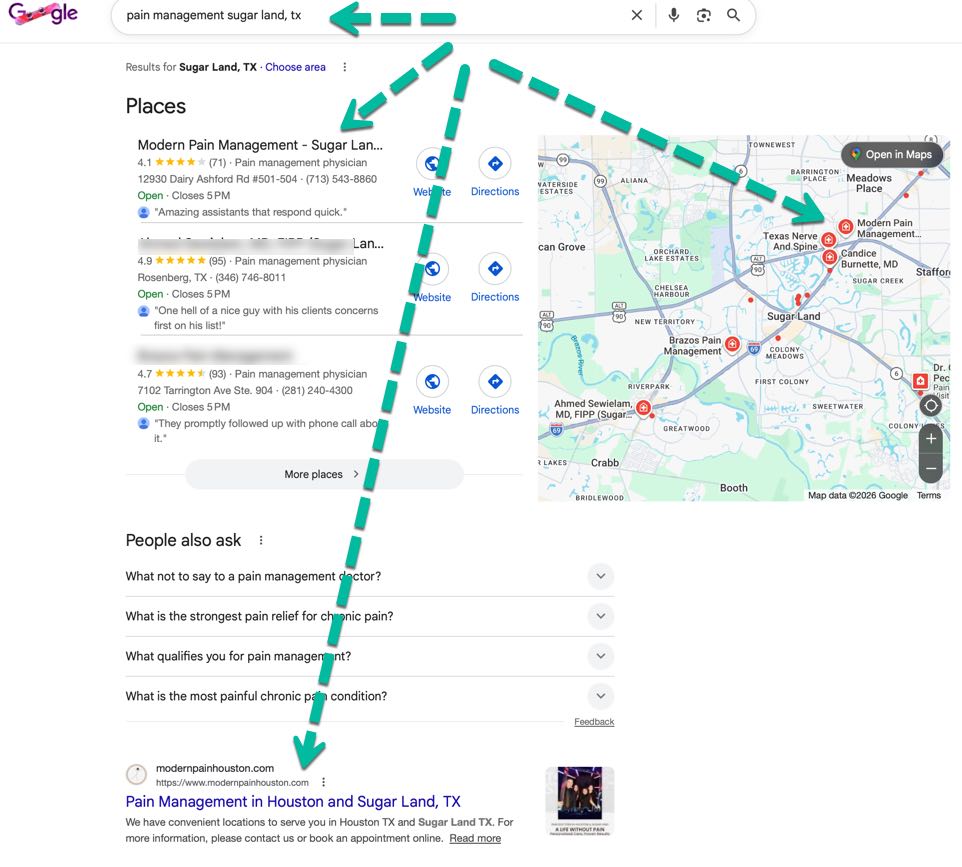
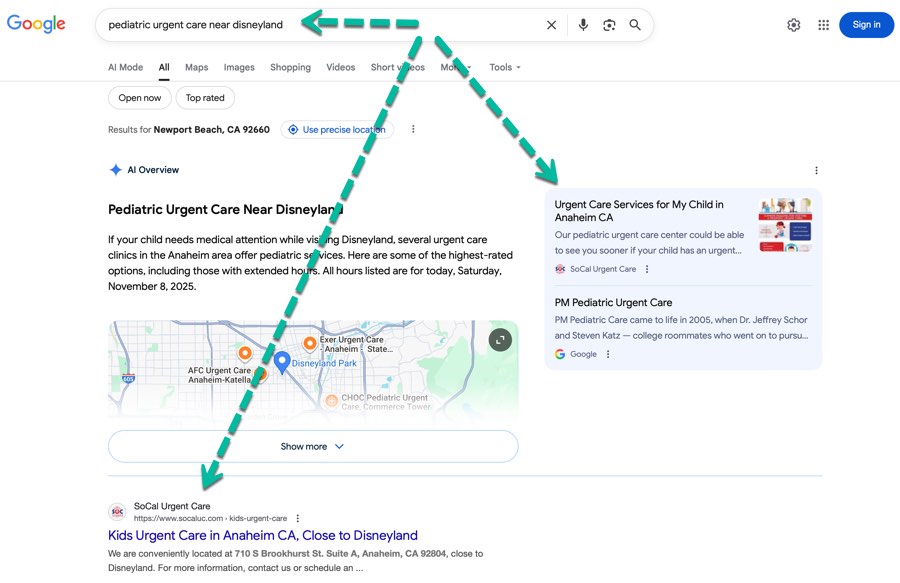
Example use case: Urgent Care location using PatientGain’s PLATINUM Service addresses these and helps your practice acquire more patients.
To understand exactly how PatientGain’s PLATINUM Service translates these abstract marketing concepts (location convenience, local SEO, and HIPAA compliance) into actual paying patients, it helps to look at a real-world scenario.
Here is a step-by-step example of how the PLATINUM system captures a patient at the exact moment of an emergency and funnels them directly into an Urgent Care clinic.
The Scenario: The Saturday Morning Crisis
The Patient: Sarah, a mother living in a highly competitive suburb. The Situation: It is 9:30 AM on a Saturday. Sarah’s 10-year-old son twists his ankle badly during a weekend soccer game. The Intent: Sarah is panicked. She is not going to spend 30 minutes researching hospital networks or reading physician bios. She pulls out her iPhone on the soccer field and uses voice search: “Urgent care near me with X-ray.”
Here is how the PLATINUM service wins that patient over the competitor down the street.
Step 1: Winning the “Proximity Search” (Local SEO & AEO)
Because of the “20-Mile Rule of Friction,” Sarah’s phone is only going to show her clinics in her immediate physical vicinity. However, there are three urgent cares within a 5-mile radius.
- The Competitor: Has a stagnant website that hasn’t been updated in months.
- The PLATINUM Clinic: Ranks #1 in the Google Local “Map Pack.” Why? Because PatientGain’s Social Auto-Pilot has been automatically publishing 20 localized, medical-specific posts to the clinic’s Google Business Profile every month. Furthermore, the human medical writers built a specific SEO page titled “Walk-in X-Rays for Sports Injuries in [City Name].”
- The Result: Google’s AI instantly recognizes the PLATINUM clinic as the most active, relevant, and authoritative choice in Sarah’s immediate location.
Step 2: The Frictionless Mobile Conversion (High-Speed UX)
Sarah clicks on the #1 result. She is on a cellular connection at a park, so speed is critical.
- The Competitor: Takes 5 seconds to load a massive background video. Sarah hits the “back” button before it even finishes loading.
- The PLATINUM Clinic: Hosted on Google Cloud C4D compute-optimized servers, the mobile site loads in under 1.5 seconds.
- The Interaction: The first thing Sarah sees is a massive, thumb-friendly button that says “Save My Spot in Line.” Next to it, the AI Medical Chatbot pops up. Sarah types, “Do you take BlueCross?” The HIPAA-compliant bot instantly replies, “Yes, we accept BlueCross! Our current wait time is 10 minutes. Would you like to register now?”
Step 3: The SPOC Dashboard (Zero Lead Leakage)
Sarah fills out the digital intake form on her phone, entering her son’s name, her phone number, and a brief description of the ankle injury.
- The Competitor: If she used their standard site, that form would go to an unencrypted email inbox that the weekend front desk staff rarely checks.
- The PLATINUM Clinic: The data completely bypasses the website and is funneled directly into the SPOC (Single Point of Conversion) dashboard.
- The Action: The front desk receptionist sees a bright notification pop up on their single, unified screen. Without leaving the dashboard, the receptionist clicks the QuickSend 2-Way Texting App and texts Sarah: “Hi Sarah, we received your registration! Our X-ray tech is ready for you. Park in the reserved spots by the front door.” ### Step 4: Legal Protection (Data Obfuscation) Unbeknownst to Sarah, she originally clicked on a localized Google Ad at the top of her search results.
- The Competitor: If she clicked their ad, their standard Meta or Google Pixel would have sent her IP address and the fact that she was searching for “pediatric X-rays” back to Google—a massive HIPAA violation.
- The PLATINUM Clinic: PatientGain’s system intercepted the click, stripped out Sarah’s name and medical data, and sent a “hashed” ping back to the clinic’s Google Ads account. This allows the clinic owner to see exactly which ad generated the revenue, with zero risk of federal fines.
Step 5: The Automated Reputation Loop
Sarah arrives, the ankle is X-rayed (just a bad sprain), and she leaves highly satisfied with the speed of care.
- The Final Step: Two hours after she leaves, the PLATINUM CRM automatically sends her a compliant text message thanking her for visiting and providing a direct link to review the clinic. Sarah leaves a glowing 5-star review about how fast and convenient the location was.
- The ROI: That 5-star review pushes the clinic’s Local SEO even higher, guaranteeing they win the next parent who searches for an urgent care the following weekend.
Summary
By combining proximity-based Local SEO, high-speed mobile design, HIPAA-compliant texting, and the SPOC unified inbox, the PLATINUM service effectively removes all friction from the patient’s journey, converting a moment of panic into a booked appointment and a lifelong patient.
 Send Text
 How may I help you?