

What is PPC Advertising for Doctors & Dentists?
PPC (Pay-Per-Click) advertising for doctors and dentists is a digital marketing model where practices pay a fee each time a potential patient clicks on their online advertisement. Unlike organic search results (SEO), which can take months to build, PPC allows medical and dental offices to appear instantly at the top of search results for specific, high-intent keywords like “emergency dentist near me” or “best cardiologist in [city]”.
How PPC Works for Medical Practices
- The Bidding Process: Practices bid on specific keywords. When a patient searches for those terms, an automated auction determines which ads appear based on the bid amount and the “Quality Score” (the relevance of the ad and the landing page).
- Search vs. Display Ads:
- Search Ads: Text-based ads at the top of search engine result pages (SERPs), ideal for capturing patients with immediate needs.
- Display Ads: Visual banner ads on websites or social media that target users based on demographics or past behavior, useful for long-term brand awareness.
- Geotargeting: Since most medical services are local, PPC allows practices to restrict ads to specific zip codes, cities, or a radius around their office to avoid wasting budget on distant users.
Key Benefits
- Instant Visibility: Campaigns can launch and start driving traffic within hours, making them ideal for new practices or urgent services like emergency extractions.
- Measurable ROI: Every click, phone call, and booked appointment from an ad can be tracked, allowing practices to calculate their exact cost per new patient.
- Budget Control: Practices set daily or monthly spending limits, ensuring costs never exceed a predetermined amount.
Critical Compliance & Regulations
Healthcare PPC is subject to strict rules to protect patient privacy and ensure truthful advertising:
- HIPAA Compliance: Ads and tracking must not handle personal health information (PHI) in a way that violates privacy laws.
- No Retargeting: In many cases, Google and other platforms restrict retargeting (showing ads to people who previously visited your site) for specific medical conditions to prevent privacy infringements.
- Truthful Claims: Regulations prohibit misleading claims, such as guaranteed “cures.” Many platforms require specific certification for medical-related advertising.
Typical Costs
- Cost-Per-Click (CPC): Generally ranges from $4.00 to $12.00 depending on the specialty and local competition.
- Monthly Budgets: Small to mid-sized practices often spend between $1,000 and $10,000+ per month.
- Cost Per Patient: Average acquisition costs typically fall between $70 and $150 for general services, though high-value procedures like implants or Invisalign can exceed $300.
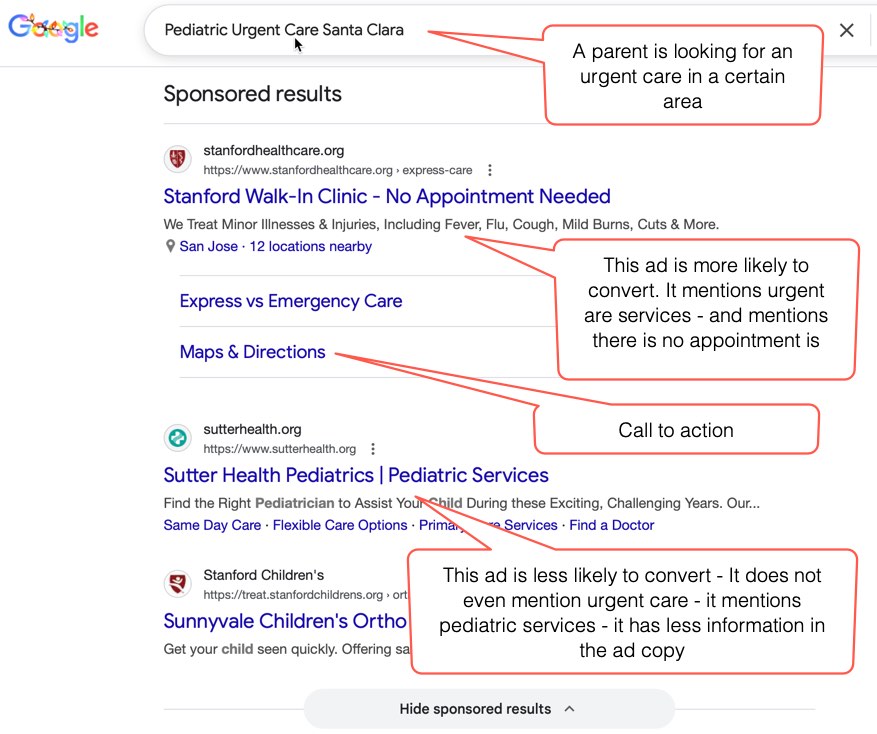
Example of a very successful PPC ad for an Urgent Care practice
How does PatientGain.com manage PPC Advertising for Doctors?
PatientGain.com manages PPC for doctors by offering an integrated platform that combines expert human management with AI, using dedicated teams to strategize campaigns on Google/social media, targeting high-intent keywords (like “Botox near me”), optimizing ads with extensions (sitelinks, calls), focusing on conversions with clear CTAs, and managing the entire lead funnel via CRM and automation, all while providing transparent pricing and focusing on HIPAA compliance.
Key Aspects of PatientGain’s PPC Management:
- Expert & AI-Driven Approach: A dedicated project manager works with in-house PPC experts who leverage AI to analyze markets, competitors, and optimize campaigns for ROI, targeting the right patients at the right time.
- Strategic Keyword Targeting: They focus on high-intent, specific keywords relevant to medical services (e.g., “laser hair removal in [City Name]”) to capture users actively seeking care.
- Integrated Platform: PPC is part of a larger system, including SEO, reputation management (reviews), email marketing, chatbots, and a HIPAA-compliant CRM, creating a holistic digital presence.
- Ad Optimization: They use ad extensions (sitelinks, callouts, location) to make ads more informative and encourage action, with clear “Book Appointment” calls-to-action.
- Transparent & Flexible Pricing: Offers simple flat-fee pricing (e.g., 18%) with no keyword markups or setup fees, allowing flexible budgets.
- Lead Management & Funnels: The platform captures leads from ads and funnels them through automated processes, tracking them in a unified system to nurture and convert them into patients.
- Performance Monitoring: Provides real-time dashboards with AI-powered analytics for data-driven decisions on campaign performance.
In essence, PatientGain acts as a full-service digital partner, handling everything from ad creation and management to patient follow-up, ensuring PPC efforts convert clicks into actual patient appointments.
How mush does PatientGain charge for PPC Advertising for Doctors?
PatientGain charges for PPC advertising in two ways: a base management fee starting around $299/month for small practices (typical at $499/month) plus a percentage of your ad spend, often 18% (e.g., $180/month for a $1000 ad budget), with specific pricing varying by service package (GOLD, PLATINUM) and market competition, plus the actual ad budget you set.
PPC Pricing Breakdown
- Management Fee: Starts at $299/month for small clinics, with $499/month being typical for comprehensive services.
- Ad Spend Percentage: An additional fee, often 18% of your total ad spend (e.g., $180 for a $1000 budget).
- Package Costs: Full marketing solutions (including PPC) are tiered:
- GOLD : For low-competition areas.
- PLATINUM : For medium-competition markets, includes more features.
- PLATINUM PLUS : For high-competition or telemedicine practices.
Key Factors Influencing Cost
- Market Competition: Higher competition means higher costs.
- Service Level: More features and apps increase the monthly fee.
- Your Actual Ad Budget: This is separate from PatientGain’s fees.
Results from PPC Advertising for Healthcare providers
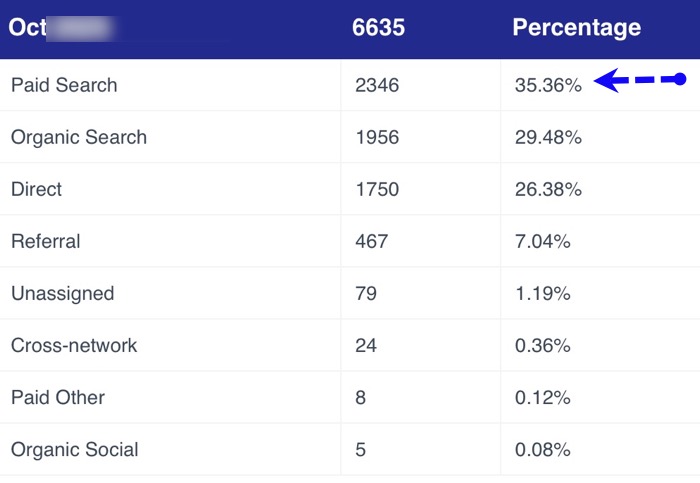
Example of SPOC dashboard – (SPOC is Single Point Of Conversion App) . You can see from the data that from in the month of October, 35.36 % of the traffic originated for this hair replacement medical practice. This practice is a very competitive area. Is using PLATINUM-Plus service from PatientGain.
 Send Text
 How may I help you?