

Six Pillars of Healthcare Digital Marketing
PatientGain identifies six core pillars for a healthcare marketing strategy: building patient trust, maintaining a high-performing website, managing online reputation, utilizing SEO and advertising, implementing a social media strategy, and developing a patient communication plan. These pillars aim to attract and retain patients through a strong online presence, effective communication, and a focus on patient experience.
Your patients start their journey to find your medical services in many ways. They may have immediate need for specific service, like a parent looking for a “pediatric urgent care near me” and over 78 percentage of the time they will go to Google and search. And majority of the time, this is done on a mobile cell phone device. You may have a client looking for specific MedSpa service like “Coolsculpting clinic near me” for non-invasive weight loss. There are millions of ways patients search and look for your services, every day, however, majority of the patients use online mediums like, Google, Facebook, Instagram, Yahoo, Bing etc to find a medical service provider.
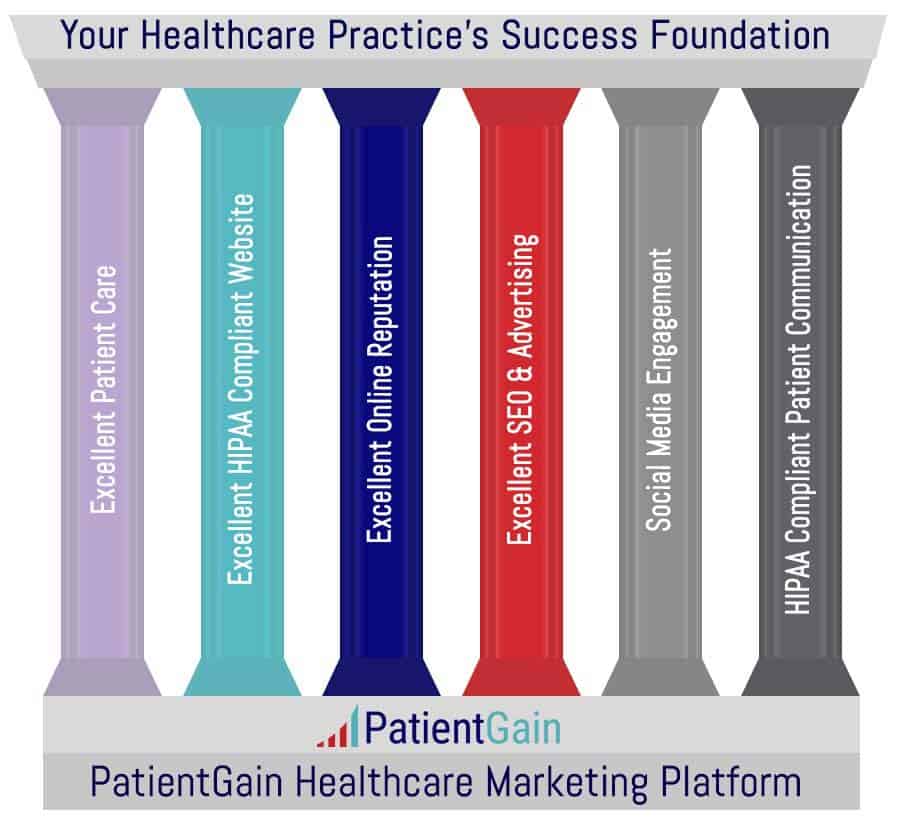
The concept of “Six Pillars of Healthcare Digital Marketing” can vary slightly depending on the source, but here’s a breakdown of a common framework that covers essential elements for a successful digital marketing strategy in the healthcare industry:
Pillar 1: Medical Practice’s Foundation: Providing Excellent Patient Care:
This pillar focuses on the core aspects of your practice that directly impact your online presence and patient experience. It emphasizes the importance of:
- Providing Excellent Patient Care: Delivering high-quality medical services is the bedrock of any successful healthcare practice. Satisfied patients are more likely to leave positive reviews online and recommend your practice to others.
- Strong Online Reputation Management: Actively manage your online reputation by addressing negative reviews promptly and professionally, and encouraging satisfied patients to leave positive testimonials.
Pillar 2: Medical Practice’s Website
Your website is often the first point of contact for potential patients. This pillar highlights the importance of:
- User-Friendly Design: Ensure your website is easy to navigate and accessible on all devices (desktop, mobile, tablets).
- Clear Information: Provide clear and concise information about your practice, the services you offer, your team’s qualifications, and insurance accepted.
- Appointment Booking Functionality: Allow patients to schedule appointments online for added convenience.
- Mobile Optimization: With the increasing use of mobile devices, ensure your website is mobile-friendly for optimal user experience.
Pillar 3: Medical Practice’s Online SEO and Advertising
Search Engine Optimization (SEO) and online advertising play a crucial role in increasing your website’s visibility in search engine results. This pillar emphasizes:
- SEO Optimization: Implement best practices to improve your website’s ranking for relevant search terms. This can involve keyword research, content optimization, and building backlinks from reputable websites.
- Pay-Per-Click (PPC) Advertising: Consider utilizing PPC ads on search engines or social media platforms to target specific demographics and reach a wider audience seeking medical services.
Pillar 4: Medical Practice’s Social Media Strategy
Building a strong social media presence allows you to connect with patients, share valuable information, and establish your practice as a trusted healthcare resource. This pillar focuses on:
- Choosing the Right Platforms: Identify the social media platforms where your target audience is most active (Facebook, Instagram, etc.) and focus your efforts there.
- Creating Engaging Content: Develop informative and engaging content that educates patients about health topics, showcases your services, and humanizes your practice.
- Social Media Engagement: Actively participate in conversations, respond to comments and messages promptly, and address any patient concerns raised on social media.
Pillar 5: Medical Practice’s Patient Communication Strategy
Effective communication with patients is essential for building trust and loyalty. This pillar highlights the importance of:
- Multiple Communication Channels: Offer patients various ways to communicate with your practice, such as email, phone calls, a patient portal, or text messaging (depending on HIPAA regulations).
- Appointment Reminders: Reduce no-shows by sending automated appointment reminders through email, text messages, or phone calls.
- Post-Visit Communication: Following up with patients after appointments demonstrates that you care about their well-being and can encourage them to return for future visits.
Pillar 6: Analytics and Data-Driven Approach
Tracking your digital marketing efforts is crucial for measuring success and refining your strategy. This pillar emphasizes:
- Website Analytics: Utilize website analytics tools to track website traffic, user behavior, and identify areas for improvement.
- Social Media Insights: Monitor social media analytics to understand your audience engagement, content performance, and identify what resonates best with your followers.
- Data-Driven Decisions: Use the insights gained from website and social media analytics to adjust your digital marketing strategies and optimize your campaigns for better results.
By focusing on these six pillars, healthcare practices can establish a strong foundation for their digital marketing efforts, attract new patients, retain existing ones, and ultimately build their practice.

Healthcare Marketing: Building Patient Trust
Building patient trust in healthcare marketing is critical because it directly impacts patient acquisition, engagement, loyalty, and, ultimately, health outcomes. Unlike other industries, healthcare involves deep vulnerability, and patients need to know they can trust a provider with their health, well-being, and even their life. This trust is built on reliability, transparency, and a consistent, empathetic patient experience, from the first marketing touchpoint to post-treatment care.
The profound impact of patient trust
- Improved patient acquisition and retention: In a highly competitive market, a reputation for trustworthiness is a major differentiator. Patients are empowered consumers who actively research and rely on online reviews and personal recommendations to make informed decisions. A strong, trustworthy brand naturally attracts and retains more patients, leading to long-term loyalty and sustained revenue growth.
- Enhanced health outcomes: When patients trust their providers, they are significantly more likely to follow treatment plans and seek preventive care. Research shows that patients with high trust are 2.6 times more likely to adhere to their medical recommendations, directly leading to better health management, fewer complications, and improved overall wellness.
- Increased patient engagement: Trust moves the patient-provider relationship beyond a simple transaction to a collaborative partnership. When patients feel understood and respected, they are more willing to openly discuss sensitive health concerns, engage in shared decision-making, and actively participate in their own care journey.
- A stronger brand reputation: Trust is healthcare’s most valuable asset. A positive reputation built on reliable care, consistent experiences, and patient-first values attracts both patients and top-tier talent. Conversely, a broken brand promise or an inconsistent experience can cause trust to plummet, an effect known as the “trust cliff”.
- Mitigated patient anxiety: Healthcare marketing can help address the real anxiety and vulnerability patients feel about seeking care. By providing reassuring and transparent information, a brand can set appropriate expectations and help patients feel a sense of psychological safety even before they step into a facility.
The patient journey: A multi-touchpoint opportunity for trust
Patient trust is not built at a single moment but across every stage of the patient journey. A holistic marketing strategy should engage and reassure patients at every touchpoint:
- Awareness: At this stage, patients recognize a health issue and begin searching for information. Marketing should provide high-quality, educational content to address their questions and establish the organization as a credible and helpful resource.
- Consideration: Patients compare providers and evaluate their options. Strategies here should emphasize the brand’s unique strengths and highlight social proof, such as authentic patient stories and testimonials.
- Decision: This stage requires a simple and seamless process to act. Marketing can facilitate this by ensuring clear calls-to-action and a frictionless user experience, such as easy online booking.
- Care: The actual care experience is where reliability and consistency cement or destroy trust. Marketing and clinical teams must align to ensure the brand promise of excellent care is consistently delivered in practice.
- Advocacy: Satisfied patients can become powerful brand ambassadors. Marketing efforts can encourage positive reviews, feedback, and referrals to amplify trust and build a stronger community.
Key marketing tactics to build trust
- Content marketing: Create informative and evidence-based content that educates rather than sells. Use plain language to explain complex medical information and show patients you are a knowledgeable resource invested in their well-being.
- Authentic social proof: Showcase testimonials, stories, and reviews from real patients (with their consent). These relatable experiences humanize your brand and build credibility far more effectively than corporate-speak.
- Transparent communication: Be honest and upfront about services, pricing, procedures, and potential outcomes. This is particularly important for addressing patient frustration with complicated billing and cost estimates.
- Patient-centric personalization: Use data to understand patient needs and preferences, then tailor your messaging accordingly. Hyper-personalized messages and experiences make patients feel seen and valued, strengthening their emotional connection and loyalty.
- Online reputation management: Actively monitor and respond to online reviews and social media comments. Responding professionally to negative feedback shows that you listen and care about patient perspectives, while engaging with positive reviews reinforces trust.
- Community engagement: Participate in and sponsor local events, health fairs, and wellness programs to build community ties and demonstrate genuine care beyond the clinic.
Challenges to building patient trust
Despite its importance, building trust in healthcare marketing faces significant challenges:
- Distrust of institutions: A decline in public trust in institutions means patients are more skeptical of healthcare organizations as a whole.
- Systemic complexity: The modern healthcare system often features fragmented care, with patients rarely seeing the same provider twice. This lack of continuity makes it harder to form trusting relationships.
- Limited clinician time: Busy schedules and high workloads can lead to rushed and poor communication, which patients cite as a key driver of mistrust.
- Misinformation on social media: The rampant spread of health-related misinformation online can confuse and mislead patients, creating a complex communication environment for providers to navigate.
- Regulatory hurdles: Healthcare marketing must navigate strict regulations like HIPAA, which can complicate efforts to share authentic patient stories and personalize communications
 Send Text
 How may I help you?