
Which strategies & mediums produce highest quality of leads for healthcare practices?
The digital patient acquisition landscape requires healthcare practices to balance visibility with intent. Evaluating Organic Search (SEO + AEO), Google PPC Ads, and Meta Ads reveals that each channel targets a completely different stage of the patient psychological funnel.
The integration of AEO (Answer Engine Optimization) has fundamentally changed organic search. It shifts the goal from simply ranking blue links to ensuring your practice is the cited, trusted recommendation when patients ask conversational questions to AI models like Google AI Overviews, ChatGPT, and Gemini.
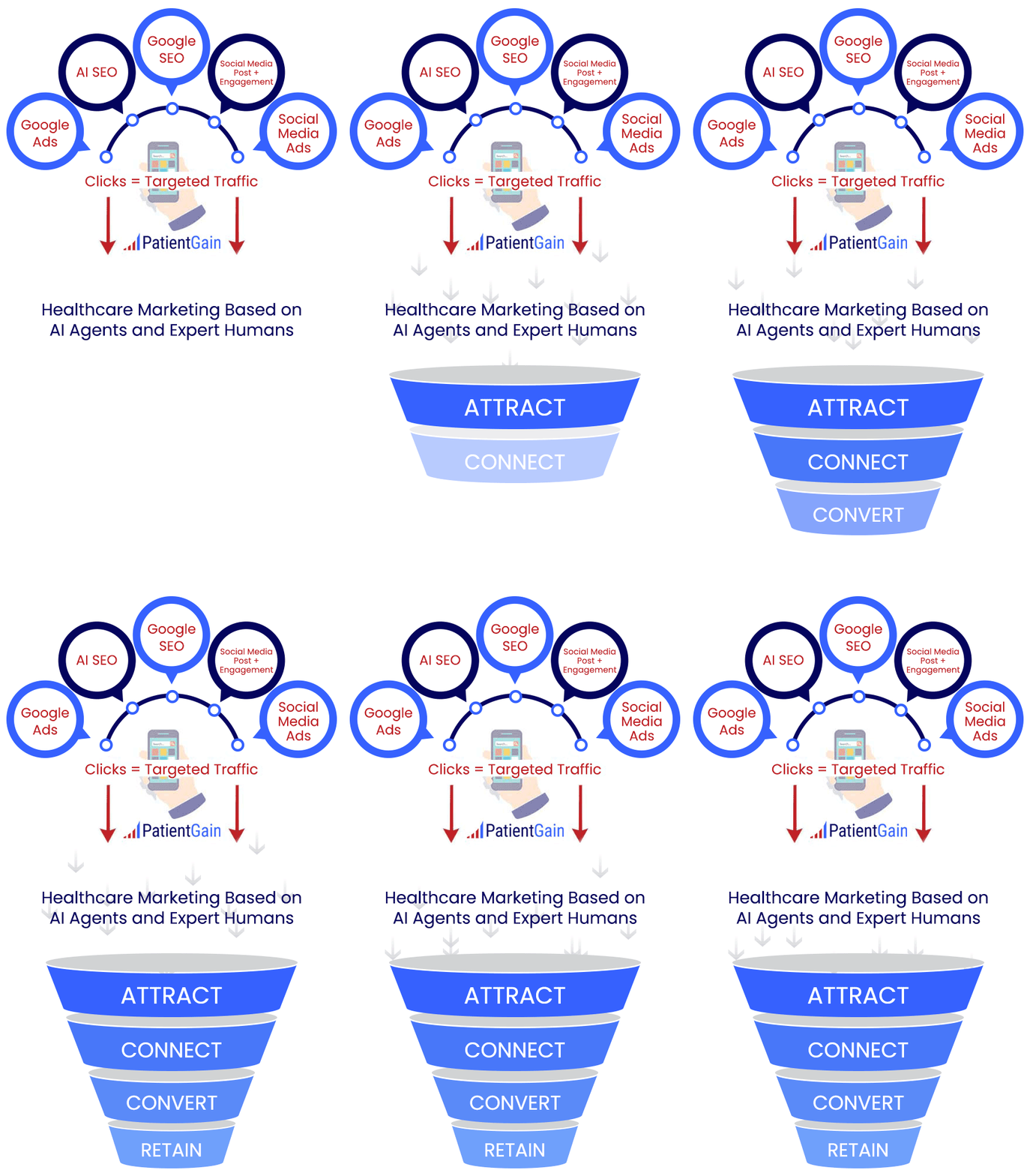
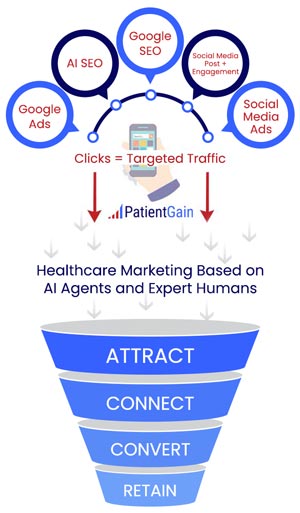
High-Level Channel Matrix – Strategies & Mediums
| Feature / Dimension | Organic SEO + AEO – Local SEO +GBP Included | Google PPC Search Ads | Meta Paid Social Ads or Google PMAX Ads |
| Patient Intent Type | High (Authoritative & Educational) | Highest (Immediate Crisis / Transactional) | Low to Medium (Passive Discovery) Both Meta and PMAX ads behave similarly. However there are some differences. |
| Search Engine Profile | Zero-click focused; structured for AI crawlers | Bidding on high-value transactional intent | Disruption-based; feeds on scroll-stopping visuals |
| Relative Cost per Lead | Low over time (high upfront asset value) | High ($35 – $245+ depending on vertical) | Low ($35 – $55 range) – Lead or success means “cost per action” which means “click” – Very low conversion rates based on PatientGain data. |
| Time to Volume | Very Slow (3 to 6 months to compound) – For some very competitive areas, it is even longer than 6 months to see meaningful results. | Instant (Goes live on day one) – However you must have good advertising budget | Fast (Scalable within days to week)- However you must have good advertising budget |
| Front Desk Friction | Lowest (Patients are pre-educated and trusting) | Low (Ready to book immediately if fast) | Highest (Requires intensive filtering and follow-up) |
1. SEO + AEO: The “Authority Engine” – The best ROI – but very slow to see ROI.
This framework pairs traditional ranking factors (keywords, local citations, page speed) with machine-extractable content optimized for Large Language Models (LLMs).
- How It Works: A patient asks an AI engine, “What type of non-surgical treatment is best for a torn meniscus in Denver?” Instead of reading a list of links, the AI aggregates data, synthesizes an answer, and explicitly highlights and links your clinic as the local authoritative expert.
- Lead Quality: Exceptionally High. Because roughly 65–70% of informational health searches result in “zero-click” answers, the leads who do bypass the AI summary to connect with your practice are deeply educated on their condition. They trust your clinical expertise before even speaking to a coordinator.
- Technical Requirement: Demands micro-content layout (40–60 word answer blocks directly below
<h2>question headers), comprehensive MedicalCondition/FAQ JSON-LD schema code, and strict E-E-A-T proofing (such as physician-reviewed medical datestamps).
2. Google PPC Search Ads: The “Instant Leads Faucet”
Pay-per-click advertising focuses entirely on capturing existing transactional demand. However – if you have a very low ads budget the ads will not produce good results. Also you cannot “start and stop” ads – If you do you will not get good baseline data and campaigns cannot be optimized.
- How It Works: A user experiences an immediate symptom or has an urgent need, searching terms like “emergency root canal open now” or “medical weight loss provider near me.” Your clinic buys its way to the absolute top of the sponsored links.
- Lead Quality: Highest Short-Term Booking Rate. The patient mindset is entirely transactional; they are not looking to read an article, they are looking to book an appointment slot today.
- Operational Impact: Low staff friction, provided your intake speed is fast. If your CRM automatically responds via text or your front desk calls within 5 minutes, they convert. If your staff lets the lead sit for an hour, the patient calls the next listing on Google.
3. Meta Paid Social Ads: The “Disruption Play”
Facebook and Instagram ads operate on passive discovery, meaning you are showing ads to users who are scrolling through social media, not actively looking for a doctor.
- How It Works: A highly visual ad showing a patient transformation, a video walkthrough of an aesthetic facility, or an incentive offer (e.g., “$100 off your first body contouring session”) disrupts the user’s feed.
- Lead Quality: High Volume, Low Uniformity. Meta is highly effective for elective care, cash-pay services, and aesthetics because visual content triggers impulse interest. However, because Meta’s native forms auto-fill contact data, users frequently click submit without high intent.
- Operational Impact: High Staff Friction. Meta will regularly net the cheapest cost-per-lead, but your front desk will spend substantial time chasing down wrong numbers, un-engaged inquiries, or people who do not clinically qualify for the procedure.
The Verdict: Balancing the Mix
- Deploy SEO + AEO as your long-term foundational asset. It future-proofs your brand as search habits shift entirely toward AI-driven recommendations, shielding your practice from ever-increasing ad-bidding costs.
- Deploy Google PPC if you are launching a brand-new facility, expanding an immediate-need clinical service line (like urgent care or orthopedics), and need next week’s schedule filled immediately.
- Deploy Meta Ads if you manage an elective or lifestyle-driven medical branch (like a MedSpa, lifestyle weight loss, or cosmetic dentistry) and have automated infrastructure—like an AI chatbot or text-triage funnel—capable of instantly filtering out low-intent tire-kickers.
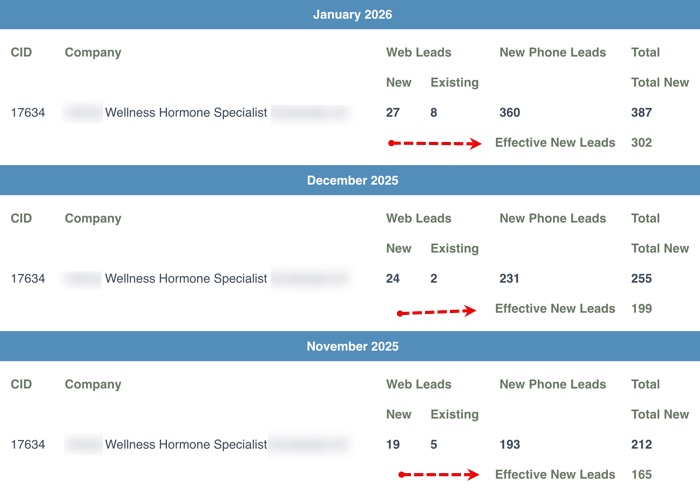
Example of Marketing ROI Dashboard of a PatientGain’s PLATINUM customer who offers Wellness Services with focus on Hormone imbalance treatments for patients. This is Cash-Pay DPC practice.
How does PatienGain’s PLATINUM service help with these advertising options for medical and dental practices?
PatientGain.com’s PLATINUM service handles the execution of these channels by replacing a fragmented marketing approach with an integrated technical infrastructure.
Instead of treating SEO, AEO, Google PPC, and Meta Ads as separate projects managed by different vendors, the PLATINUM service binds all three options into a single, automated, HIPAA-compliant system managed by assigned technical leads and project managers.
1. Optimizing for SEO + AEO (The Long-Term Authority Engine)
Organic traffic is driven by algorithmic trust and technical speed. The PLATINUM service builds digital authority using specialized infrastructure adjustments:
- Compute-Optimized Cloud Infrastructure: PatientGain moves your practice’s website off cheap, shared hosting and deploys it on Google Cloud Platform’s (GCP) Compute-Optimized C4D servers. This helps your mobile layout pass Google’s core web vitals with a 90%+ performance score, which is essential for modern mobile-first indexing and search result visibility.
- The “Reverse Search Engine” Algorithm: Rather than writing generic, keyword-stuffed blog posts, PatientGain’s automated engine creates monthly, clinically accurate content mapped directly to localized patient symptoms and intents (e.g., “where to treat an ankle sprain in [City]”).
- AI & LLM Training (AEO & ChatGPT Mentions): To ensure your practice is cited by generative answer engines like Google AI Overviews, Gemini, and ChatGPT, the platform injects structured JSON-LD schema code (
MedicalClinic/DentalClinictags) into your backend. It formats content into concise, machine-readable Q&A blocks that AI crawlers can cleanly extract. - The Social Auto-Pilot App: To maintain continuous algorithmic activity signals, the platform automatically generates and publishes 20 custom, service-specific posts per month across your Google Business Profile, Facebook, and Instagram feeds.
2. Streamlining Google PPC Ads (The High-Urgency Faucet)
Paid search relies on highly targeted ad spend. PatientGain manages your capital through specialized campaigns designed around clinical operations:
- Micro-Geotargeting & Drive-Time Bidding: The platform moves away from generic radius rings, building ad parameters using precise zip-code clusters or travel-time polygons mapping highway access points and local competitor placement.
- Hours-Based Bid Adjustments: PatientGain automatically scales your ad spend up during your high-volume windows—such as evenings, weekends, and holidays when traditional primary care networks are closed and patients are actively searching for local walk-in alternatives.
- Pre-Built Medical Negative Keyword Databases: PatientGain utilizes an established library of thousands of negative keywords to ensure your clinic doesn’t waste ad budget on low-intent search terms (e.g., filtering out “free clinical trials,” “medical school rankings,” or “healthcare jobs”).
- A/B Tested Landing Pages: Clicking a paid ad skips your standard homepage. The PLATINUM service routes PPC traffic directly to specialized, high-conversion landing pages built into the Mobile Accelerated Conversion (MAC) App to maximize direct appointment requests.
3. Management of Meta Ads (Volume Without Front Desk Burnout)
Paid social advertising is highly visual and generates significant lead volume, but it can often exhaust staff with low-intent inquiries. PatientGain filters this channel using structured engagement tech:
- Impulse Capture and Filtration Funnels: For elective or lifestyle treatments (like MedSpas, dental implants, or medical weight loss), PatientGain builds targeted social ad frameworks. However, to prevent your front desk from chasing unengaged users, the lead must instantly pass through a mandatory screening layer via the Leads Funnel App or an intelligent AI Chatbot.
- Centralization in the SPOC Dashboard: Meta leads do not sit unaddressed in an independent Facebook Business Suite inbox. They are pushed directly into your centralized SPOC (Single Point of Conversion) dashboard task funnel alongside your high-priority search traffic, allowing your intake coordinator to follow up via the QuickSend App using template-driven SMS or email within minutes.
- Call Tracking and Clear ROI Attribution: The platform deploys dedicated tracking phone lines to isolate incoming calls generated specifically by your social media promotions, providing real-time data visibility regarding which campaigns are generating revenue versus dead leads.
The Architecture: How PLATINUM Unifies the Funnel
| Advertising Medium | How Generalist Agencies Run It | PatientGain PLATINUM Implementation |
| SEO & AEO | Superficial, unoptimized blogs; generic formatting. | GCP C4D Server Hosting + machine-readable schema for AI Overview citations. |
| Google PPC | Uniform, flat 24/7 budgets; broad radius targeting. | Hours-Based Bidding tailored to night/weekend demand spikes and zip code polygons. |
| Meta Ads | Raw lead forms dropped directly onto busy front desk lines. | Enforced AI Chatbot screening and task routing via the SPOC dashboard. |
| Data Privacy | Standard browser tracking pixels (Risk of HIPAA leaks). | Secure Server-Side Tracking Layer to anonymize patient identifiers. |
How can PatientGain’s PLATINUM service replaces 5 to 8 service providers and simplify digital marketing for medical and dental practices?
For many medical and dental practices, digital marketing quickly devolves into an operational nightmare known as “vendor sprawl.” To run a modern clinic, practice managers often piece together a disjointed patchwork of software subscriptions and agencies. This requires logging into multiple dashboards, managing separate bills, and dealing with technical integration issues.
PatientGain.com’s PLATINUM service simplifies this operational chaos through extreme vendor consolidation. It replaces 5 to 8 standalone service providers with a single, unified, HIPAA-compliant software ecosystem run by dedicated account managers.
The Fragmented Stack vs. The PatientGain PLATINUM System
A typical competitive clinic often pays for multiple separate services. The PLATINUM service replaces these individual subscriptions by bundling them into one integrated environment:
| Fragmented Vendor Type | Common Examples | How PatientGain PLATINUM Natively Replaces It |
| 1. Web Developer & Host | WP Engine, GoDaddy, Custom Agency | Integrated Medical Website: Designed and hosted on high-performance Google Cloud Platform (GCP) infrastructure. |
| 2. Medical CRM / Pipeline | HubSpot, Salesforce, LeadSquared | Leads Funnel CRM: A secure backend that organizes patient inquiries as action items without data leakage. |
| 3. Patient Texting App | Podium, Weave, Zipwhip | QuickSend 2-Way Texting App: Allows staff to securely text prospects directly from the desktop command center. |
| 4. Review Automation | Birdeye, Reputation.com, Grade.us | Reputation Management App: Using SMS/email review invites to patients automatically or by your front desk’s approval. |
| 5. Website Chatbot | ManyChat, Ruby, generic bots | HIPAA-Compliant AI Chatbot: Converts late-night traffic by screening basic questions and capturing intake details. |
| 6. Email Marketing | Mailchimp, Constant Contact | Healthcare Email AI Agent: Automatically cleans domain lists, segments patients, and creates content for the newsletters. Then the final newsletter is sent to the provider or the front desk for “approval”. Once they click on “approve, it is sent out. |
| 7. SEO & Content Agency | Local boutique marketing agencies | Reverse SEO Engine: Deploys monthly symptom-based content optimized for Google Search and AI Overview citations. |
| 8. Call Tracking | CallRail, Invoca | Call Tracking App: Assigns distinct tracking lines to paid ads to calculate true marketing ROI. |
How Consolidation Simplifies Clinic Operations
1. Centralization via the SPOC Dashboard
When a clinic uses separate vendors, the front-desk staff must monitor an email inbox for web forms, a separate app for text messages, a portal for chatbot interactions, and a third platform for Google reviews.
PatientGain simplifies this workflow using the SPOC (Single Point of Conversion) dashboard. Every web submission, incoming text, chatbot conversation, review notification, and phone call routes into a single feed. This setup reduces “lead leakage,” helping busy receptionists capture and book prospects quickly.
2. Elimination of the “Middleware Security Risk”
To make fragmented software tools communicate, practices often rely on third-party integration tools like Zapier or custom plugins. This workflow introduces compliance vulnerabilities. If a non-compliant plugin transmits Protected Health Information (PHI) across an unencrypted network, it constitutes a federal data privacy violation.
The “Walled Garden” Solution: PatientGain isolates the entire patient journey. Because your website, forms, chatbot, CRM, and texting tools live inside the same encrypted cloud network (HipaaServer), data moves securely without relying on third-party connections. PatientGain signs a single, comprehensive Business Associate Agreement (BAA) covering the entire technical stack.
3. Human-in-the-Loop Operational Management
With standard software subscriptions, your staff must still spend hours logging in to configure templates, write emails, and format graphics.
The PLATINUM tier functions as a Done-For-You (DFY) service. PatientGain’s AI engine drafts your monthly emails, social media posts, and localized SEO articles automatically. Instead of creating marketing assets from scratch, your staff simply logs into a portal once a month, checks the pre-written drafts for clinical accuracy, and clicks “Approve.” This workflow keeps your practice compliant while reducing the time your team spends on marketing tasks.
Financial and Administrative Efficiency
By bundling software infrastructure with managed agency labor, the PLATINUM tier optimizes both direct software expenses and indirect staff time:
- Lower Subscription Costs: Consolidating 5 to 8 separate platforms into a single fixed subscription eliminates redundant software costs, often reducing monthly software overhead by 30% to 50%.
- Predictable Analytics: Instead of trying to combine conflicting metrics from various software tools, the platform tracks your marketing performance in one place—tracing your initial ad spend directly to booked appointments.
- Unified Technical Support: If a tracking link or contact form breaks, your staff does not have to spend hours on hold with multiple software support teams. One dedicated PatientGain project manager oversees your entire digital footprint.
How the PLATINUM service unifies a practice’s technical footprint, compresses staff operational overhead, and eliminates traditional vendor sprawl:
PatientGain PLATINUM Cost, Time, & Efficiency Benefit Analysis
| Operational Pillar | Traditional “Vendor Sprawl” (Time & Cost Burden) | PatientGain PLATINUM (Unified Subscription Model) | Operational Efficiency & Regulatory Impact |
| Website & Cloud Infrastructure | $150 - $500/mo website host.Time: 5 – 10 hrs/mo manual plugin tracking, security patches, and downtime management. | Included in bundle. Time: 0 hrs/mo. Hosted on Compute-Optimized Google Cloud Platform (GCP) infrastructure. | Eliminates manual IT patching. Instantly delivers 90%+ mobile performance speed scores, boosting Google Local Map pack rankings. |
| Lead Capture & Medical CRM | $200 - $400/mo (HubSpot/Salesforce).Time: 8 – 12 hrs/mo managing Zapier integrations and fixing broken synchronization hooks. | Included in bundle. Time: 0 hrs/mo maintenance. Native secure Leads Funnel CRM architecture. | Centralizes all web forms into the SPOC (Single Point of Conversion) dashboard, mitigating lead leakage from overwhelmed receptionists. |
| Patient Communication (SMS & Chat) | $300 - $600/mo (Podium/Weave) + separate bot tools.Time: 15+ hrs/mo staff chasing missed incoming calls and fragmented messages. | Included in bundle. Time: Automated. Features QuickSend 2-Way SMS and native HIPAA AI Chatbot. | Instantly triggers an automated text-back upon a missed clinic call, converting dropped callers into active text conversations within 90 seconds. |
| Reputation & Review Generation | $300 - $500/mo (Birdeye/Reputation).Time: 6 – 8 hrs/mo staff manually inputting patient details to trigger review invites. | Included in bundle. Time: Fully automated system hooks trigger post-discharge text invites. | Safeguards the practice via an automated dashboard providing pre-drafted, HIPAA-compliant review responses, avoiding PHI disclosure. |
| SEO, AEO & Content Creation | $1,500 - $3,000/mo agency retainer.Time: 10 – 15 hrs/mo meetings, reviewing off-brand copy, and fixing formatting errors. | Included in bundle. Time: < 2 hrs/mo total staff time utilizing the “1-Click” Human-in-the-Loop review portal. | Proprietary Reverse SEO maps pages to consumer symptoms rather than generic terms, optimizing for citations inside Google AI Overviews. |
| Social Footprint & Mapping | $300 - $800/mo social manager tools.Time: 8 – 10 hrs/mo planning grids, formatting graphics, and manual posting. | Included in bundle. Time: 0 hrs manual labor. Native Social Auto-Pilot app deploys 20+ posts/mo. | Maintains continuous algorithmic activity signals on Google Maps and social networks without depleting clinic staff resources. |
Key Takeaways from the Analysis:
- Massive Cost Consolidation: Instead of paying multiple separate software invoices totaling anywhere from $2,750 to $5,800/month, the PLATINUM service rolls all digital infrastructure into a fixed subscription starting at $1,699/month, creating immediate bottom-line savings.
- Reclaiming Staff Hours: Clinic staff typically lose 40 to 65 hours per month managing disjointed systems, manual data entry, and marketing coordination. The PLATINUM tier compresses this to under 2 hours per month, redirecting your team’s energy toward in-office patient care and practice operations.
- Automated Risk Shielding: By eliminating third-party integrations (like Zapier or custom plugins) and substituting traditional client-side tracking pixels with a secure Server-Side Tracking Layer, the platform completely stops “PHI leakage.” Your data remains locked inside an isolated cloud network (
HipaaServer) backed by a Master Business Associate Agreement (BAA) and tamper-proof Immutable Audit Logging.
 Send Text
 How may I help you?