

What is Patient Privacy Data Platform for Healthcare Practices?
A patient privacy data platform for healthcare websites is a secure, HIPAA-compliant system that manages, encrypts, and controls patient data (PHI) collected through digital channels. It acts as a shield, ensuring that tools like analytics, chatbots, or booking forms do not leak sensitive information to third-party advertisers. This platform integrates patient data management with the practice’s website and marketing tools, enabling secure communication, efficient data capture, and effective patient engagement while safeguarding patient privacy.
Patient Privacy Data Platform: Table of Contents
Examples of Patient Privacy Data Platforms for Healthcare Websites
Key Features of a Patient Privacy Data Platform for Healthcare Websites:
Benefits of Using a Patient Privacy Data Platform for Healthcare Websites:
How does PatientGain.com’s PLATINUM service act as a Patient Privacy Data Platform
Examples of Patient Privacy Data Platforms for Healthcare Websites
- PatientGain: PatientGain offers an integrated HIPAA-compliant marketing platform that combines secure website infrastructure, automated patient engagement tools, and real-time analytics. It allows healthcare providers to manage leads, automate marketing workflows, and maintain compliance while growing their practice.
- Salesforce Health Cloud: Salesforce’s platform offers a secure patient data management system that integrates clinical and non-clinical data, ensuring patient privacy and streamlined communication.
- Redox: A healthcare-specific integration platform that offers secure, HIPAA-compliant data exchanges between systems. It enables healthcare practices to securely manage patient data across multiple systems and platforms.
Key Features of a Patient Privacy Data Platform for Healthcare Websites:
- HIPAA-Compliant Data Handling:
A core feature of any Patient Privacy Data Platform is ensuring that PHI (personal health information) is encrypted and stored securely to meet HIPAA standards. This includes:- Secure data storage (e.g., using HIPAA-compliant cloud providers such as AWS or Google Cloud).
- Encrypted communication (e.g., emails, SMS messages, and form submissions) to prevent unauthorized access.
- Audit trails for tracking access to sensitive data, ensuring accountability and transparency.
- Secure Online Appointment Scheduling:
Patient Privacy Data Platforms provide secure systems for online appointment scheduling where patients can book, reschedule, or cancel appointments directly through the healthcare practice’s website. All interactions must be encrypted, and patient details should only be accessible by authorized staff members. - Lead Capture and Form Submission Security:
Patient data collected through online forms (e.g., contact forms, intake forms, medical history questionnaires) must be protected using secure data encryption. The platform ensures that any sensitive health information shared through these forms is transmitted securely and stored in compliance with HIPAA. - Automated Communication Tools:
The platform enables secure, HIPAA-compliant automated communications such as appointment reminders, follow-up messages, and patient engagement campaigns (e.g., health tips, reminders for screenings, etc.). These tools reduce administrative burdens and help improve patient retention while keeping PHI private. - Role-Based Access and Permissions:
Healthcare providers using a Patient Privacy Data Platform can set role-based access controls (RBAC) to ensure that only authorized personnel have access to certain patient data. For example, receptionists may only have access to appointment-related data, while doctors can access more sensitive health records. This ensures that PHI is only viewed and shared on a need-to-know basis. - Compliance Management:
A Patient Privacy Data Platform helps healthcare practices manage compliance with HIPAA and other regulations (such as HITECH Act and GDPR). This includes:- Data retention policies to ensure that patient records are kept for the required amount of time.
- Consent management for obtaining patients’ explicit consent before collecting, storing, or using their health data for marketing or treatment purposes.
- Reporting tools that track and document compliance efforts and activities.
- Real-Time Analytics and Insights:
The platform may provide real-time analytics that give healthcare practices insights into website traffic, lead conversion rates, and marketing campaign performance while ensuring that any data captured is anonymized or aggregated to prevent unauthorized access to PHI. - Patient Data Segmentation:
To facilitate targeted marketing and patient engagement, a Patient Privacy Data Platform may allow practices to segment patient data securely based on criteria such as age, condition, or treatment history, while ensuring that no personally identifiable information (PII) is shared improperly. - Secure Patient Portals:
A secure patient portal enables patients to access their own health records, appointments, and test results. The portal is designed with encryption and secure login systems, such as multi-factor authentication (MFA), to ensure that patient data is only accessible by authorized individuals.
Benefits of Using a Patient Privacy Data Platform for Healthcare Websites:
- Improved Patient Privacy and Compliance:
The platform ensures all patient data is handled in full compliance with HIPAA and other relevant privacy laws, reducing the risk of data breaches and non-compliance penalties. - Streamlined Patient Engagement:
By automating appointment scheduling, communication, and patient engagement tasks, the platform helps healthcare practices operate more efficiently and keep patients informed and engaged, leading to better patient retention and satisfaction. - Increased Trust:
Patients trust healthcare providers that prioritize their privacy and security. A HIPAA-compliant platform reassures patients that their personal health information is safe and secure, building trust and encouraging more active engagement. - Improved Marketing and Lead Conversion:
By securely capturing and segmenting patient data, healthcare practices can create targeted, personalized marketing campaigns to attract new patients and increase conversion rates, without compromising patient privacy. - Centralized Data Management:
A Patient Privacy Data Platform consolidates all patient information into a single, secure system, making it easier for practices to manage, access, and analyze patient data while maintaining compliance with privacy regulations.
How does PatientGain.com’s PLATINUM service act as a Patient Privacy Data Platform for Healthcare Websites?
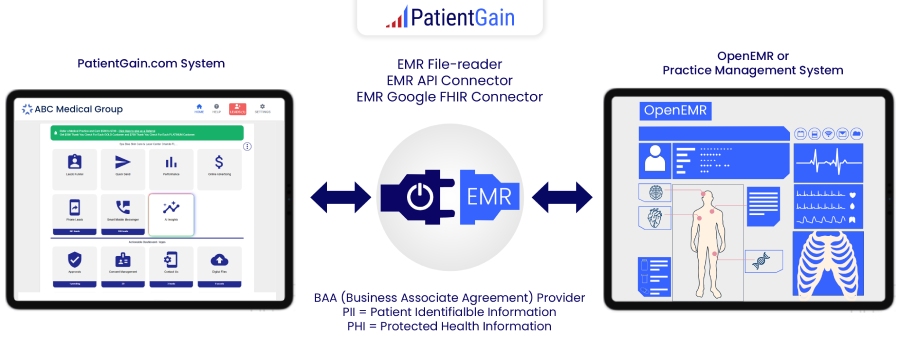
PatientGain’s PLATINUM service acts as a comprehensive Patient Privacy Data Platform (often functioning like a HIPAA-compliant Customer Data Platform, or CDP) to solve this exact problem. It allows a practice to aggressively market and track their return on investment (ROI) without illegally leaking Protected Health Information (PHI).
1. Data Obfuscation (Safe Lead Attribution)
This is the core of how PatientGain protects your practice from the “Pixel Crisis” while still allowing you to track your marketing performance.
- The Process: When a patient clicks a Google Ad and fills out a form on your site, PatientGain’s platform intercepts the data. It securely routes the patient’s medical symptoms and contact info to your private dashboard.
- The Obfuscation: It then strips away all PHI (name, email, phone number, specific health condition, and IP address) and stores all data in the leads funnel app. When your staff members look at leads, they have to click on “view un-obfuscated”- this action is logged in the audit trails for security.
2. The “Zero-Database” Vault Strategy
Standard WordPress websites store form submissions in their backend database tables, which is a massive security vulnerability and a frequent target for hackers.
- The PLATINUM Fix: PatientGain ensures that no patient information is ever stored in the WordPress website database. * The Secure Vault: Instead, when a patient submits a form or interacts with the chatbot, the data is instantly encrypted and tunneled directly into the SPOC (Single Point of Conversion) CRM. This CRM is hosted on enterprise-grade, HIPAA-compliant Amazon Web Services (AWS) and Google Cloud servers. Certain sensitive patient data is never stored in the same databases. Partial data is store server 1 and rest of the data stored in server 2. Hence minimizing risk if a system is hacked.
3. Built-In Consent Management App (CMA)
Under HIPAA, you cannot capture or use a patient’s data for marketing without explicit, recorded consent.
- Front-End Gatekeeping: The PLATINUM service includes a native Consent Management App. Before a patient can submit a form or engage with the AI chatbot, the app forces them to actively opt-in to your privacy policies. If they decline, the system blocks the transmission of PHI.
- Back-End Audit Logs: The system automatically generates a secure, non-editable audit trail. It logs the exact date, time, IP address, and the specific version of the privacy policy the patient agreed to, making your practice instantly audit-ready.
4. Strict Access Controls & Immutable Logs
A privacy platform must govern not just how data enters the system, but how your staff interacts with it.
- Role-Based Access: Inside the SPOC dashboard, access is strictly regulated. A marketing coordinator might only be able to see anonymized lead numbers, while a triage nurse can see the actual medical symptoms. (PatientGain strictly prohibits shared logins for this reason). For example users are highly discouraged and even blocked from cretaing accounts like “frontdesk@ABCmedicalClinic.com”
- Audit Trails: The platform tracks and timestamps every internal action. If a staff member opens a patient’s file or listens to a recorded call, the system logs it to ensure internal accountability and compliance.
5. The Comprehensive Legal Shield (BAA)
A software tool is only a true privacy platform if the vendor is willing to share the legal liability with you.
- When you use the PLATINUM service, PatientGain issues a standard Business Associate Agreement (BAA). This legally binding contract covers the website hosting, the SPOC CRM, the chatbot, the forms, and the consent management tools, ensuring the entire technology stack meets federal guidelines. This BAA is based on shared responsibility. As a practice you agree to follow the security polices and role based access to PHI as defined by PatientGain.
6. Staff training
All PatientGain staff have to go through back-ground checks. Every staff member must submit monthly acknowledgment if they have witnessed any violations of HIPAA.
 Send Text
 How may I help you?