

Medical Practice Digital Marketing
Medical practice digital marketing is the strategic use of online channels, tools, and platforms to attract new patients, retain existing ones, and build a trusted healthcare brand. Unlike standard corporate marketing, it strictly balances patient acquisition with rigorous healthcare regulations like HIPAA compliance and patient privacy standards.
Core Components of Medical Practice Marketing
To turn local online searches into booked clinical appointments, practices rely on several interconnected digital strategies:
- Medical Website Optimization: Your digital front door. A successful medical site must be highly secure, mobile-friendly, and integrate seamless online scheduling tools to minimize friction for patients.
- Local Search Engine Optimization (SEO): Optimizing your Google Business Profile and website content so your clinic appears at the top of map results when locals search terms like “pediatrician near me” or “urgent care”.
- Online Reputation Management: Proactively collecting and managing genuine patient reviews on platforms like Google, WebMD, and Healthgrades to establish clinical trust.
- Healthcare Content Marketing: Creating educational blogs, patient FAQs, and instructional videos that position your providers as local medical thought leaders.
- Pay-Per-Click (PPC) Advertising: Running targeted search ads via Google Ads or social media to immediately capture high-intent leads looking for specific specialized treatments.
- Patient Communication Systems: Utilizing HIPAA-compliant two-way messaging, automated appointment reminders, and email newsletters to maximize patient retention.
Critical Compliance Differences
Marketing a medical practice requires navigating strict boundaries that don’t apply to traditional businesses:
- Privacy Controls: Standard tracking pixels (like the Meta Pixel) often violate HIPAA rules by transmitting Protected Health Information (PHI). Digital agencies must use specialized, compliant tracking software.
- Advertising Approvals: Major platforms like Google and Meta strictly regulate pharmaceutical, treatment, and medical claims, requiring verified credentials before ads can run.
- Review Ethics: Providers cannot incentivize patients for positive reviews, and replying to public comments requires extreme care to avoid accidentally revealing a patient’s medical history or appointment status

What is the role of hipaa compliance in Medical Practice Digital Marketing?
HIPAA compliance acts as the legal and ethical framework for medical practice digital marketing, dictating how a clinic can acquire and communicate with patients online. In the United States, the Health Insurance Portability and Accountability Act (HIPAA) strictly protects Protected Health Information (PHI). Because digital marketing inherently relies on tracking, targeting, and communication, HIPAA fundamentally changes how medical practices run campaigns compared to traditional retail businesses.
1. The Redefinition of PHI Online
In digital marketing, PHI is no longer just a medical chart. Under recent guidelines, an IP address, a tracking cookie, an email, or a phone number connected to a health-related webpage is considered PHI.
- The Rule: If a user visits your website looking for “oncology treatments” and a tracking tool captures their IP address, that data is protected.
- The Impact: You cannot allow standard, unsecure third-party tools to track user behavior on pages that discuss specific medical conditions or treatments.
2. Strict Limits on Web Tracking and Analytics
Traditional marketers use pixels (like the Meta/Facebook Pixel) and analytics (like standard Google Analytics) to track what users do and retarget them with ads.
- The Danger: Standard tracking pixels transmit user data directly to tech platforms, which violates HIPAA if the user is seeking medical care.
- The Solution: Practices must use HIPAA-compliant analytics tools or specialized server-side tracking that strips away identifying data before it reaches platforms like Google or Meta.
3. Business Associate Agreements (BAAs)
A medical practice cannot share any patient data with a digital marketing agency, software vendor, or web host unless that partner signs a Business Associate Agreement (BAA).
- The BAA Role: A BAA is a legal contract where the vendor takes on legal liability for safeguarding PHI.
- Vendor Restrictions: Mainstream email tools (like Mailchimp) or CRM software generally will not sign a BAA on standard plans. Marketers must use specialized healthcare platforms (like PatientPop, OhMD, or compliant tiers of Salesforce) to manage patient leads.
4. Patient Reviews and Public Responses
Online reviews on Google or Healthgrades are public, but the practice’s response is governed by HIPAA.
- The Trap: If a patient leaves a review saying, “Dr. Smith cured my back pain!” the practice cannot reply, “We were so glad to help with your back pain, Sarah!” This confirms she was a patient and acknowledges her diagnosis.
- The Compliant Way: Responses must be generic and never confirm the reviewer is an actual patient (e.g., “We strive to provide excellent care to everyone who visits our clinic. Please reach out to our office manager directly if you have any questions.”).
5. Patient Communication and Lead Forms
When a prospective patient fills out a “Contact Us” or “Request an Appointment” form on a practice website, that data must be encrypted immediately.
- Form Security: Standard website forms send data via unencrypted email. HIPAA requires secure, encrypted intake forms.
- Email & SMS Marketing: Practices must get explicit, documented patient consent before sending marketing emails or text messages, and the platforms sending them must be completely secure.
Summary: Compliance vs. Performance
HIPAA does not stop medical digital marketing; it simply changes the tools. Practices that market compliantly build immense trust, protecting their patients’ privacy while protecting themselves from massive legal fines and reputation-damaging data breaches.
Does PatientGain offers Medical Practice Digital Marketing with HIPAA compliance for healthcare clinics?
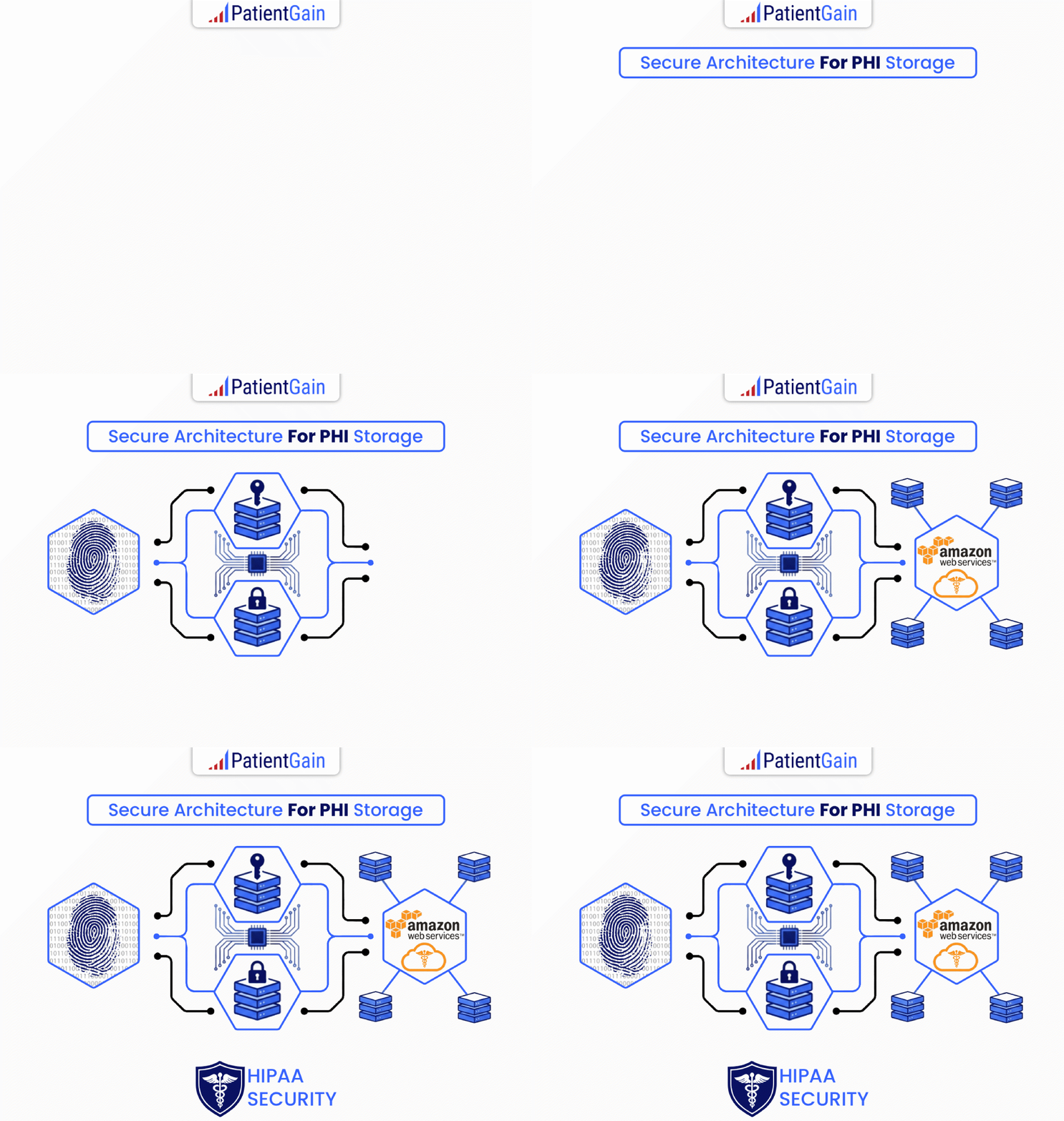
Yes, PatientGain explicitly offers Medical Practice Digital Marketing with built-in HIPAA compliance for healthcare clinics. The platform operates as a secure, all-in-one marketing engine that provides healthcare practices with a signed Business Associate Agreement (BAA), legally binding them to protect patient data. They achieve this by hosting websites on encrypted U.S. data centers, using role-based data access control, and ensuring all lead-capture mechanisms securely isolate Protected Health Information (PHI).
6 Examples of PatientGain’s HIPAA-Compliant Marketing Tools
The platform deploys specific, regulatory-safe applications across its PLATINUM marketing service packages:
- 1. The SPOC (Single Point of Conversion) Dashboard: This secure app centralizes all incoming patient communications—including new patient phone calls, text messages, web inquiries, and chat logs—into one master dashboard. It functions like a secure, encrypted email inbox so clinical staff can respond to leads without accidentally transmitting unencrypted PHI over public networks.
- 2. Secure Appointment Request Forms: Unlike standard site builders that email patient data over insecure channels, PatientGain uses native, end-to-end encrypted intake forms. If a user provides an email, phone number, and a medical symptom on a landing page, that data is instantly encrypted at rest and in transit.
- 3. HIPAA-Compliant Web Analytics: Most clinics risk massive fines by using standard web tracking codes (like the Meta Pixel or basic Google Analytics), which share user IP addresses alongside medical search terms. PatientGain includes server-side, HIPAA-Compliant Analytics at no extra cost, automatically stripping out identifiers before passing anonymous data to ad platforms.
- 4. HIPAA Compliant Email Marketing: The system includes a healthcare-specific CRM that isolates patient lists. When sending automated patient retention newsletters, appointment reminders, or treatment updates, the system utilizes secure communication pathways that follows patient communication opt-in, and stores all patient names, Emails in a secure database.
- 5. AI-Powered Medical Chatbots: They deploy interactive web bots designed specifically for medical and dental websites. These bots pre-screen visitors, answer clinical FAQs, and collect contact details using specialized secure scripting that prevents data leaks to unauthorized third parties.
- 6. Consent Management App: PatientGain HIPAA Consent Management App (CMA) is HIPAA-compliant and designed specifically to capture and store patient’s consent related to medical and dental practices. The app functions as a compliance layer for your website to ensure that any prospective patient submitting Protected Health Information (PHI) explicitly agrees to your privacy policies before communication begins.
 Send Text
 How may I help you?