

Traditional Medical Marketing – Is It Still Important?
Yes, traditional medical marketing is still important, but its role has shifted in the modern healthcare environment. While digital healthcare marketing dominates patient acquisition today, traditional marketing methods can still play a key role in building trust, local awareness, and patient retention.
Traditional medical marketing uses older, non-digital channels like print ads, TV/radio spots, direct mail, billboards, and community events (health fairs, sponsorships) to build local brand awareness and reach broad audiences, focusing on physical materials and in-person interactions, often complementing digital strategies for comprehensive patient engagement. Key tactics include newspaper ads, direct mailers, TV infomercials, bus ads, and local event marketing, aiming to boost visibility and community trust, though sometimes less trackable than digital methods.
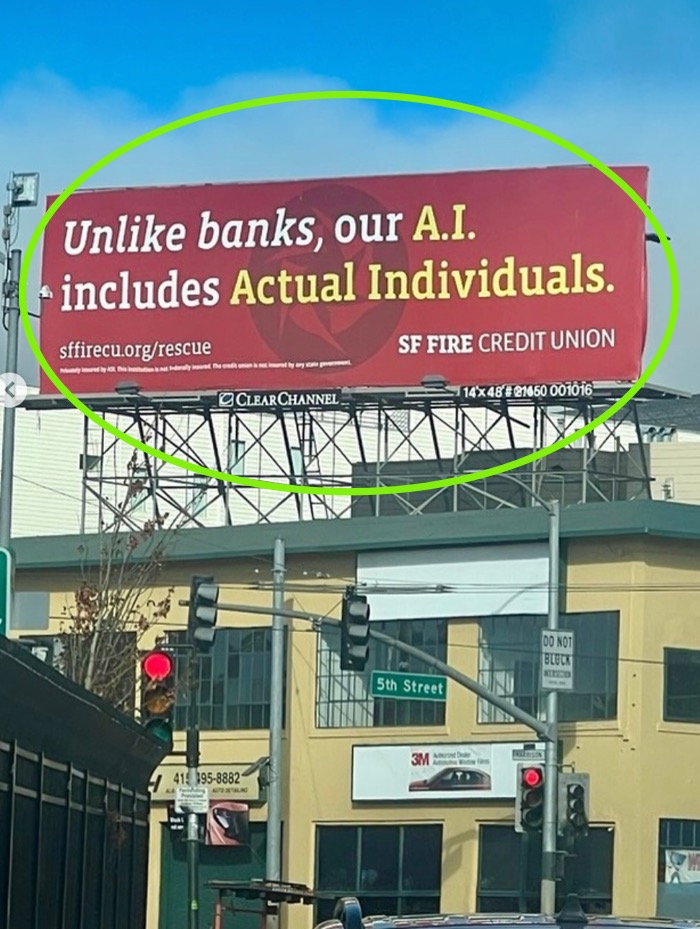
Example of a compelling billboard ad in San Francisco, California – This billboard gets a person’s attention and is actually is helpful bridging the online/AI with human in the loop of customer service.
14 Examples of traditional advertising strategies for doctors and dental practices:
For example, if you are single-location healthcare practice in a typical competitive area, traditional advertising strategies can add value to your patient acquisition. The estimated annual costs for these strategies will vary, here are general ranges based on competitive markets in U.S. cities and will vary by location, media, and scope of campaigns:
1. Print Advertising
- Examples: Local newspapers, magazines, community health guides
- Typical Annual Cost: $3,000 – $15,000
- Notes: Cost depends on ad size, frequency, and circulation. More frequent ads in larger publications increase cost.
2. Direct Mail
- Examples: Postcards, letters, flyers to local households
- Typical Annual Cost: $2,500 – $10,000
- Notes: Costs include design, printing, and mailing. Targeted lists in competitive areas may raise costs.
3. Radio Advertising
- Examples: Local FM/AM spots, streaming radio ads
- Typical Annual Cost: $5,000 – $25,000
- Notes: Pricing depends on ad length, time slots, and station popularity.
4. Television Advertising
- Examples: Local cable or network TV commercials
- Typical Annual Cost: $10,000 – $50,000
- Notes: Costs vary by channel, ad length, and frequency. High-visibility times like evening news cost more.
5. Billboards / Outdoor Signage
- Examples: Roadside billboards, banners near the clinic
- Typical Annual Cost: $3,000 – $20,000
- Notes: Costs depend on size, location, and duration of display. Digital billboards cost more.
6. Event Sponsorship
- Examples: Community health fairs, charity runs, school wellness events
- Typical Annual Cost: $1,000 – $10,000
- Notes: Cost varies by event size, sponsorship tier, and inclusion of branding.
7. Brochures and Pamphlets
- Examples: Informational materials in-office or at local businesses
- Typical Annual Cost: $500 – $3,000
- Notes: Costs include design, printing, and occasional updates.
8. Referral Programs
- Examples: Incentives for patients to refer friends/family
- Typical Annual Cost: $500 – $5,000
- Notes: Cost includes discounts, gift cards, or small incentives; ROI is often high.
9. Professional Networking
- Examples: Collaboration with local physicians, specialists, or wellness providers
- Typical Annual Cost: $500 – $3,000
- Notes: Includes event participation, sponsorships, or hosting small professional gatherings.
10. Health Education Seminars
- Examples: In-person workshops or presentations for patients/community
- Typical Annual Cost: $1,000 – $5,000
- Notes: Costs include venue, materials, and promotional flyers. Free events can reduce costs.
11. Print Directories
- Examples: Phone books, Yellow Pages, local health directories
- Typical Annual Cost: $200 – $1,500
- Notes: Still relevant for older demographics; pricing depends on directory size and distribution.
12. Community Boards / Local Posters
- Examples: Posters in libraries, gyms, pharmacies, or wellness centers
- Typical Annual Cost: $300 – $2,000
- Notes: Costs include printing and permission fees; effectiveness depends on foot traffic.
13. Press Releases
- Examples: Announcements about new doctors, services, or awards
- Typical Annual Cost: $500 – $3,000
- Notes: Costs include writing, distribution, and PR service fees; local media coverage can enhance reach.
14. Patient Appreciation Materials
- Examples: Thank-you cards, newsletters, small gifts for loyal patients
- Typical Annual Cost: $500 – $3,000
- Notes: Includes printing, mailing, or gift costs; helps retain existing patients and encourage repeat visits.

To be effective using offline media to promote your medical practice, you need to:
• Identify your target audience
• Highlight the medical issue they are having
• Present a solution with a positive outcome
• End with a clear call to action
In today’s highly competitive health care industry, you need to emotionally connect with your potential patients to capture their attention. Connecting with them will help build trust and rapport, leading to higher conversion rates. There are several ways you can emotionally connect with a potential patient when using offline media.
Tip No 1. Try to speak directly to your target audience
Your offline media ad may be showing to many people, but it is meant for your target audience. So instead of speaking to everyone, talk directly to your target audience to connect with them. You want to express in words they understand in a pleasant, reassuring tone. You probably interact with your patients on a regular basis at your medical practice. Use positive encounters as a template on how to sound and what words to use when speaking to potential patients in your ad. You do not want to be standing on a soapbox yelling at a crowd to come to your medical practice. The most effective way to talk to someone is in an intimate one on one setting. Create ads that recreate that tone and context, and you’ll find them to be very effective.
Tip No 2. Your ads should be useful and valuable, but also unique and difficult if not impossible, to be recreated by your competitors
You are going to get more attention to your medical practice if you have something that is one of a kind, not something that can be found at every other doctor’s office. Exclusivity is a powerful emotional motivator. If a target audience has access to a service or a product that they can not easily find somewhere else, you’ll hook their attention, and they will tell their friends about it. You do not want to fade into the background, but rather stand out among your competition. There are only so many different topics in healthcare, so try to give them your own unique take on it. The same goes for current events related to health. Try not to say what everyone else is saying, say it your own unique way that can not be replicated by anyone else.
Tip No 3. People gravitate towards the following: Empathy, Compassion, and Humor
Emotions are very powerful. If you get an emotional reaction from someone, you’ve made a powerful bond with them. Empathy, compassion, and humor are very powerful to use in marketing because they are emotions people enjoy relating to most frequently. When you market your medical practice to your target audience, tell an emotional story about how your services helped someone resolve their medical issue. Also, don’t be afraid to have some fun with your marketing to make it humorous. While you certainly should be respectful, look for a joke that only your target audience would “get” or “understand,” but the rest of the general public would not fully appreciate. Also, look to build on a connection with stories about the people who work at your medical practice. Putting a face on your business will help others relate to it and emotionally connect with the services you provide.
Tip No 4. Make a case for why your medical practice is the best selection for their health care decision
More often than not, you will not be the only business in town offering your services. Instead of passively just saying what you do, go on the offensive and tell potential patients why you are the better choice. Provide insights on why you are more cost-effective, experienced, or have better results than others in the area. Your marketing should include data, sources, and powerful imagery to back up your statements. Be mindful not to be too aggressive, no one likes marketing material that is pushy. You can be passionate, but you also must be professional.
Tip No 5. Ask questions that provoke a potential patient to think
Questions are the best way to engage someone. By asking a question, you are making them think and consider the information you’ve just presented them, embedding it into their minds. When medical practices ask people questions in their offline marketing, you are often asking them to recall past experiences with medical services at other health care facilities. The higher the contrast you can make between those past experiences and the services you offer, the more likely you are to make a connection with them. You’ll enter into their mind as a possible choice to get better results or experience then they are used to.
Another great way to connect with a target audience is to answer a question about a current health care topic. Pose the question, and then answer it yourself. Solicit their opinions after taking a stance on an issue and ask them to agree or disagree with you. The more conversations you have with a patient, the better the emotional connection you can make with them.
Tip No 6. Review your campaign every time you re-run it
Engaging in emotionally compelling offline media is not as simple the point, click, and type in a zip code. You must work to create a persuasive ad that will connect with patients on an emotional level. This requires some time and research to develop the best message for your campaign. A mistake that many medical practices make is not updating their campaigns to reflect current events. If you have a particularly successful campaign for one year, don’t assume it will be just as good every year until you retire. You are preventing disappointment by reviewing your marketing materials to make sure they still have the same emotional connection with potential patients.
Advantages of Traditional Offline Advertising and Marketing
- Trust & Credibility: Traditional media often projects a sense of stability and institutional authority, which is critical in healthcare.
- Reaches Non-Digital Audiences: Ideal for connecting with elderly populations or demographics who may not be highly active on social media or search engines.
- Hyper-Local Focus: Because healthcare delivery is predominantly a localized service, physical flyers and mailers can ensure that marketing dollars are spent only on the immediate surrounding community.
- Builds Top-of-Mind Recall: Consistent billboard or print presence keeps your practice’s name in front of commuters and residents, ensuring you are the first point of care when a need arises.
 Send Text
 How may I help you?