

What is AI Based Patient Communication and Is It Effective?
Yes, AI-based patient communication is effective in improving patient engagement, reducing administrative workload, enhancing operational efficiency, and providing cost savings. When implemented correctly, in conjunction with human oversight, it can significantly improve the patient experience, help streamline practice operations, and provide a scalable solution for patient communication. However, by simply adding a AI ChatBot or a Voice based AI agent, you should not expect miracles. After all you are in healthcare, and removing human touch, and forcing patients to “speak to a AI Voice Agent” will win you more patients or happy existing patients.
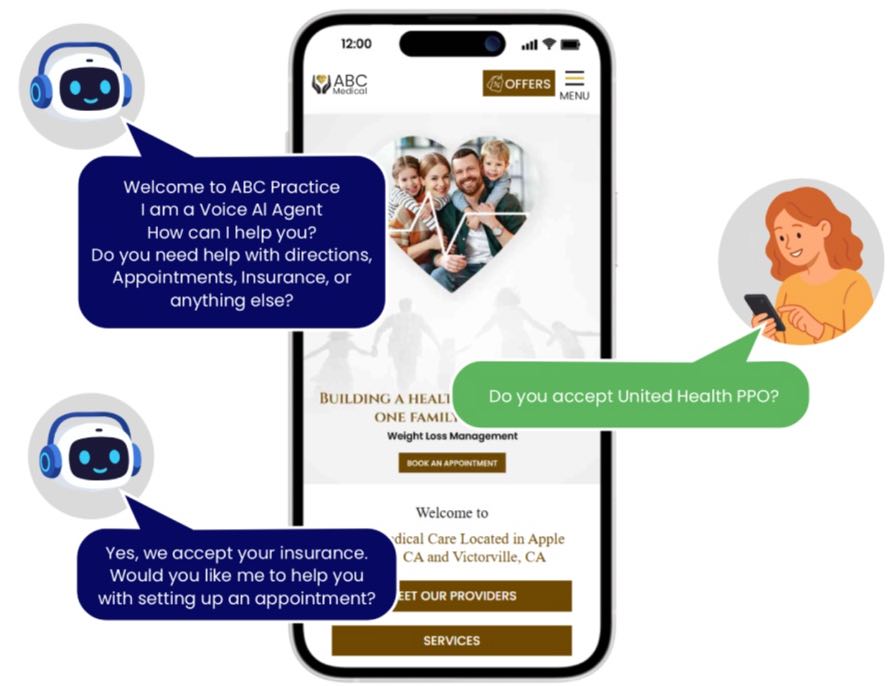
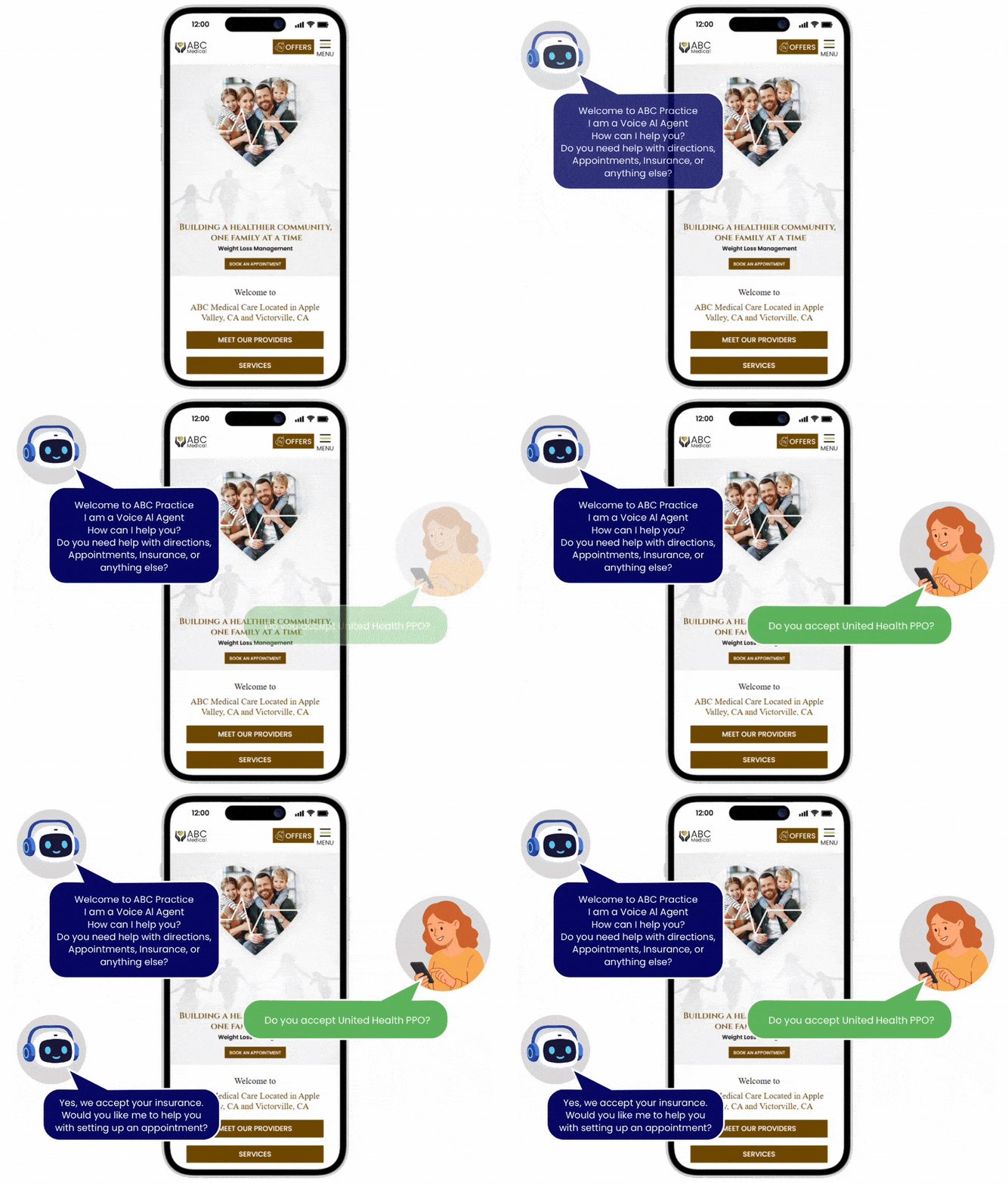
How should an AI agent app be implemented on my medical or dental practice website?
For practices that embrace AI-powered communication, it can be a game-changer in improving overall efficiency, patient care, and business growth. However, AI should complement and enhance human interaction, not completely replace it. The key is to balance AI automation with personalized care to ensure that patients feel supported, informed, and valued at every touchpoint.
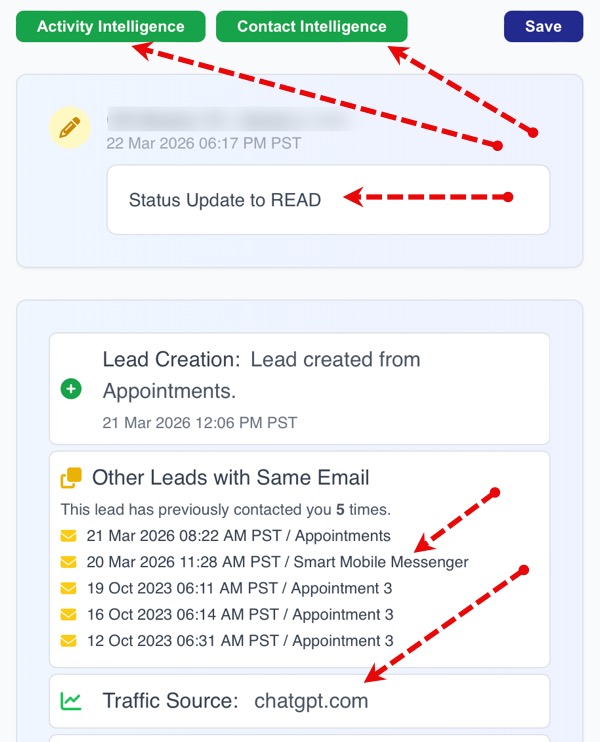
In addition, the AI communication agents are as good as the software, and logic behind the front-end AI communication agents. For high ROI based solutions, the solution is a complete 360 view of a lead and the apps should have “activity intelligence” and “contact intelligence” in the system. Basically you will needs smart CRM that is HIPAA compliant, and that undertsands that you are running e healtchare practice, not a “generic business”.
What is a hybrid communication model (AI + Human) solution?
Ahybrid communication model (AI + Human) yields better ROI and higher conversion rates than a strictly AI-based system because it provides an “escape hatch.” When patients are forced to answer too many automated questions, they get frustrated. Allowing them to bypass the AI and speak to a real human directly improves conversions for four main reasons:
1. Healthcare is High-Stakes and Emotional Booking a medical or dental appointment is often driven by pain, anxiety, or urgency. While AI is efficient, it completely lacks empathy. If a patient is stressed, being interrogated by a bot can feel dismissive. Giving them an immediate option to speak with a human provides the emotional reassurance needed for them to actually follow through and book the appointment.
2. Eliminating the “Friction Bounce” Even the smartest AI agents can get confused and trap users in endless loops if a patient types something unexpected. This creates “friction,” and frustrated patients will simply close the window (bounce) and call a competitor instead. A “skip automation” button eliminates this friction and keeps the high-value lead engaged with your practice.
3. The Psychology of Autonomy and Control While patients don’t mind using AI for quick tasks (like checking hours), they hate being forced to use it for everything. Interestingly, simply knowing that a human is just one click away drastically reduces their anxiety. Giving patients the control to bypass the bot builds trust, and in healthcare, trust is what ultimately drives conversions.
4. Nuance in Medical Triage Medical inquiries rarely fit perfectly into pre-programmed boxes. A patient might ask a multi-part question: “I’m a new patient, my jaw hurts on the left side, I’m on blood thinners, and I need to know if you take Aetna PPO.” An AI will often struggle to process all those variables at once, potentially returning an error message and losing the patient. A human front desk worker, however, can instantly process that complex scenario, answer it, and secure the lead.
What are some key considerations when implementing an AI based communication strategy for a healthcare practice?
1. Improved Patient Engagement and Satisfaction
- 24/7 Access: Patients can receive information, book appointments, and get answers to their questions at any time, enhancing satisfaction by providing convenience.
- Immediate Response: With AI-powered tools like chatbots, patients no longer need to wait on hold for a human agent. AI ensures instant responses to queries, improving response time and patient satisfaction.
- Personalization: AI-driven communication ensures that messages are tailored to the individual patient’s needs, whether it’s a follow-up on their treatment or a reminder about preventive care.
Result: Higher engagement, better patient retention, and an improved overall patient experience.
2. Streamlined Operations
- Automating Repetitive Tasks: AI can automate common administrative tasks, such as sending appointment reminders, collecting insurance details, patient intake forms, or even pre-screening for symptoms. This reduces manual workload for your staff and frees them up to focus on more critical tasks.
- Efficiency in Communication: With AI, practices can handle high volumes of patient inquiries without overburdening staff. For example, an AI tool can answer multiple patient questions simultaneously, whereas a human representative can handle only one at a time.
Result: Increased operational efficiency, less burden on staff, and reduced administrative costs.
3. Cost-Effective
- Reduced Labor Costs: Automating routine communication processes reduces the need for extensive customer service or administrative staff. Chatbots, virtual assistants, and automated messaging systems can handle a large percentage of routine inquiries, lowering operational costs.
- Scalability: AI communication tools scale easily as the practice grows, reducing the need for additional staff or expanded hours to manage patient communications.
Result: Cost savings on labor and increased ability to scale without increasing expenses.
4. Enhanced Data Collection and Insights
- Patient Insights: AI systems can track patient interactions, identify patterns in patient behavior, and generate insights that help healthcare practices improve their services or marketing strategies.
- Predictive Analysis: By analyzing patient data, AI can help predict trends, like when a patient might need a follow-up visit or when to send targeted health information or promotions, improving care and engagement.
Result: Better decision-making and a more data-driven approach to patient care.
5. Better Patient Retention
- Proactive Communication: AI can help send reminders for preventive care, follow-ups, or seasonal health tips, which can help keep patients engaged with the practice and maintain consistent care.
- Personalized Patient Journeys: AI allows for a customized experience for each patient, based on their medical history, preferences, and interactions with the practice. This personalization builds patient loyalty and increases retention.
Result: Stronger patient relationships and higher retention rates.
6. Regulatory Compliance (HIPAA)
- Security Features: When implemented correctly, AI systems can be designed to meet HIPAA compliance standards, ensuring that sensitive patient data (PHI) is encrypted, stored securely, and only accessed by authorized personnel.
- Tracking and Auditing: AI systems can also track and log all patient interactions, providing a secure, auditable trail in case of any compliance review or security breach investigation.
Result: Secure, HIPAA-compliant communication, reducing the risk of privacy violations.
What is the bottom line?
The Bottom Line: PatientGain’s philosophy is that “AI handles the volume, so humans can handle the value.” By letting AI act as a sieve to catch the 60% of routine questions, your staff is freed up to personally handle the 40% of complex, high-value, or frustrated patients—maximizing your ROI without losing the personal touch.
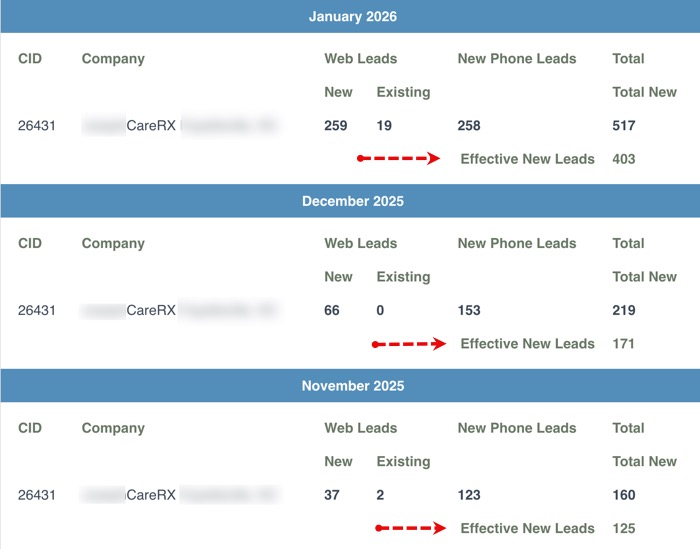
Review of end results: If you look at the documented data below, this practice received 403 new patient inquiries in a single month. As this practice has implemented SPOC app and QuickSpend app from PatientGain, the increase in the new new patient inquiries in a single month, does proportionally increase the workload of the front desk. As repetitive tasks can be handled by the AI Agents and human beings working together.
 Send Text
 How may I help you?