

HIPAA Compliant VS HIPAA Aware Marketing
When it comes to HIPAA, and PHI protection, patient privacy, there is no such thing as HIPAA Aware or HIPAA friendly. You have to be HIPAA Compliant.
From a HHS.gov regulatory standpoint under the Department of Health and Human Services (HHS), a software, service, or organization cannot simply be “HIPAA aware” or “HIPAA friendly”—it must be HIPAA compliant. While marketers often use terms like “friendly” or “aware” to suggest their product has privacy features, these terms have no legal standing under the law.
The Problem with “HIPAA Friendly” & “HIPAA Aware”
- No Legal Definition: The Health Insurance Portability and Accountability Act (HIPAA) does not recognize these terms.
- False Sense of Security: A tool might encrypt data (making it “friendly”), but if the vendor refuses to sign a legal agreement or lacks proper access audits, using it violates the law.
- No Accountability: These labels are often used by companies to attract healthcare clients without taking on the legal liabilities required by HIPAA.
What “HIPAA Compliant” Actually Requires
To legally handle Protected Health Information (PHI), a product or organization must meet rigorous standards, including:
- Business Associate Agreement (BAA): This is the ultimate deal-breaker. If a third-party vendor handles your PHI, they must sign a BAA. This contract holds them legally liable for protecting the data. If a vendor refuses to sign a BAA, you cannot use them, no matter how “friendly” their software is.
- The Security Rule: Implementation of strict administrative, physical, and technical safeguards (like end-to-end encryption, automatic logouts, and unique user IDs).
- The Privacy Rule: Strict rules on how PHI can be used and disclosed.
- Regular Audits & Risk Assessments: Proof that the organization actively monitors and patches security vulnerabilities.
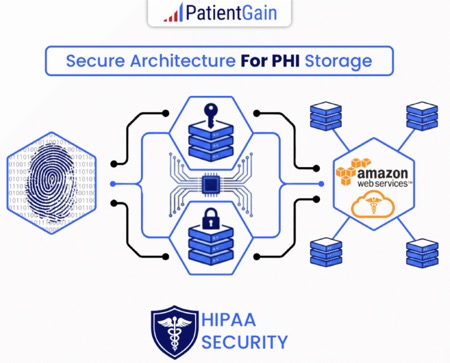

Conclusion: If you are looking for a healthcare marketing company, they cannot be HIPAA friendly or HIPAA aware. They have to be HIPAA compliant.
If you are a Covered Entity (like a doctor’s office) or a Business Associate (like a medical billing company), using a service that is merely “aware” or “friendly” put you at risk for massive government fines and data breaches.
Always look for a signed BAA, and ask these 8 questions
When you hire a marketing agency for your healthcare website, they will become a Business Associate under HIPAA if they have any access to Protected Health Information (PHI). This includes patient names, email addresses, phone numbers, or IP addresses collected through your website’s contact forms, appointment schedulers, or tracking pixels.
1. Will you sign a Business Associate Agreement (BAA) with us before any work begins?
- Why it matters: This is the ultimate deal-breaker. Under HIPAA law, any third-party vendor handling your PHI must sign a BAA. If an agency refuses to sign one or claims they don’t need to because they are just doing “external marketing,” do not hire them. They are avoiding legal accountability.
2. How do you secure data from our website forms, and is it encrypted at rest and in transit?
- Why it matters: Many marketing agencies build simple WordPress or Webflow forms that email patient inquiries directly to a standard, unencrypted inbox. A compliant agency must ensure that any form collecting patient data uses end-to-end encryption (TLS/SSL in transit) and stores that data in a secure, encrypted database (AES-256 at rest).
3. What platforms do you use for website analytics, and how do you ensure they don’t violate HIPAA tracking rules?
- Why it matters: This is one of the most common ways healthcare providers get sued. The Department of Health and Human Services (HHS) has made it strictly clear that using standard tracking pixels (like standard Google Analytics or the Meta/Facebook Pixel) on pages where a user might be seeking care can violate HIPAA if it shares their IP address or activity. Ask if they use specialized healthcare privacy routers (like Freshpaint, PatientGain) privacy-first analytics to govern this data.
4. Are the email and SMS marketing platforms you plan to use fully HIPAA compliant?
- Why it matters: Popular email platforms like Mailchimp or standard Constant Contact generally do not support HIPAA compliance or sign BAAs for standard tiers. If the agency plans to send newsletters, appointment reminders, or patient follow-ups, they must use a platform that actively signs a BAA and supports encrypted transmission.
5. Do you have a formal process for obtaining patient authorization before using any testimonials, photos, or reviews in marketing?
- Why it matters: You cannot simply copy and paste a glowing 5-star Google review onto your website or post a patient’s before-and-after photo on social media without a very specific, signed HIPAA authorization form. Ask the agency to show you the exact authorization templates they use to remain compliant with the HIPAA Privacy Rule.
6. Where will our website and marketing data be hosted?
- Why it matters: Standard shared hosting (like basic GoDaddy or Bluehost plans) is not structured to be HIPAA compliant. The agency needs to host your website on a dedicated, secure cloud infrastructure (like HIPAA-compliant AWS instances, Google GCP with HIPAA, or PatientGain Vault) that is willing to sign a BAA with the agency.
7. Do all your staff receive regular, documented security and HIPAA training?
- Why it matters: A single untrained graphic designer or copywriter logging into your website and taking a screenshot containing a patient’s name can trigger a massive data breach. A truly compliant agency mandates that every staff member who touches healthcare accounts goes through documented annual HIPAA training.
8. Do you have internal workflows that document and track every staff and create log files?
- Why it matters: Under the HIPAA Security Rule (45 CFR § 164.312(b)), any organization acting as a Business Associate must implement technical “Audit Controls”. This means a compliant marketing agency must have internal workflows and specialized software that automatically generate tamper-proof log files.
- If you are evaluating a marketing agency, here is exactly what they should be tracking and documenting regarding their staff and log files:
- Unique User Identification: The agency must give every employee a unique login ID. They cannot use shared accounts (e.g., a single “admin” login that the whole team shares to access your website or database).
- Exact Timestamps: Every action must be recorded with a precise date and time.
- Actions Taken: The logs must detail exactly what the employee did. This includes viewing a file, editing a contact form submission, deleting data, or exporting a list.
- Login Attempts: The system must log every successful and failed login attempt to detect if someone is trying to hack into the system.
- Source Identifiers: The logs should record the IP address and the specific device the employee used to access the system.
- Immutability: HIPAA requires that audit logs be tamper-proof. A staff member should not be able to go in and delete or alter a log file to hide their activity.
- 6-Year Retention: Under federal law, HIPAA audit logs must be securely stored and readable for a minimum of 6 years.
- Strict Access Controls: Access to the raw log files themselves must be highly restricted only to the agency’s security or compliance officers
 Send Text
 How may I help you?