

HIPAA Compliant Analytics For Multi-Location Healthcare Practices
HIPAA-compliant analytics for multi-location healthcare practices require a signed Business Associate Agreement (BAA), secure servers with SOC2 certification (AWS HIPAA Compliant Servers) , and PHI (Protected Health Information) stripping before data reaches standard advertising networks like Google or Meta. Standard tools like Google Analytics out-of-the-box are not compliant because Google does not sign BAAs for standard accounts.
Key Requirements for Multi-Location Practices
- Centralized Roll-Up Dashboards: View consolidated performance across all clinic sites without stitching together separate reports.
- Site-Level Asset Control: Track patient acquisition, form submissions, and phone calls per location with role-based access for regional managers or each practice manager who manages a specific location.
- Compliant Data Routing: Use proxy servers or privacy-first tracking to intercept data, remove PHI, and send only safe conversion signals to ad networks.
How does PatientGain’s SPoSA app implements HIPAA Compliant Analytics For Multi-Location Healthcare Practices?
PatientGain’s SPOSA (Single Point of Secure Analytics) app achieves HIPAA-compliant analytics across multi-location healthcare practices by combining server-side data isolation, automatic PHI stripping, and centralized regional management. Unlike traditional browser-based tools like Google Analytics 4 (GA4), which automatically leak tracking data to public networks, SPOSA acts as a controlled firewall between your clinic’s web traffic and your marketing platforms.
The application implements its compliance architecture across multiple locations through several core components:
1. The “Secure Bubble” Server-Side Ingestion
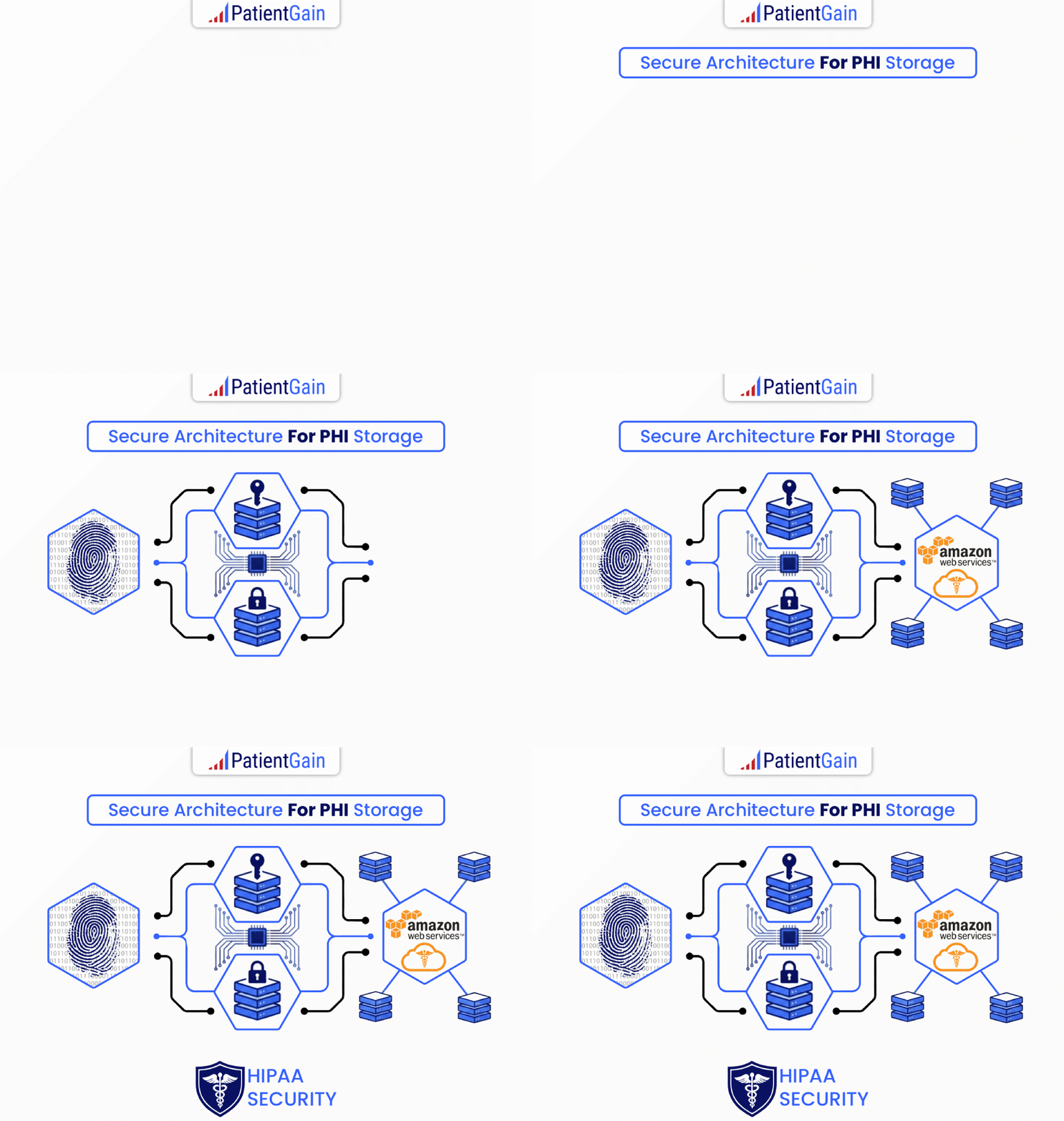
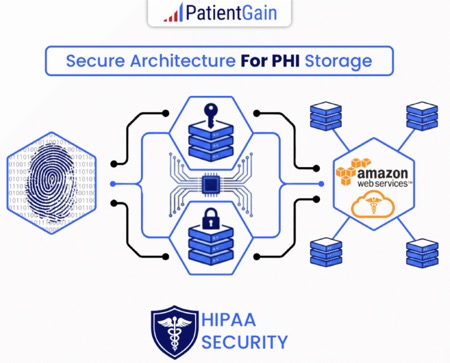
Instead of sending a user’s web interaction directly from their browser to public ad networks, SPOSA uses an isolated, server-side framework hosted on healthcare-certified AWS infrastructure.
- Data Isolation: When a patient visits a location page, clicks to call, or fills out an appointment form, the raw digital data bypasses public networks entirely.
- Direct Routing: The data routes directly into PatientGain’s secure environment under a signed Business Associate Agreement (BAA).
2. Automated PHI Scrubbing & Masking
Once the data enters the server-side “Secure Bubble,” native algorithms instantly strip out Protected Health Information (PHI):
- Anonymization: The software automatically removes user IP addresses, masks browser fingerprints, and redacts sensitive query parameters or URL paths that reveal specific medical conditions.
- Safe External Transmission: Only clean, non-identifiable conversion signals are passed on to external platforms like Google Ads or Meta for attribution.
3. Integration with the SPOC App (Multi-Location Tracking)
The SPOSA framework is deeply integrated into PatientGain’s SPOC (Single Point of Conversion) dashboard. For multi-location practices, this offers unified management:
- HIPAA-Leakage Tracking: It safely bridges the gap between marketing campaigns and clinical actions. It ties specific ad spend directly to actual patient intake actions across various clinics inside one dashboard without exposing PHI to the public web.
- Multi-Location Attribution: The platform maps individual clinic websites, tracking and segregating inquiries (phone calls, texts, form submissions) specifically to the precise physical location where the conversion occurred
4. Role-Based Access Controls (RBAC) & Compliance Audits
To maintain strict compliance across broad clinic networks, the application limits internal exposure to patient data:
- Restricted Views: Dashboards containing raw lead data and marketing attribution sources are locked behind Role-Based Access Controls, visible only to authorized practice owners and regional managers.
- Automated Audit Logs: The system maintains strict audit records that track whenever internal clinic staff views or un-obfuscates data fields. This creates a complete paper trail for HIPAA compliance officers.
Multi-Location Pricing Structure
PatientGain provides this as a fully managed, “Done-For-You” deployment. Their team sets up the tracking code, structures the local site partitions, and removes old, non-compliant tracking codes:
- Base Price: $199 per month for the primary location.
- Expansion Cost: $50 to $100 per month for each additional clinic location.
What is PatientGain pricing to replace the free version of Google analytics, which is no longer HIPAA compliant?
1 location – $199/mon
Solo provider – $100/mon
Up to 9 locations – $199/mon for the first location and then $100/mon per location
10+ locations – $199/mon for the first location and then $50/mon to $75/mon per location – Volume discounts
Example 1 – 15 location dermatology practice.
First location $199/mon + 14 locations x $65 = $910 – Total 910 + 199 = $1109 per month. If you are a provider owned practice then there are additional discounts.
Example 2 – 26 location urgent care.
First location $199/mon + 25 locations x $58 = $1450 – Total 1450 + 199 = $1649 per month. If you are a provider owned practice then there are additional discounts.
Example 3 – 3 location med spa and plastic surgery.
First location $199/mon + 2 locations x $100 = $200 – Total 200 + 199 = $399 per month. If you are a provider owned practice then there are additional discounts.
Example 4 – 7 location mental healthcare practice.
First location $199/mon + 6 locations x $100 = $600 – Total 600 + 199 = $799 per month. If you are a provider owned practice then there are additional discounts.
 Send Text
 How may I help you?