

What is HIPAA Compliance of Healthcare Practice Websites?
HIPAA compliance for a healthcare practice website, dental website, medical practice website, refers to ensuring that any digital channel collecting, storing, processing, or transmitting electronic Protected Health Information (ePHI) adheres to the Privacy, Security, and Breach Notification Rules set by the U.S. Department of Health and Human Services (HHS). While a standard brochure website showing office hours and services does not require HIPAA infrastructure, any interactive feature that touches identifiable patient data must be fully compliant. HHS requires covered healthcare organizations and their business associates to use administrative, physical, and technical safeguards to protect electronic PHI.
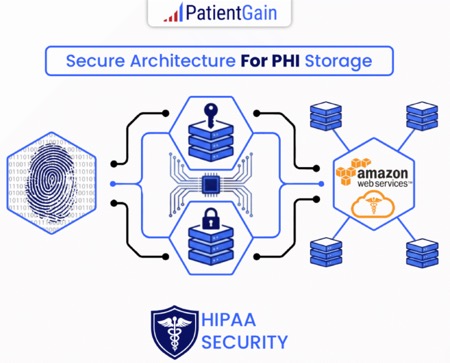
Examples of 12 common overlooked areas, specifically if you are using an agency your healthcare practice website, SEO, paid advertising (Google PPC ads, Meta Ads, TikTok), and external web hosting:
1. The Marketing Agency BAA (with Sub-contractor Addendums)
Because your agency is managing your SEO, running ads, and hosting your website, they are a Business Associate under HIPAA. You must sign a BAA directly with the agency. Furthermore, because they host your site, if they use a cloud infrastructure provider (like AWS, Google Cloud, or Liquid Web), the agency must secure a Sub-contractor BAA from that hosting provider to maintain the legal chain of compliance.
2. Meta Conversions API & Server-Side Tagging (For Facebook Ads)
Standard Facebook tracking pixels send browser data directly to Meta, which violates HIPAA because Meta will not sign a BAA. To run paid Facebook ads compliantly, your agency cannot use standard pixels. They must implement Server-Side Tagging or the Meta Conversions API (CAPI) via a HIPAA-compliant proxy server. This setup allows the agency to scrub away all ePHI (like IP addresses, URLs showing medical specialties, and form-fill data) before sending anonymized conversion events to Meta.
3. Server-Level Encryption and Backups (For Agency Web Hosting)
When an agency provides web hosting, standard shared hosting will not suffice. The agency must provide a dedicated or virtual private server environment where data is encrypted both in transit (SSL/TLS) and at rest (on the server drive). Additionally, any automated website backups the agency schedules must be encrypted and stored in a secure, HIPAA-compliant cloud storage bucket backed by a BAA.
4. SEO Search Query & Keyword Tracking Traps
When optimization agencies track how users find your site, they often look at user paths. If a user searches for a highly specific, stigmatized condition (e.g., “addiction treatment near me”), clicks your organic search listing, and fills out a form, linking that specific search query to that user’s IP address or session ID creates ePHI. Your SEO analytics tools must be configured to mask user identities to keep aggregate data anonymous.
5. IP Address Logging in Agency Security Monitoring
Agencies hosting websites install firewalls and security tools (like Cloudflare or Wordfence) to prevent hacking. These tools log visitor IP addresses to block malicious traffic. Because an IP address combined with a visit to a medical website constitutes ePHI, the agency must ensure these security logs are stored securely, automatically purged after a set timeframe, and never transmitted to third parties without a BAA.
6. Dynamic Call Tracking for Ad Attribution
To prove their Facebook ads or SEO efforts are working, agencies often use dynamic call tracking (like CallRail) to show different phone numbers to different web visitors. Because these tools track caller IDs, map user sessions to phone calls, and often record conversations, they capture heavy amounts of PHI. Your agency must use a HIPAA-compliant tier of the call tracking software and secure a BAA with that specific vendor.
7. Unencrypted Lead Notifications (SMS & Email)
When a new patient submits a form on the hosted website, the platform often sends an automatic alert to your practice staff or the agency’s marketing team. If these notifications contain patient details (name, phone, medical intent) and are sent via standard email or SMS, it is a data breach. The agency must configure the server to send secure, encrypted email alerts or abstract the data entirely (e.g., “You have a new lead on the portal”).
8. Agency Employee Access Controls (RBAC)
With an agency managing your SEO and hosting, multiple people (developers, SEO specialists, copywriters, ad managers) will need access to your website backend. Giving the agency a single, shared “Admin” login violates HIPAA’s audit trail requirements. Every single agency employee must have their own individual user account with Role-Based Access Controls, ensuring a copywriter cannot view or download patient form databases.
9. Secure API Integrations with CRMs or Portals
If your website forms send patient information into an external CRM or Patient Management System, the data must travel through an API. Because your agency is hosting the website and managing the code, they are responsible for ensuring this API connection is fully encrypted and that no patient data is accidentally left cached in cleartext within the website’s local database logs.
10. Reviews Syndication and Ad Retargeting
Agencies often want to feature patient reviews on the site for SEO and conversion benefits, or set up ad retargeting to show Facebook ads to past website visitors. Both tactics are major compliance traps. You cannot retarget ads to past website visitors using health-related data, and you cannot pull patient reviews onto your hosted site without explicit, signed HIPAA marketing authorizations from those patients.
11. Enforced Multi-Factor Authentication (MFA)
Because your agency manages the hosting infrastructure and backend access, they must enforce MFA across all touchpoints. This includes the hosting control panel (e.g., cPanel, AWS console), the website CMS (WordPress, Webflow, etc.), and the ad accounts. A single compromised agency password shouldn’t allow a hacker to access the server where patient interactions are processed.
12. Notice of Privacy Practices (NPP) and Cookie Banner Alignment
Your agency must ensure your digital privacy infrastructure matches your real-world compliance. This means prominently displaying a link to your Notice of Privacy Practices (NPP) in the website footer. Furthermore, if the agency uses cookie banners to comply with state privacy laws, the banner logic must be tightly integrated so that tracking scripts do not load at all until compliance criteria are cleared.
How many BAA’s are typically required if I use an agency to build and manage my healthcare practice website’s complete marketing?
If you hire a single, outside agency to handle your healthcare practice website’s complete digital marketing ecosystem—including SEO, paid Facebook ads, and web hosting—you will typically need a minimum of 5 to 8 distinct Business Associate Agreements (BAAs) active in your network.
While you only sign a BAA directly with a few companies, your agency is legally required to secure downstream BAAs (Sub-contractor BAAs) with the vendors they use to host and track your data. If any link in this chain is missing a BAA, you are exposed to significant HIPAA liability.
The required BAAs are divided below into the ones you must sign directly and the ones your agency must secure:
1. BAAs You Sign Directly (Typically 3 to 4)
As the Covered Entity, you must execute a BAA directly with any core platform or vendor that handles your patients’ electronic Protected Health Information (ePHI).
- The Marketing Agency itself: This is your primary BAA. Because their staff will have administrative access to your website backend, form submissions, and analytics dashboards, they are a primary Business Associate.
- The HIPAA-Compliant Web Form Provider: Even if your agency builds the site, you should use a dedicated, secure form plugin or tool (such as Jotform Enterprise, Formstack, or Hushmail) to collect patient names, phone numbers, and symptoms. You must sign a BAA directly with this provider.
- The CRM or Patient Management System: If website form submissions flow automatically into a Customer Relationship Management (CRM) tool or an Electronic Health Record (EHR) system, you must have a BAA with that software company.
- The Encrypted Communication Vendor: If your website automatically sends email or SMS confirmations to patients or staff when a form is filled, the email relay service (like Paubox or Virtru) requires a BAA.
2. BAAs Your Agency Must Secure (Typically 2 to 3 Downstream BAAs)
Under HIPAA Omnibus rules, your agency cannot pass your data through third-party tools unless they secure a Sub-contractor BAA. You should request proof from your agency that these agreements are actively signed:
- The Infrastructure/Cloud Hosting Provider: Since your agency is providing the hosting service, they do not physically own the data servers. They are renting space from a cloud giant like Amazon Web Services (AWS), Google Cloud Platform (GCP), or a specialized host like Liquid Web. Your agency must have a signed BAA with that hosting provider for the specific server your site sits on.
- The Server-Side Analytics Proxy Host: Because standard Google Analytics and Meta Pixels violate HIPAA, your agency must use a “Server-Side Tagging” proxy (like a dedicated server on Stape.io or an AWS instance) to scrub IP addresses and private medical URLs before sending data to Facebook. Your agency must sign a BAA with the platform hosting that proxy.
- The Dynamic Call Tracking Software: If your agency tracks phone call conversions from their Facebook ads or SEO using a tool, they must use a HIPAA-compliant plan and sign a BAA with that software company.
Quick Chain of Custody Summary
| Entity Handling Data | Who Signs the BAA? | Why It’s Required |
|---|---|---|
| Marketing Agency | You + Agency | They have backend website and marketing access. |
| Secure Form Software | You + Form Vendor | It collects initial patient intake data. |
| Marketing CRM, Leads Funnel | You + CRM Vendor | It stores the patient records and leads. |
| Cloud Server Host (e.g., AWS) | Agency + Cloud Provider | It houses the server database and website backup logs. |
| Server-Side Tracking Proxy ( Google Analytics PHI Issue) | Agency + Proxy Vendor | It processes and strips PHI before it reaches Meta/Google. |
| Call Tracking Software | Agency + Call Software | It records calls and tracks patient phone numbers. |
| Email Marketing Software | You + Email Marketing Vendor – Like Mail Chimp Email Marketing | Sends monthly Email marketing |
| SMS/Texting App | You + SMS/Texting Vendor | Sends text messages to patients |
| ChatBot | You + ChatBot Vendor | ChatBot app is typically added to your practice website. It may display wait times, or collect basic information from patients during times when your practice is closed or your staff is busy. |
If I use PatientGain’s PLATINUM service, can I address these items from a single vendor?
Yes — for the healthcare practice website, SEO, advertising (Google, Meta), patient-acquisition, communications, analytics, and digital-marketing layer, PatientGain’s current PLATINUM service is designed to consolidate all of these functions under one primary vendor and one BAA. PatientGain explicitly describes PLATINUM as replacing roughly 5–8 separate vendors with a single managed solution.
| HIPAA / website requirement | PatientGain PLATINUM |
|---|---|
| HIPAA-compliant website | Included — PatientGain creates, hosts, maintains and optimizes the website. BAA is included. |
| HIPAA website hosting | Included — PatientGain states PLATINUM hosting runs on Google Cloud infrastructure configured for its healthcare environment. BAA is included. |
| Business Associate Agreement | Included — PatientGain confirms BAA covers the applicable website, apps and data stack, and even the service – Every staff member goes through background check, Security and HIPAA training. Every staff member attests (monthly) to if they are of aware any HIPAA violations they must report it. |
| Secure contact / lead forms | Included . BAA is included. |
| Digital intake forms | Included — forms are set up for the practice. BAA is included. |
| Patient appointment requests | Included — integrated scheduling/appointment functionality. BAA is included. |
| HIPAA-compliant Leads Funnel + CRM | Included — integrated with website inquiries, SMS, chatbot, calls and email marketing. BAA is included. |
| HIPAA-compliant website analytics | Included — secure analytics and lead attribution are bundled into GOLD, PLATINUM service . BAA is included. |
| Consent management | Included — PatientGain lists its Consent Manager app as part of the PLATINUM platform. BAA is included. |
| Role-based/user access | Included — multiple users and access levels are supported. BAA is included. Even internal staff members have restrictions on what they can see or access. There are RBAC for engineers, project managers. |
| Website lead tracking | Included — leads funnel and Single Point of Conversion dashboard. BAA is included. |
| Call tracking | Included — includes new-patient/call tracking functionality. BAA is included. |
| Two-way texting | Included — available through its integrated messaging dashboard. BAA is included. |
| Email marketing | Included — newsletters are created for the practice to review/approve. BAA is included. |
| Chatbot | Included — PatientGain confirms its medical chatbot as HIPAA-compliant. BAA is included. |
| Reputation/review management | Included — SMS/email/kiosk-oriented review-management apps. BAA is included. |
| Google Business Profile posting | Included — currently advertised as up to 20 Google posts/month. BAA is included. |
| Facebook / Instagram posting | Included. The practice must review content before posting. |
| SEO | Included — monthly SEO content marketing is part of PLATINUM. |
| Website maintenance | Included. BAA is included. |
| EMR/EHR connector | Available for extra fees. |
The biggest benefit of PLATINUM service is consolidation
A conventional medical practice might have something like:
Website company
- hosting company
- WordPress developer
- secure forms vendor
- analytics vendor
- CRM
- texting company
- Mailchimp
- chatbot vendor
- call-tracking company
- reputation-management software
- SEO agency
- social-posting company
 Send Text
 How may I help you?