
Facebook VS Google Advertising ROI For Doctors and Dentists
Facebook & Instagram (Meta) advertising can be very effective, just like Google search advertising. However, overall Google search ads perform much better than Facebook and Instagram display ads for doctors and dentists. The ROI is greater for advertising for doctors on Google search. This data is consistent across multiple medical disciplines. Key difference we have found is that Facebook and Instagram (and other social media ads like TikTok, SnapChat) are more effective at “awareness” and introducing a brand. Whereas, if your objective is get new patients in your dental or medical practice for procedures, Google search, PPC ads are more effective. However, if you have a medical spa or aesthetics practice, then social media can also be effective. All of this assumes the advertising team is knowledgeable and specialist in healthcare advertising and conversion tracking. Google PPC Ads are based on user “Intent” VS Meta ads are based on user “interest”.
For example we analyzed campaigns from the last 2 years and found that while Facebook, IG ads are easier to setup, and cheaper based on “per action” meaning per click, eventually the return on investment is higher from Google ads.
ROI Data:
Generally, if most of your leads are being generated from Social Media, you will get many inquiries but most of them are low quality leads. So actual paying patients/clients is much less. Compared to a lead originated from Google search ads or Google SEO, our data shows much higher conversion rates. Generally, if using Google PPC ads correctly, if 100 patients/clients contact you and indicate they are “new patients/clients”, you should be able to convert 31 into real patients/clients. However, if leads are originating from social platforms, we see less than 5 convert to real patients/clients. Another strategy used is to add all the social leads into an Email database, and start sending them drip campaigns. However, as a medical or dental practice that is subject to HIPAA, you cannot store, capture leads/patient information on social media platforms like Meta. Meta is not HIPAA compliant.
Google PPC Ads are based on user “Intent” VS Meta ads are based on user “interest”
To distinguish between the two major platforms: Google Ads typically yield higher-quality leads with a more immediate conversion intent due to targeting users actively searching for services, while Meta Ads are better for building brand awareness and reaching potential patients earlier in their decision-making journey by targeting based on interests and demographics. Google Ads often have a higher cost per click but can deliver a greater return on investment (ROI) for high-intent searches, whereas Meta Ads have a lower cost per click but lower immediate conversion rates, as users are not actively seeking a solution at that moment.
- Google PPC Ads (Search Network) primarily target users based on their immediate, explicit intent as demonstrated by the specific keywords they type into the search bar. Users are actively searching for a medical or dental service, solution, product, or information right now.
- Meta Ads (Facebook/Instagram) primarily target users based on their inferred interests, demographics, and behaviors observed over time on their platforms, aiming to capture passive attention in a user’s social feed.
Breakdown of the differences:
| Feature | Google PPC Ads (Search Network) | Meta Ads (Facebook/Instagram) |
|---|---|---|
| User State | Active searching; high commercial intent | Passive scrolling; low immediate intent |
| Targeting Basis | Keywords the user types or speaks to a device | Demographics, interests, behaviors, connections |
| Ad Placement | Search results pages, right when the user needs something | Social media feeds, interrupting the user’s content consumption |
| Goal | Capture existing demand and provide immediate solutions | Generate new demand, build brand awareness, and interrupt scrolling with engaging visuals |
While Google offers interest-based targeting through display and video networks, and Meta allows for some intent inference based on recent activity, the fundamental philosophical difference lies in capturing existing demand versus generating new demand. Google Ads often have a higher cost per click but can deliver a greater return on investment (ROI) for high-intent searches, whereas Meta Ads have a lower cost per click but lower immediate conversion rates, as users are not actively seeking a solution at that moment.
Key differences
| Google Ads | Meta Ads (Facebook/Instagram) | |
|---|---|---|
| Primary Return | High-intent, immediate leads and appointments | Brand awareness, relationship building, and long-term patient acquisition |
| Typical Lead Quality | Higher quality, as users are actively searching for a specific service or solution | Lower immediate quality, as users are scrolling and not in a “search” mindset |
| Conversion Intent | Strong (“bottom of the funnel”) | Weaker (“top of the funnel”), building interest over time |
| Cost Per Click (CPC) | Generally higher, especially for competitive medical terms | Generally lower |
| Return on Investment (ROI) | Can be very high for specific, high-intent searches | Can be high, but conversion rates are lower due to lower initial intent |
| Best For | Urgent needs, new practice openings, specific promotions, or highly competitive local markets | Building trust, promoting general services, reaching specific demographics, and nurturing leads over time |
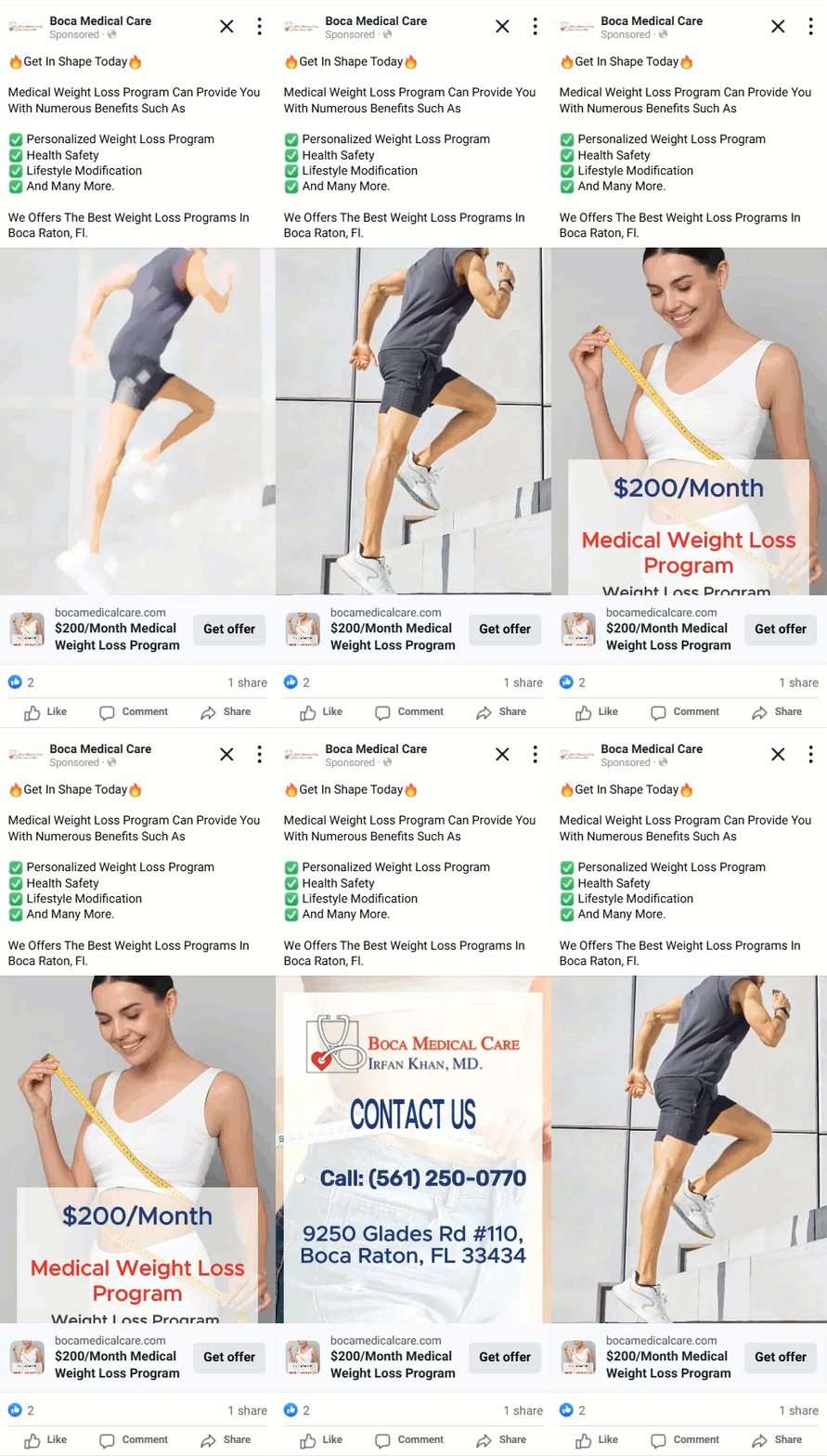
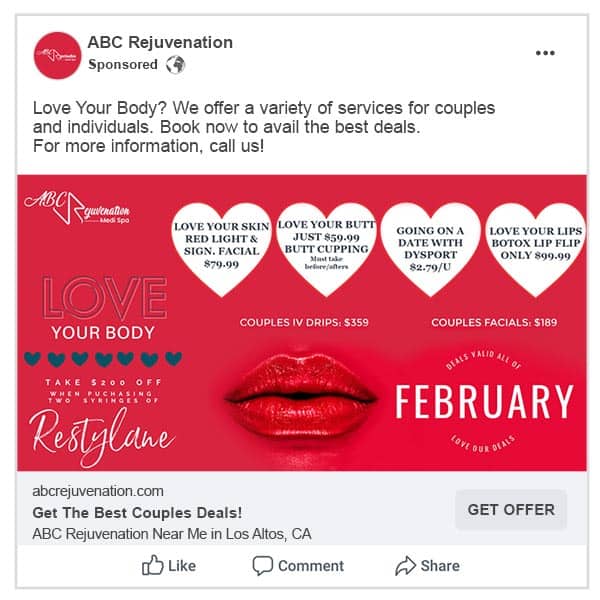
Example of a Facebook ad : This is video ad for a medical practice on Meta, target is potential patients interested in medical weight loss.
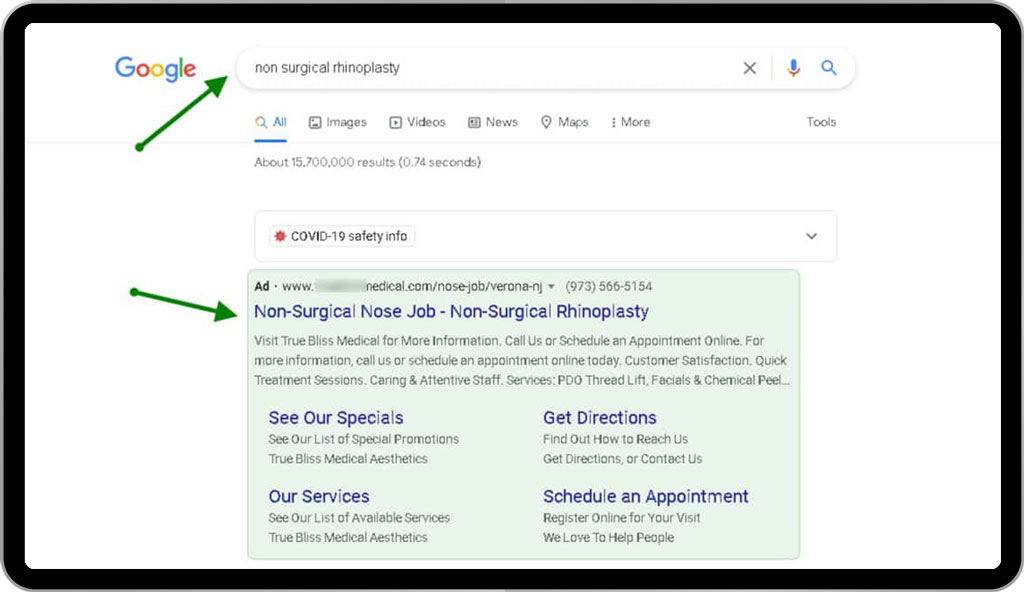
Example of a Google PPC ad : This is a Google search PPC ad for a medical practice, target is potential patients interested in non surgical nose job (rhinoplasty)
It’s a given that you must advertise online to be successful these days. Online Search Advertising, Facebook Advertising, Display Advertising & Re-Marketing are constantly changing. Medical and dental practices need to use the latest trends and strategies in online advertising. Our tests were conducted using multiple campaigns and multiple type of clinics. For example MedSpa, elective services produced better ROI then non-elective services, but even then, Facebook advertising ROI is still less than Google’s search PPC ads ROI. However we typically recommend a mix of Google and Facebook ads for most medical marketing, with most of the ads dollars going towards Google. This may change in the future, but as of right now, Google still produces best ROI for your medical practice.
Results of Advertising for Dentists and Doctors – Google VS Facebook (and Instagram)
The ROI is greater for advertising for doctors on Google PPC search compared to Facebook, Instagram display advertising. Lets go over an example below. Key difference is :
1) Google PPC Ads are based on user “Intent”, and they use artificial intelligence to improve the ads and conversions.
2) Facebook VS Instagram ads are based on user “Interest” and past history. Facebook and Instagram also use AI (Artificial Intelligence and Data Science) to predict the conversion of each ad
Results: Our data from thousands of medical marketing campaigns, shows that “Intent” wins and is more accurate and produces better online advertising ROI for dentists, surgeons & healthcare practices.
For aesthetics and weight loss practices, Facebook and Instagram produce good results. However the total cost of per “action” has increased significantly in recent months. For example average cost per PPC click in the example below is $7.89 and average cost per “event” is $2.13 on Facebook and Instagram. However the number of actual conversions are less from Facebook and Instagram. We see more leads but less actual customers from Facebook and Instagram, for the same amount spent. This could be that most potential patients on social media have more time than money, and they are not actively looking for certain services. In this case, if the average cost per Facebook and Instagram “event” is $2.13 on Facebook and Instagram – the data shows that social media platforms consider that if a person clicks on your ad, it is a success and they are done. If an ad is displayed on Google search PPC , in response to a specific search, the person clicks on your ad and Google considers it a success. However that is only 25% of the success. The rest 75% happens on your website. You can capture leads on social media pages also. However our data shows that conversion is 45% to 50% less compared to lead captured on your website, with specific page with service information. So we recommend capturing leads on a website page only. You also have to consider HIPAA compliance issues. Social media platforms are generally not HIPAA compliant. Remember that each campaign is different, and online competition for the same potential patient is constantly changing and is extremely dynamic. It also depends on who is managing your ads. We also see more bugs and inconsistent behavior of algorithms on Facebook and Instagram, compared to Google.
Example Campaign Data
The time frame is 1 month, 30 days. The budget spent is almost the same on Google Search and Facebook Ads for this medical practice. This an esthetics practice with a mix of medical weight loss services.
Google CPC resulted in 2241 total visits, with 5078 page views, on average 3.01 page views per visit. During this time there were 78 conversions and 13 new sales. Each sale is approx $5000 for this medical clinic.
Facebook CPC resulted in 5036 total visits, with 6043 page views, on average 1.20 page views per visit. During this time there were 26 conversions and 4 new sales. Each sale is approx $5000 for this medical clinic.
Conclusion: Based on this and similar data from hundreds of medical practices, we know that Facebook (and Instagram) ads work, however ROI from Google search ads is much higher, however if you are trying to build a brand and an awareness campaign, then social media is a better choice. If you are selling products, rather than medical services, then social media produces almost identical results.
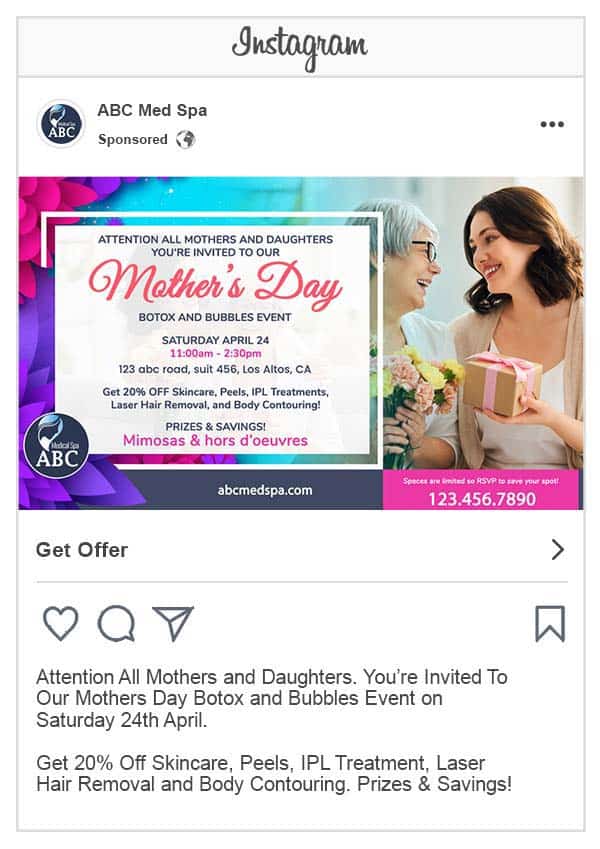
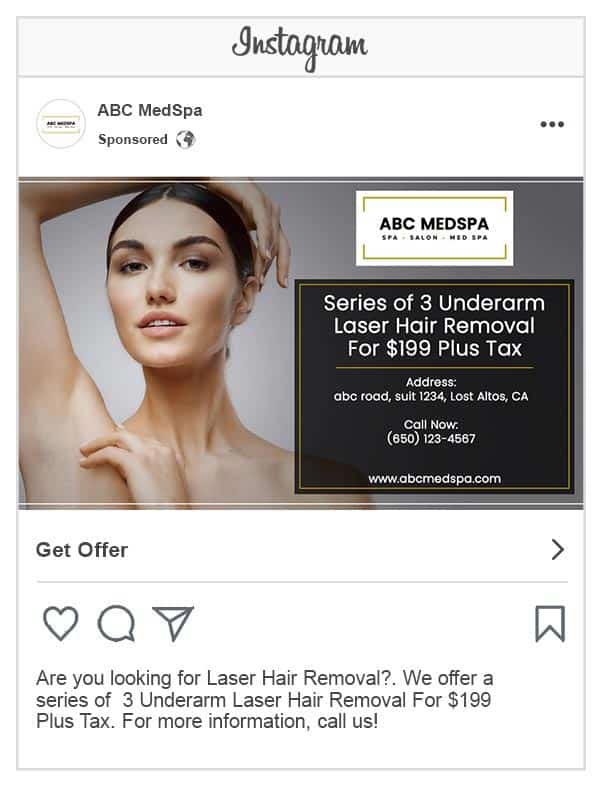
Example of an Instagram ad :
 Send Text
 How may I help you?