

HIPAA Compliant Email Marketing VS HIPAA Compliant Email Service
Common question asked by healthcare practice managers: What is the difference between HIPAA Compliant Email Marketing VS HIPAA Compliant Email Service? Do I need both ?
The terms HIPAA Compliant Email Marketing and HIPAA Compliant Email Service are closely related, but they refer to different aspects of email communication that healthcare providers and practices must consider to maintain compliance with the Health Insurance Portability and Accountability Act (HIPAA).
1. HIPAA Compliant Email Marketing
Definition: HIPAA Compliant Email Marketing refers to the practice of using email as a marketing tool in a way that adheres to HIPAA guidelines, particularly regarding the privacy and security of Protected Health Information (PHI).
Key Characteristics:
- Patient Consent: Email marketing campaigns may involve targeting patients with promotional content, health tips, appointment reminders, newsletters, or other communication. For HIPAA compliance, practices must obtain explicit patient consent to use their information for marketing purposes, especially when PHI is involved.
- Sensitive Content: In email marketing, care must be taken not to include PHI without the patient’s consent. For instance, sending an email with a patient’s health condition or test results would violate HIPAA unless the patient has consented to such disclosures.
- Third-Party Vendors: When using email marketing platforms or services (e.g., Mailchimp, Constant Contact), the provider must be HIPAA-compliant and sign a Business Associate Agreement (BAA) with the healthcare practice. The vendor must guarantee that they will protect PHI and adhere to HIPAA regulations in their processes.
- Security Measures: Marketing emails containing sensitive patient information should be sent through secure, encrypted channels to prevent unauthorized access. This often involves HIPAA-compliant email systems that ensure data security.
- Unsubscribe Option: Patients must always be able to opt-out of marketing communications, ensuring they retain control over their information.
Example: A healthcare provider sending out a monthly newsletter that includes health tips and promotion of services (such as weight loss programs or seasonal vaccinations) must ensure that the email platform is HIPAA-compliant, and that patient data (like names and email addresses) is not shared without consent.
Companies that offer such a service is like PatientGain’s Monthly Email Marketing for healthcare providers.
Key Features of PatientGain’s Monthly Email Marketing Campaigns
- Educational Content: Newsletters focus on specific services your practice offers, such as “The Benefits of Morpheus8” or “Managing Chronic Back Pain,” to establish authority.
- Patient Reactivation: Automated “recall” emails target patients who haven’t visited in over six months, often offering an incentive to return for routine care.
- Legal Compliance: The system records your IP address and a time-stamp when you click “APPROVED” on a campaign for legal protection.
- Data Cleansing: The platform automatically identifies and removes invalid emails, frequent complainers, or those who opt out, protecting your sender reputation.
- Visual Assets: Campaigns are designed with practice-specific photos, infographics, and logos to increase open and consumption rates.
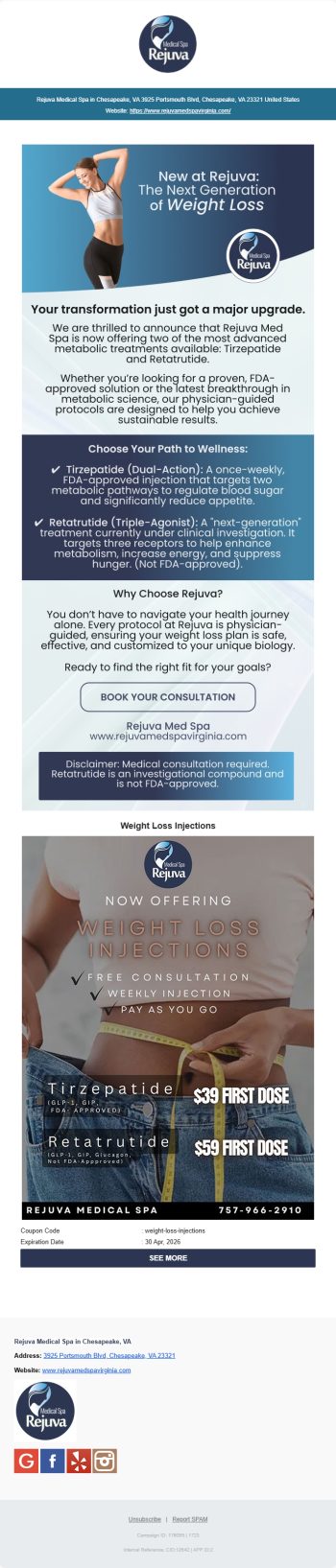
Example of monthly newsletter for a medical weight loss practice, using PatientGain’s PLATINUM service.
Standard Content Elements
PatientGain recommends including four key pillars in every marketing email:
- Health Concern Information: Addressing a specific medical issue.
- Educational Link: A link to a current blog post on your website.
- Staff/Provider Profile: Introducing a new team member to build trust.
- Service Promotion: A clear call-to-action for a specific treatment or check-up.
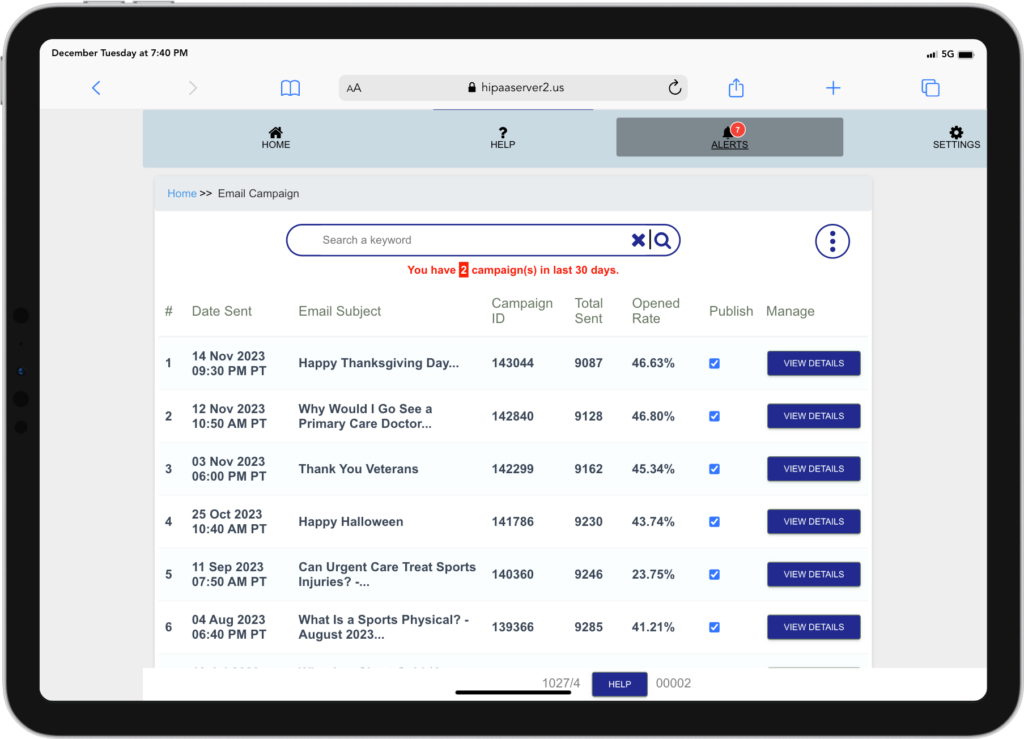
Example of monthly newsletter for a primary care practice, using PatientGain’s PLATINUM service. In this example this dashboard is measuring the open rates of the Email campaigns. In the month of Nov 12 – Email campaign was sent to 9128 Emails. 46.80% of the patients in this list opened the Email. Which is a very good number.
2. HIPAA Compliant Email Service
Definition: A HIPAA Compliant Email Service refers to an email system or platform that meets the technical and administrative requirements of HIPAA, ensuring the secure transmission and storage of PHI during regular email communication, whether for patient correspondence, appointment reminders, or sharing test results.
Key Characteristics:
- Secure Transmission: The email service must use encryption to ensure that PHI is transmitted securely, preventing unauthorized access during the sending and receiving of emails.
- Business Associate Agreement (BAA): The email service provider must be willing to sign a BAA with the healthcare provider to outline responsibilities for protecting PHI, ensuring that both parties are in agreement about data security measures.
- Access Control: The email service must implement strict user access control policies, ensuring only authorized personnel can access PHI sent or received via email.
- Audit Trails: The system should maintain detailed audit trails of email communication, providing a record of who accessed the PHI and when. This is crucial in case of audits or breaches.
- Data Retention and Deletion: A HIPAA-compliant email service must have specific policies and tools in place to retain, archive, and securely delete emails that contain PHI in line with HIPAA retention requirements.
- No Unauthorized Sharing: The service should prevent PHI from being disclosed to unauthorized recipients. For example, automatic forwarding or emails sent to incorrect recipients should be blocked.
Example: A healthcare provider using a HIPAA-compliant email service like Microsoft 365 (with its HIPAA settings configured) to send lab results or appointment reminders to patients. The email system must ensure that all communications are encrypted and protected, and that any PHI contained in the email is kept secure at all stages.
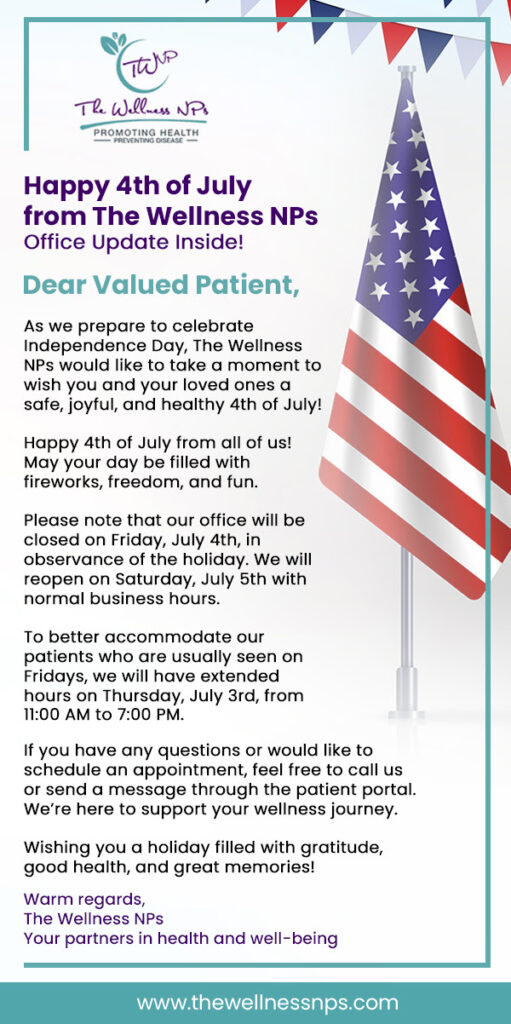
Example of monthly Email Marketing for 4th of July for a Wellness Practice. This practice is using PaitentGain’s PLATINUM service.
 Send Text
 How may I help you?