

Digital Marketing ROI (Return On Investment) for Urgent Care Practices
Medical marketing ROI is also known as healthcare marketing ROI. In the world of digital marketing, marketers often focus on marketing results, however these may not result in profits and growth of the healthcare practice, like an urgent care practice. It is important to distinguish between business results VS marketing results.
First, the formula for calculating ROI for your healthcare practice marketing efforts
(Total revenue generated Minus $ spend on campaign ) Divided by $ spent on a a campaign

To measure the ROI for an urgent care, specific metrics to track include Cost Per Acquisition (CPA), conversion rates (appointment bookings, form submissions), and patient value through metrics like Customer Lifetime Value (CLV) and tracking patient sources to connect marketing spend to patient visits and revenue.
Example 1: Case study single location – Urgent care located in a very competitive area of Florida. This practice is using PLATINUM service for 5 years. They have 9 exam rooms, and open 7 days a week, 13 hours a day.
Needless to say, very busy and handling 100+ patients per day. For the first year, Google ads budget was set at $5000/month – They are within 5 miles of 5 other urgent care clinics. The population is dense, but competition is very high. After SEO started building, the ads budget was reduced to $4000/mon – this took 9 months. Additional 10 months the ads budget is set at $3000/mon, $100/day. Most of the PPC keywords are very targeted now. 58% of the new leads are from Organic SEO, including ChatGPT referrals, Google SEO, Local SEO and Google Gemini AI. 22% are from direct – meaning patients are looking for the the brand directly, and the paid search, Google PPC is producing about 12% of the new patients. See data below.
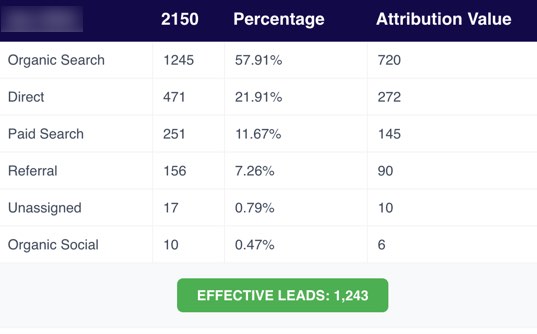
So what is the ROI? Cost of PLATINUM Service $1399 + $3000 in ads = $4399 / month. Assuming each urgent care patient spends $225 per visit. According to the Urgent Care Association, the average cost of an urgent care visit was about $171 – however. a more recent survey suggests $280. So mid point is $225 per visit. About 24% of these patients are also converted to long term primary care patients also. A common benchmark for LTV in primary care is about $3,000 per patient over the life of their relationship with the practice. Another insurance data suggests $4800 per patient over the life of their relationship with the practice.
So if this urgent care (and primary care on the side) attracts 3000 patients and converts 720 patients into long term primary care patients, by spending $4399 per month to achieve this ROI is in excellent category, patient acquisition cost $1.46 per patient. However this data is unique to this practice only, and your results will vary. Also note that this practice has excellent staff, very good location, and 4.9 ranking on Google reviews from over 1200 patients. So the success is due to many factors.
Example 2: Case study multiple locations – Urgent care network of 8 clinics located in competitive area of mid-west US.
This practice is using PLATINUM service for 7 years. They started with 1 location and have grown to 8 locations. The strategy is to buy retiring primary care providers, and turn the practice to a “walk-in” clinic and then eventually to Urgent Care (with primary care services). In the example below, there are 5811 new patient leads/inquiries from the website.
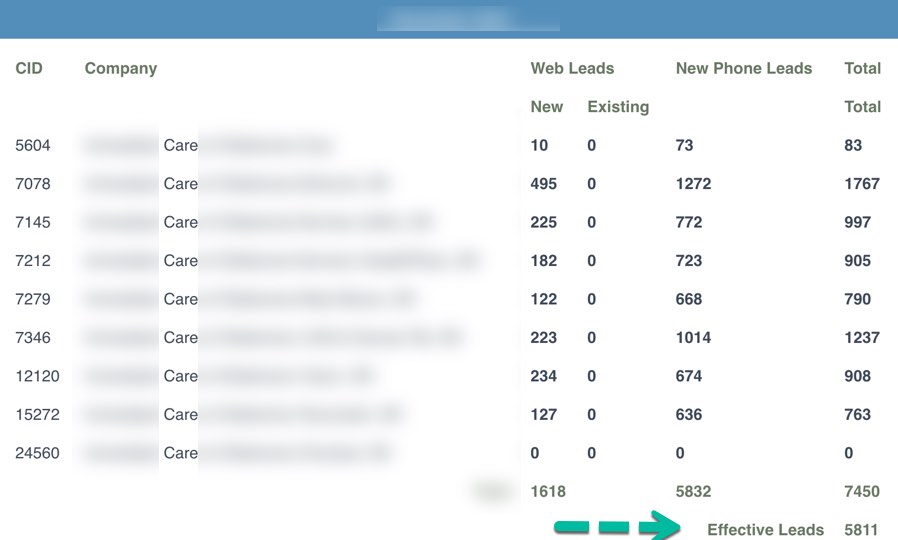
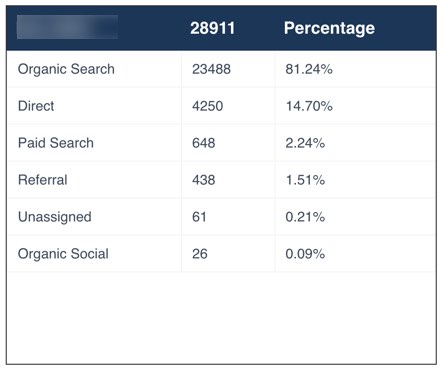
Digging deeper, you will see that 81% of the leads are coming from organic SEO. What this means is that patient acquisition is primarily from the results of the SEO of the PLATINUM Service for this multi-location urgent care network.
To learn more about the PLATINUM service for Urgent care practices, please contact us.
Question: Why Knowing Marketing ROI is Important for Your Urgent Care Clinic?
Knowing the Return on Investment (ROI) of your marketing efforts is essential for the financial health and strategic growth of your urgent care clinic. In a competitive, consumer-driven healthcare market, marketing is an investment, not just an expense, and calculating ROI is the only way to measure its true value.
1. Maximizes Your Marketing Budget
By measuring Marketing ROI, you ensure that your money is being spent effectively. Not all marketing channels or tactics will deliver the same results, so tracking ROI helps you identify which strategies are delivering the highest returns.
How it Helps:
- Identifies the best-performing campaigns, like PPC ads, SEO, or social media, so you can optimize them and allocate more budget to channels that generate the highest patient acquisition.
- Helps cut unnecessary spend on low-performing campaigns and shift focus to higher ROI efforts.
2. Enables Data-Driven Decision Making
Marketing ROI provides you with the data needed to make informed decisions about where to spend your marketing dollars.
How it Helps:
- Real-time insights into campaign performance, such as click-through rates, conversion rates, and cost-per-patient acquisition.
- Allows you to make adjustments on the fly and adapt marketing strategies for greater efficiency.
For example, if you notice that your Google Ads campaign is performing better than your Facebook Ads, you can increase your Google Ads budget while reducing spend on Facebook Ads, this type of insight is automatically acted upon for you if you are using PLATINUM service.
3. Tracks Patient Acquisition Cost (PAC)
Understanding Marketing ROI helps you determine your Patient Acquisition Cost (PAC), which is the total cost spent on marketing to acquire each new patient.
How it Helps:
- Allows you to calculate the cost-effectiveness of your marketing efforts.
- Helps identify areas to reduce cost-per-lead and improve conversion rates.
- Understanding PAC helps set clear benchmarks for future marketing campaigns and ensures sustainable growth.
For example, if your PAC is $50 and you’re acquiring 100 new patients a month, you’re spending $5,000 on marketing. If each new patient generates $300 in revenue, you’ll be able to see that the ROI is positive, giving you the confidence to continue investing.
4. Improves Patient Retention
Knowing the ROI of your marketing efforts isn’t just about patient acquisition; it also helps in retaining those patients for repeat visits.
How it Helps:
- Through CRM and retention tools, you can analyze how well your marketing strategies are keeping patients engaged, such as automated follow-ups, appointment reminders, and health tips.
- Helps you understand which patient engagement campaigns (e.g., email, SMS, reactivation efforts) are most successful in driving repeat visits and long-term patient loyalty.
5. Justifies Marketing Spend to Stakeholders
As an urgent care clinic owner or a practice manager, you need to justify your marketing spend to stakeholders (partners, investors, etc.). Demonstrating positive Marketing ROI shows that your practice is efficiently growing and maximizing resources.
How it Helps:
- Provides quantifiable results that prove your marketing efforts are producing measurable outcomes.
- Helps make a case for increased marketing budgets or additional marketing tactics.
For example, if a certain campaign is returning a 400% ROI, stakeholders will be more inclined to approve a larger marketing budget.
6. Aligns Marketing Goals with Business Objectives
Tracking Marketing ROI ensures that your marketing strategies are aligned with your business goals. Whether your goal is to increase patient volume, grow a specific service line (e.g., urgent care for pediatric care), or improve patient retention, knowing your ROI allows you to fine-tune campaigns to meet those objectives.
How it Helps:
- Allows you to focus on high-priority services and allocate marketing spend toward campaigns designed to boost these specific services.
- Helps ensure that your marketing efforts are targeted and produce results that align with the long-term vision of your practice.
7. Identifies Areas for Improvement
Measuring Marketing ROI provides valuable feedback on what’s working and what’s not, allowing you to pivot or optimize your marketing efforts.
How it Helps:
- Pinpoints underperforming channels and highlights opportunities for improvement or changes in messaging.
- Provides a clear roadmap for testing different strategies (e.g., A/B testing of landing pages, new ad creatives, or different audience segments).
For instance, if your SEO efforts are generating more traffic but low conversion, you may need to improve your website’s patient conversion flow (i.e., clearer CTAs, appointment scheduling optimization).
8. Tracks Patient Lifetime Value (LTV)
Marketing ROI doesn’t just help you understand the cost to acquire a patient, it also gives you insight into the long-term value of retaining them.
How it Helps:
- Helps you measure Patient Lifetime Value (LTV) by looking at the long-term financial impact of each patient, helping you understand which marketing strategies not only bring patients in but also ensure they stay long-term.
- Knowing the LTV of your patients ensures you can confidently spend more on acquiring patients, knowing their value over time will far exceed the upfront costs.
For example, if the LTV of a patient is $5,000, and you spend $300 to acquire them, your ROI would be substantial.
9. Boosts Competitive Advantage
By consistently tracking and optimizing Marketing ROI, you gain a competitive edge over other urgent care clinics that may not be measuring their marketing performance as closely.
How it Helps:
- Ensures your clinic is always operating at peak marketing efficiency, helping you attract more patients while spending less than competitors.
- Allows you to outperform competitors by using data-driven insights to improve marketing tactics and patient acquisition strategies.
Conclusion:
Knowing your Marketing ROI is vital for making data-driven decisions and ensuring your marketing dollars are being used in the most cost-effective way possible. For urgent care clinics, where competition is high, and patient loyalty is key, understanding the impact of your marketing spend ensures that every dollar invested drives patient acquisition, retention, and ultimately practice growth.
Key Takeaways:
- ROI provides clarity on which campaigns drive results and which ones don’t.
- Data-driven decisions lead to better patient acquisition and retention.
- Justifying marketing spend to stakeholders and improving clinic profitability is easier with ROI tracking.
- Optimizing marketing efforts based on ROI helps you spend efficiently and maximize patient value over time.
 Send Text
 How may I help you?