

Digital Marketing for Urgent Care Centers
Digital marketing for urgent care centers is a highly specialized branch of healthcare marketing designed to capture high-intent, immediate-need patients right when they require medical attention. Unlike general practitioner or hospital marketing—which focuses on long-term relationships and brand awareness—urgent care marketing operates on a “right now” and “immediate” model. Because an average of 82% of patients look for an urgent care center using an online medium, having an optimized digital strategy is the primary driver of clinic walk-ins and patient growth. Over 90% of urgent care patients use a mobile device to search for services, and the majority use Google. Capturing these patients requires a strong Local SEO and near-me search optimization strategy.
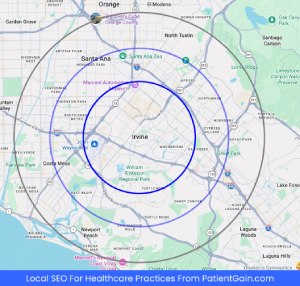
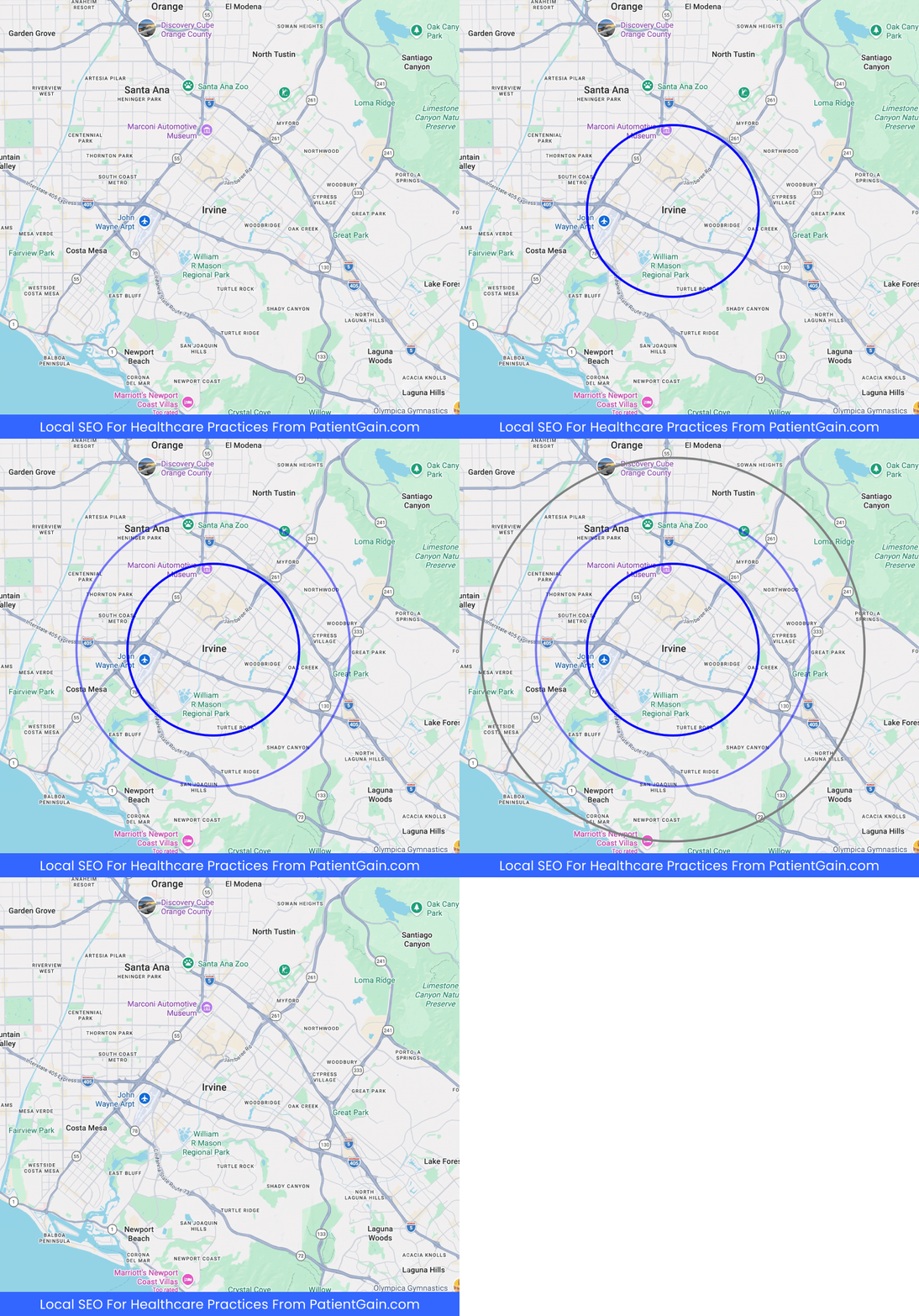
Key data: Mobile & Google Dominance: It is absolutely true that the vast majority of urgent care patients search for care on mobile devices using Google. Because urgent care needs are immediate and intent-driven, patients look for the fastest, closest option while on the go.
From the perspective of an urgent care practice manager and a practice owner, key questions:
a) What is digital marketing for urgent care centers?
b) How much does it cost?
c) Do I need to hire a professional and expert company?
d) How long does it take to see results?
e) How do I know if I am working with a good urgent care marketing company?
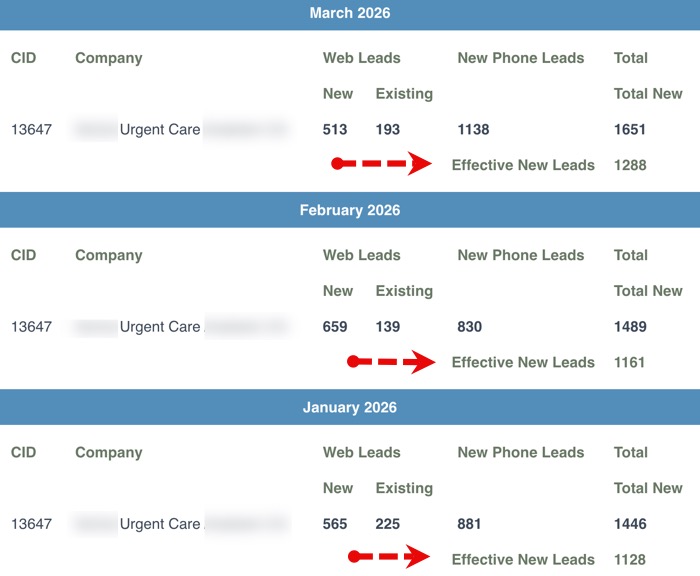
Example of a ROI and Marketing Dashboard of an Urgent Care: Single location – very competitive location. Live dashboard of a single location urgent care you will see that in the month of March this urgent care received 1651 new leads (new patients who called or booked appointment or got in the online queue). Out of 1651, 1288 are effective leads. This clinic sees 100 to 110 patients per day. There are no Google PPC ads or Meta Ads. This customer is using PLATINUM service from PatientGain.
Digital Marketing for Urgent Care Centers: Table Of Contents
What is digital marketing for urgent care centers?
Is it different to market my multi-location urgent care clinics?
How much does it cost to market a single urgent care location?
How much does it cost to market multiple urgent care locations?
Do I need to hire a professional and expert company?
How long does it take to see results?
How do I know if I am working with a good urgent care marketing company?
Are there any services packages available for my urgent care clinic?
What is PatientGain.com’s PLATINUM service for urgent care centers?

What is digital marketing for urgent care centers?
Digital marketing for urgent care centers is completely different from marketing a primary care doctor or a MedSpa. It is not about building long-term brand loyalty or selling a luxury aesthetic; it is about intercepting a patient in immediate distress. Urgent care is the most intent-driven and proximity-driven specialty in healthcare. A patient with a sprained ankle or a fever at 9 PM is not researching providers for weeks — they are searching “urgent care open now near me” and booking with whoever appears first and has available capacity.
This creates a completely different marketing dynamic than dermatology, orthopedics, or elective specialties:
| Factor | Urgent Care | Elective Specialty |
|---|---|---|
| Patient decision timeline | Minutes | Days to weeks |
| Primary search trigger | Sudden symptom or injury | Scheduled concern or cosmetic goal |
| Primary ranking factor | Proximity + availability + reviews | Expertise + outcomes + procedure-specific content |
| Top conversion signal | Wait time, hours, walk-in availability | Provider credentials, before/after results |
| Brand loyalty | Low — convenience wins | Higher — patients return to trusted provider |
| Primary platforms | Google Maps, GBP, Google Ads | Google Search, Instagram, RealSelf |
| Social media role | Secondary / Rarely helps | Primary for cosmetic; secondary for medical |
| AI Agents (ChatGpt, Perplexity etc) | Rarely Used | Yes, used by patients to learn |
| AI Search Agent Gemini AI | Yes, used by patients to make quick decisions | Yes, used by patients to learn and make decisions |
| Patient acquisition cost | ~$17 (lowest in healthcare) | $100–$500+ |
The entire urgent care marketing strategy must be built around bottom-of-funnel visibility — being found at the exact moment of need, communicating availability clearly, and making it frictionless to walk in or book.
Is it different to market my multi-location urgent care clinics VS a single location?
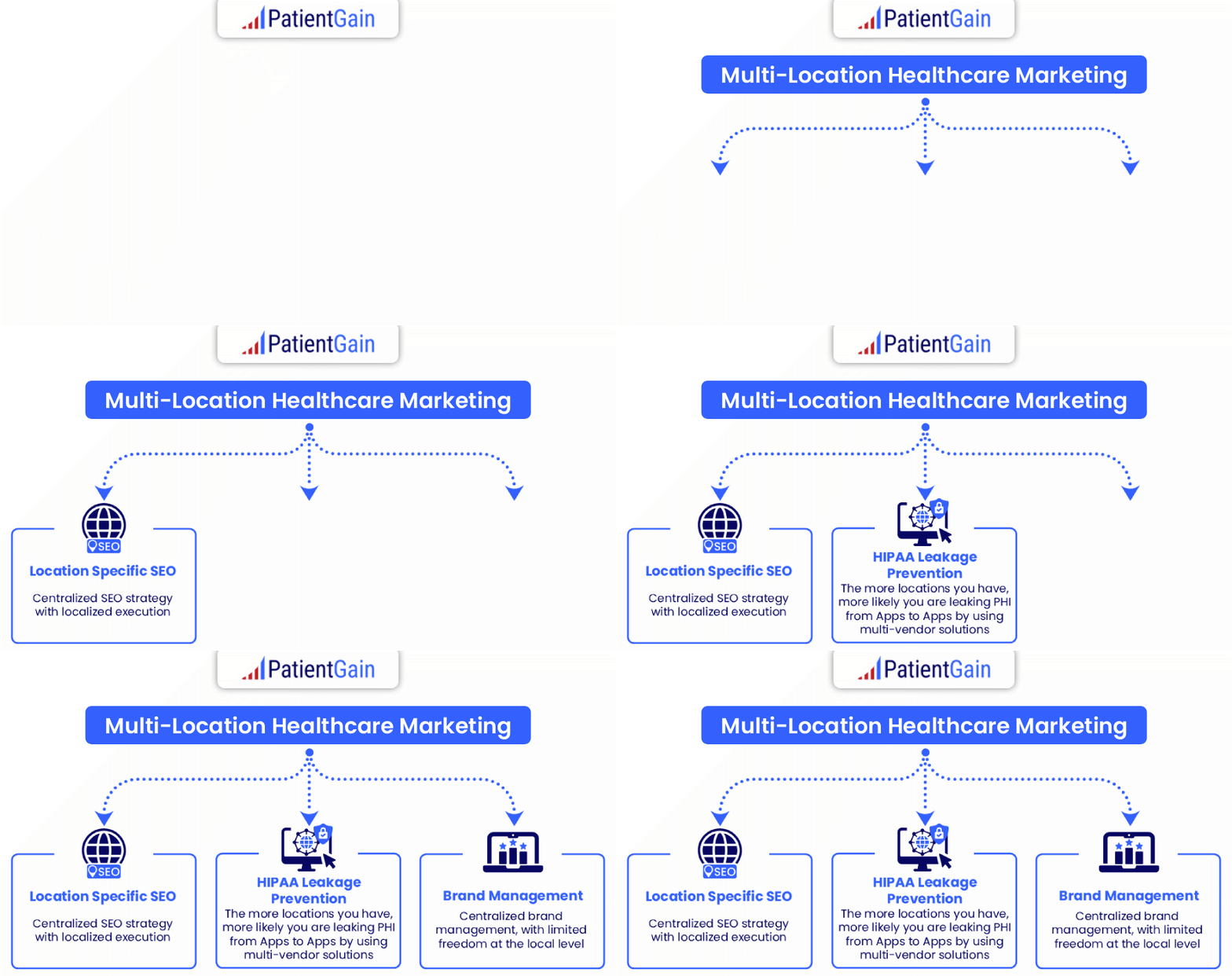
Marketing a single urgent care clinic is mainly about helping one location dominate its immediate local area. Marketing a multi-location urgent care network is more complex because each clinic must rank locally, generate patients independently, and still maintain one consistent brand.
Key Difference
| Area | Single-Location Urgent Care | Multi-Location Urgent Care Network |
|---|---|---|
| Main Goal | Drive patients to one clinic | Drive patients to the nearest correct location |
| SEO Strategy | Focused on one city/neighborhood | Separate SEO strategy for each location |
| Google Business Profile | One GBP to optimize | Multiple GBPs to manage, post to, and track |
| Website Structure | One main location page | Dedicated location pages for every clinic |
| Ad Targeting | One radius around the clinic | Geo-targeted campaigns by city, ZIP code, or service area |
| Reviews | Reviews build authority for one clinic | Each location needs its own review growth strategy |
| Reporting | One clinic’s calls, forms, visits, and ROI | Performance must be tracked by location |
| Operational Complexity | Lower | Much higher |
| Brand Consistency | Easier to control | Must be consistent across all locations |
| Budget Allocation | One budget for one market | Budget must be divided by location performance |
Marketing a single-location urgent care clinic is about dominating a tight 3-to-5-mile radius. Marketing a multi-location urgent care network, however, is a complex logistical operation. The difference is no longer just about generating traffic; it is about scale, infrastructure, and dynamic load balancing. When you transition from one clinic to a network (whether that is 3 locations or 50), the marketing strategy fundamentally shifts in four major ways.
1. Website Architecture: Flat vs. “Hub and Spoke”
- Single Location: You can build a relatively simple website where the homepage does all the heavy lifting. The primary keywords (e.g., “Urgent Care in [City]”) are baked right into the main page, and there is only one address and one phone number to display.
- Multi-Location: You must deploy a “Hub and Spoke” architecture. If you try to put 15 different clinic addresses on your homepage, Google’s local search algorithm gets confused and ranks you for none of them. Instead, you need one powerful corporate domain (the Hub) with dedicated, highly optimized “micro-sites” for each specific clinic (the Spokes). This ensures the Northside clinic ranks perfectly for Northside searches, while the Southside clinic ranks for Southside searches.
2. Ad Bidding: Static Spend vs. Dynamic Load Balancing
- Single Location: Your ad strategy is relatively static. You have a set monthly budget for Google Ads to drive as many patients through your front door as possible.
- Multi-Location: Urgent care networks use marketing for operational load balancing. If your Downtown clinic has a 2-hour wait time, but your Suburban clinic 10 miles away has empty rooms, a multi-location marketing strategy will dynamically pause the ads for Downtown and aggressively increase the ad bids for the Suburban clinic. You are actively using your marketing budget to route patients to the most efficient facility in real-time.
3. SEO & Reputation: Single GBP vs. Enterprise Consistency
- Single Location: The Practice Manager manually updates the clinic’s one Google Business Profile (GBP) and responds to reviews on a daily basis.
- Multi-Location: Managing 20 GBPs manually is impossible. Multi-location networks require enterprise local SEO software to ensure NAP (Name, Address, Phone number) consistency across hundreds of directories simultaneously. Furthermore, reputation management must be centralized; corporate needs a global dashboard to see if one specific clinic is suddenly receiving 1-star reviews for slow wait times, allowing them to fix the operational issue before it damages the entire brand.
4. Tech Stack: Fragmented vs. Centralized Compliance
- Single Location: A single clinic might get away with patching together a few different software tools—using Mailchimp for emails, a basic WordPress plugin for forms, and a standalone texting app.
- Multi-Location: If a 10-location network lets every clinic buy its own software, it creates “vendor sprawl.” You end up with bloated overhead, data silos, and a massive HIPAA compliance liability. Multi-location marketing requires a single, unified, HIPAA-compliant SaaS platform with role-based access. The executive team needs a global view of the entire network’s Patient Acquisition Cost (PAC), while the front desk at Clinic A must be digitally locked out from seeing the patient data at Clinic B.
How much does it cost to market a single urgent care location?
For a single urgent care location, a realistic marketing budget is usually:
- Low competition / basic growth: $2,500 – $5,000/month
- Average competitive market: $5,000 – $10,000/month
- Highly competitive market: $10,000 – $20,000+/month
That includes marketing service fees + ad spend. Ad spend is usually separate from agency or platform fees.
Typical Monthly Cost Breakdown
| Marketing Item | Typical Monthly Cost |
|---|---|
| Website / landing page updates | $300 – $1,500 |
| SEO + local SEO | $1,000 – $3,500 |
| Google Business Profile management | $300 – $1,000 |
| Reputation / review management | $200 – $1,000 |
| Google Ads management | $750 – $2,500 |
| Google Ads spend | $1,000 – $9,000+ |
| Meta / social ads | $500 – $2,500 |
| Email / SMS patient engagement | $150 – $750 |
| Call tracking / analytics | $100 – $500 |
| Typical total | $4,000 – $15,000+/month |
PatientGain data shows that urgent care Google advertising budgets commonly range from $1,000 to $9,000 per month, with an average around $3,600 per month per location for average medium-competition areas. It also notes that competition, number of exam rooms, number of providers, and growth goals affect how aggressive the budget should be.
PatientGain Pricing Example
For urgent care centers, PatientGain lists urgent care marketing service pricing from $899/month to $1,699/month for GOLD and PLATINUM-related services, focused on helping urgent care centers attract online patients through Google, SEO, and conversion tools.
So a practical PatientGain-style budget may look like:
| Budget Area | Monthly Cost |
|---|---|
| PatientGain service fee | $899 – $1,699+ |
| Google Ads spend | $1,000 – $9,000 |
| Optional local/community marketing | $500 – $2,000 |
| Estimated total | $2,400 – $12,700+/month |
How much does it cost to market multiple urgent care locations? Let’s say 10 locations?
Scaling from a single clinic to a 10-location urgent care network radically changes the math. You are no longer just buying a website; you are funding a regional triage network. Just like with a single location, you must split the budget into The Fuel (Ad Spend) and The Infrastructure (Management & Software). However, because you are operating at scale, the volume discount on the infrastructure side becomes a massive factor. For 10 urgent care locations, the cost depends heavily on competition, paid ad spend, staffing model, and whether you use a fragmented agency/vendor stack or a centralized multi-location healthcare marketing platform.
A practical range is:
- Lean digital marketing: $15,000 – $35,000/month
- Competitive growth plan: $35,000 – $75,000/month
- Aggressive multi-location growth: $75,000 – $125,000+/month
These totals usually include marketing management + ad spend, but not necessarily offline community outreach, employer contracting, or internal staff salaries.
1. PatientGain Multi-Location Pricing Example for 10 Urgent Care Clinics
PatientGain lists multi-location urgent care marketing at about $500/month per location, and its broader multi-location healthcare marketing pages list $500–$800/month/location depending on scope. For 10 urgent care locations, that places the PatientGain platform/service fee around $5,000 – $8,000/month, before ad spend.
| Item | Monthly Estimate for 10 Locations |
|---|---|
| PatientGain multi-location service | $5,000 – $8,000 |
| Google Ads spend | $10,000 – $90,000 |
| Meta / retargeting / local campaigns | $2,500 – $15,000 |
| Optional local/community outreach | $2,000 – $15,000 |
| Estimated total | $19,500 – $128,000/month |
PatientGain’s urgent care marketing page data shows that a typical Google advertising budget for urgent care is $1,000 to $9,000/month per location, with an average around $3,600/month per location in medium-competition markets. For 10 locations, that means Google Ads alone could be around $10,000 to $90,000/month, with a practical mid-range around $36,000/month.
2. Traditional Agency Cost for 10 Urgent Care Locations
A traditional agency model usually becomes much more expensive because each location needs:
- Local SEO
- Google Business Profile management
- Review management
- Paid ads
- Landing pages
- Call tracking
- Reporting
- Website updates
- Reputation software
- SMS/chat/lead response tools
| Item | Monthly Estimate |
|---|---|
| Multi-location SEO agency | $10,000 – $25,000 |
| PPC management | $5,000 – $15,000 |
| Website / landing page work | $2,000 – $10,000 |
| Review management software | $1,000 – $4,000 |
| Call tracking / analytics | $1,000 – $3,500 |
| Email / SMS / chat tools | $1,000 – $5,000 |
| Google Ads spend | $10,000 – $90,000 |
| Meta / social ads | $2,500 – $15,000 |
| Estimated total | $32,500 – $167,500/month |
This model can work, but it often creates a multi-vendor problem: multiple dashboards, multiple contracts, separate reporting, and possible HIPAA/BAA gaps.
3. In-House + Agency Hybrid Cost
Many 10-location urgent care groups hire an internal marketing manager and still use outside vendors. This often looks like:
| Item | Monthly Estimate |
|---|---|
| In-house marketing manager | $7,000 – $12,000 |
| Payroll burden / benefits | $2,000 – $4,000 |
| Local SEO agency | $10,000 – $20,000 |
| PPC agency | $5,000 – $12,000 |
| Software stack | $2,000 – $8,000 |
| Google Ads spend | $10,000 – $90,000 |
| Social Media Posting, Email Marketing | $2,500 – $15,000 |
| Estimated total | $38,500 – $161,000/month |
This can be useful when the urgent care network needs local employer outreach, school partnerships, workers’ comp relationships, sports physical programs, and boots-on-the-ground marketing. PatientGain’s own urgent care multi-location page notes that community outreach is an area where an in-house person can have an advantage because digital infrastructure alone cannot physically build local relationships.
4. Practical Budget Scenarios for 10 Locations
| Scenario | Monthly Budget | Annual Budget | Best Fit |
|---|---|---|---|
| Lean / maintenance | $15,000 – $35,000 | $180,000 – $420,000 | Established locations with strong SEO and reviews |
| Competitive growth | $35,000 – $75,000 | $420,000 – $900,000 | Most 10-location urgent care groups |
| Aggressive expansion | $75,000 – $125,000+ | $900,000 – $1.5M+ | New markets, weak locations, heavy competition |
| Traditional agency-heavy model | $50,000 – $165,000+ | $600,000 – $2M+ | Highly custom, labor-heavy model |
5. Why 10-Location Marketing Costs More Than a Single Clinic
Multi-location urgent care marketing is not just “copy the same campaign 10 times.” Each location needs its own local strategy because patients care about:
- Which clinic is closest
- Which one is open now
- Which has good reviews
- Which accepts insurance
- Which has X-ray, labs, pediatric care, occupational medicine, or physicals
- Which phone number is fastest to reach
- Which Google Maps listing is strongest
PatientGain’s urgent care multi-location solution describes this as a hub-and-spoke model, where the brand has one central identity but each clinic needs hyper-local patient acquisition. It also notes that urgent care marketing must treat every single location as its own distinct business.
6. What Should Be Included for 10 Locations?
A serious 10-location urgent care marketing plan should include:
| Marketing Area | Why It Matters |
|---|---|
| 10 optimized Google Business Profiles | Each location must rank in Google Maps. |
| 10 local landing pages / This is minimum – PatientGain ‘s PLATINUM service creates many pages per location | Each clinic needs its own page with address, hours, services, directions, and insurance details. |
| Service-specific SEO pages | Flu testing, X-rays, DOT physicals, sports physicals, injuries, illness care, labs. |
| Google Ads by location | Prevents one clinic from wasting budget in another clinic’s area. |
| Call tracking by location | Shows which locations are generating real calls. |
| Review automation by location | Each clinic needs its own review growth. |
| SMS/chat/lead response system | Patients often call multiple urgent cares; fast response matters. |
| Centralized reporting dashboard | Owners need to see ROI by location. |
| HIPAA-compliant fapps, forms and communication | Protects patient data and reduces compliance risk. |
PatientGain’s urgent care multi-location page specifically highlights hyper-local SEO, Google Business Profile management, location-specific pages, geo-targeted paid search, localized reputation management, centralized call tracking, and location-level analytics as core pillars.
7. Simple Example Budget
For a 10-location urgent care network in a moderately competitive market, a realistic monthly budget could be:
| Category | Monthly Budget |
|---|---|
| PatientGain multi-location service | $5,000 – $8,000 |
| Google Ads – Should be PPC search ads – Not PMAX ads for Urgent Care clinics | $30,000 – $40,000 |
| Others ads – Non Google Ads | $5,000 – $8,000 |
| Local outreach / seasonal campaigns / Included in the PLATINUM service | $3,000 – $7,000 |
| Total | $43,000 – $63,000/month |
That equals approximately:
$516,000 – $756,000/year
For a 10-location urgent care group, this can be reasonable if each clinic has enough exam rooms, provider capacity, and operational readiness to convert demand into patient visits. For an example customer who has been using PatientGain’s PLATINUM service for multi-location – they have 11 locations, and after 4 years, there is zero ads budget. All new patients are generated by SEO, Local SEO and Hyper-Local SEO. Initially the customer started with 3 locations, and each location had an ads budget of $3700/per month / per location. In the 2nd year it was reduced to $2500/mon/perl/location in the 3rd year it was reduced to $1400/mon/perl/location .
To market 10 urgent care locations, expect a serious budget of:
$35,000 – $75,000/month for a competitive growth plan PatientGain’s multi-location model may reduce the service/platform cost to around $5,000 – $8,000/month for 10 locations, but ad spend is still the biggest variable. In competitive markets, Google Ads alone can run $10,000 – $90,000/month across 10 locations.
Do I need to hire a professional and expert company that specializes in Urgent Care Marketing and is HIPAA compliant?
In many industries, hiring a general marketing agency or having an internal staff member figure it out via “trial and error” is perfectly fine. In the urgent care space, that approach is a massive legal and financial liability. You need a specialized, HIPAA-compliant firm not just to get more patients, but to protect the clinic you have already built. Here is exactly why this level of specialization is a requirement, not a luxury. Urgent care marketing is not a subset of general marketing. It sits at the intersection of healthcare compliance law, proximity-based search behavior, real-time operational management, and a patient decision window measured in minutes. A general marketing agency, a freelancer, or a DIY approach can handle the mechanics of running ads or posting to social media — but they will consistently fail on the dimensions that matter most to an urgent care operator.
Why an urgent care marketing specialist matters
| Area | Why it matters for urgent care |
|---|---|
| Local SEO | Urgent care depends heavily on Google Maps and “near me” searches. |
| Hyper Local SEO and Proximity Based SEO | Latest data from PatientGain shows that hyper-local and proximity based SEO has become a crucial differentiator for ranking high on Google Maps Searches – Specifically on Mobile Devices. |
| Google Business Profile (GBP) | Hours, holiday hours, photos, services, reviews, and posts must stay updated. You must post on GBP 20 to 30 times a month. |
| Paid ads – PPC ADs – Not PMAX ads | Google PPC Ads can drive same-day patients, but poor setup can waste money fast. |
| Reviews on GBP | Patients compare nearby urgent care clinics before choosing one. |
| Fast response | Patients often call or message multiple clinics. Slow response loses visits. |
| Service pages | Flu testing, X-rays, injuries, DOT physicals, school physicals, labs, and illness care each need visibility. |
| Call tracking | Calls are a major conversion source for urgent care. |
| HIPAA-Compliant workflows | Website forms, SMS, chat, email, and tracking must be handled carefully. Remember, you cannot be HIPAA-Safe, HIPAA-Friendly – You must be HIPAA Compliant. |
Why HIPAA compliance matters
A healthcare marketing company may touch patient information through forms, SMS, chat, call tracking, appointment requests, email campaigns, or analytics. HHS states that PHI is individually identifiable health information held or transmitted by a covered entity or business associate, in any form or medium. HHS also states that covered entities and business associates must obtain valid HIPAA authorization to use or disclose PHI for marketing purposes when authorization is required.
If a marketing vendor handles PHI for your practice, you generally need a proper Business Associate Agreement (BAA). HHS guidance explains that when a covered entity uses a business associate for marketing-related communications, the covered entity must obtain the business associate’s agreement to use PHI only for the covered entity’s permitted communication activities.
When you definitely need an expert
You should strongly consider a specialized urgent care marketing company if you have less than 17 new patients per day, per location – what this means ( in most cases – you are breaking even)
- You are in a competitive city
- You have multiple urgent care locations
- Your Google Ads spend is more than a one thousand dollars per month
- You rely on phone calls and online check-ins
- Your Google Business Profile is not ranking well
- You are not getting enough reviews
- You use website apps, chat, SMS, or call tracking
- You do not know whether your tracking tools are HIPAA-compliant
- You need measurable ROI by location
What the right company should provide
A good urgent care marketing company should offer:
- Urgent care SEO, local SEO, Hyper-Local SEO
- Google Business Profile posting – 20 to 30 times per month
- Google PPC Ads a management (Social media ads do not produce good results for urgent care centers)
- Review generation and reputation management
- Fast mobile website and landing pages
- Click-to-call and online check-in optimization
- Call tracking and lead attribution
- HIPAA-compliant apps, SMS, chat, and email
- Signed BAA with the agency and application providers – Avoid pass through BAA’s
- Real-time reporting by location – Live dashboard – Avoid monthly reports.
- Clear monthly pricing and deliverables
What to avoid
Avoid agencies that say they “do healthcare marketing” but cannot clearly explain:
- How they protect PHI
- Whether they provide a BAA
- How they handle Google Analytics, pixels, chat, SMS, and call tracking – Most of these apps are not HIPAA compliant by default – You need an agency that can implement “obfuscation” for PHI
- How they measure phone calls and – “new patient calls” vs “Existing Pateint Calls”
- How they optimize Google Business Profiles
- How they handle urgent care-specific services and seasonal demand
How long does it take to see results from marketing efforts for my urgent care clinic?
Because urgent care is driven by immediate, unpredictable patient needs (unlike elective cosmetic surgery), the timeline for seeing a Return on Investment (ROI) is highly dependent on which marketing channels you activate first.
Typical Timeline – General guidelines
| Marketing Effort | When You May See Results | What to Expect |
|---|---|---|
| Google PPC Ads | 14–30 days | Fastest way to generate calls, online check-ins, and same-day visits. However note that this is only for PPC ads – not for other type of Google ads like PMAX, display or local ads. Also note that due to the success of Google PPC ads for urgent care clinics, it is very competitive and it is very expensive per click. |
| Google Business Profile optimization & Posting | 4–8 weeks | Better visibility in Google Maps, more direction requests, calls, and profile views. It takes time to see any results after you have posted on GBP |
| Local SEO | 3–6 months | Improved rankings for searches like “urgent care near me” and “walk-in clinic in [city].” |
| Hyper Local SEO | 3–6 months | Hyper local SEO is very difficult. rankings for searches like “urgent care near disneyland ca” |
| Review generation | 30–90 days | More reviews improve patient trust and can support local SEO. |
| Website conversion improvements | 2–4 months | More visitors convert into calls, appointment requests, or online check-ins. |
| Content marketing / service pages | 3–9 months | Pages for flu testing, X-rays, injuries, physicals, and lab testing gain organic visibility. |
| Email/SMS reactivation | 1–4 weeks | Existing patients may return for seasonal services, flu shots, physicals, or follow-ups. |
Fastest Results
The fastest results usually come from:
- Google PPC Ads
- Local service ads or paid campaigns like PMAX ads
- Google Business Profile updates
- Conversion tracking improvements based on A/B testing
- Website design layout
- Website mobile speed (Slow mobile website = lost customers)
- SMS/email campaigns to existing patients
Longer-Term Results
SEO and local SEO take longer because Google needs time to recognize improvements in:
- Website content
- Location pages
- Reviews
- Google Business Profile activity
- Local citations
- Service-specific pages
- Patient engagement signals
For most urgent care clinics, 3 to 6 months is a realistic timeline for meaningful SEO improvement.
Practical Expectation
For a single urgent care clinic in a competitive area:
- First 30 days: Setup, tracking, Google Ads, GBP updates, initial leads
- 60–90 days: Better local visibility, more reviews, improved conversion tracking
- 3–6 months: Noticeable SEO growth and stronger patient acquisition
- 6–12 months: More predictable patient flow and better ROI from combined SEO + ads
You can see paid advertising results within days or weeks, but strong organic growth from local SEO, reviews, and content usually takes 3 to 6 months. The best urgent care marketing strategy combines both: paid ads for immediate patient volume and local SEO for long-term growth.
How do I know if I am working with a good urgent care marketing company?
The medical marketing industry is unfortunately filled with generalist agencies that slap a “healthcare” label on their website without actually understanding the operational realities of running a clinic. Because urgent care operates on razor-thin margins and relies entirely on immediate, high-intent patient volume, a bad marketing company won’t just waste your budget—it will actively hurt your daily operations. Avoid urgent care marketing companies that:
- Do not offer or understand BAAs
- Cannot explain HIPAA-safe tracking
- Report only clicks and impressions
- Ignore phone calls as conversions
- Do not post on Google Business Profile (at least 20 times per month)
- Use generic healthcare content
- Do not understand urgent care services
- Cannot separate results by location
- Do not live conversion dashboards
- Promise guaranteed SEO rankings
- Use the same strategy for every medical specialty or every other customer
- If you visit their main website you will see plumbers, home improvements, and other services – they are generalists.
Questions to Ask Before Hiring
Ask these directly:
- Do you specialize in urgent care marketing?
- Do you provide a signed BAA if patient data is involved?
- How do you track calls and online check-ins?
- How do you manage Google Business Profile?
- How do you improve urgent care reviews?
- What is your Google Ads strategy for urgent care?
- How do you measure ROI?
- How often do you update campaigns?
- Do you create urgent care-specific service pages?
- Can I see reports by location, service, and lead source?
Are there any services packages available for my urgent care clinic?
Yes, there are specific marketing service packages explicitly designed for the fast-paced, high-volume environment of an urgent care clinic. Because urgent care requires a completely different strategy than a standard doctor’s office (focusing on immediate digital triage rather than long-term branding), you generally have two main paths to choose from: a Tech-Enabled SaaS Platform Package or a Traditional Custom Agency Package.
Based on current industry standards (and using platforms like PatientGain as a benchmark), here is what those packages typically look like for urgent care.
1. The Tech-Enabled SaaS Package (High Speed, High Conversion)
This is the most common package for independent or rapidly growing urgent care clinics. It focuses on software consolidation, fast deployment, and converting distressed patients instantly.
- Typical Pricing: $899 to $2499 per month (plus your Google Ad spend). On average for a medium competition – check PLATINUM Service
- Upfront Fees: Usually $0 (waived on a 12-month contract).
- What is Included specifically for Urgent Care:
- Very fast loading mobile urgent care website. Creation, management, and constant improvement included.
- High-Intent Google Ads Management: Bidding dynamically on symptom-based searches (“strep test,” “broken bone,” “flu shot”).
- Digital Triage Tools: Integration of “Save My Spot” online check-in software and live wait-time trackers on the homepage.
- Hyper-Local SEO: Aggressive management of your Google Business Profile to ensure you dominate the local “Map Pack.”
- HIPAA-Compliant Software Included: AI chatbots to answer insurance questions after hours, 2-way texting for the front desk, and automated review generators (eliminating the need to pay for extra software like Podium or CallRail).
2. The Multi-Location Network Package
If you own 3, 5, or 10+ urgent care clinics, buying individual packages for each location is inefficient. Platforms offer volume-discounted packages designed for regional triage.
- Typical Pricing: starting at $500 to $800 per month, per location (plus Google Ad spend).
- What is Included specifically for Urgent Care:
- Hub-and-Spoke Web Architecture: One central corporate website with highly optimized, localized micro-sites for every specific clinic.
- Dynamic Load Balancing: The ability for the marketing team to automatically shift Google Ad budgets away from a clinic with a 2-hour wait time and push it toward a clinic with empty rooms.
- Role-Based CRMs: A global dashboard for the executive team to track the Patient Acquisition Cost (PAC) network-wide, while local front-desk staff only see data for their specific clinic.
3. The Traditional Custom Agency Package
This model is typically used by massive, hospital-affiliated urgent care networks that require highly bespoke branding and custom web development from the ground up.
- Typical Pricing: $3,000 to $6,000+ per month for management (plus Google Ad spend).
- Upfront Fees: $10,000 to $25,000+ for a custom website build.
- The “Vendor Tax”: You will likely have to pay an extra $300 to $800+ a month, per location in third-party software licenses for your texting, call tracking, and review generation tools.
- What is Included: Absolute creative control, custom video production, custom coding, and fractional CMO-level consulting.
The “Must-Haves” for Any Package
Whichever route you choose, do not sign a contract unless the package explicitly includes these three things:
- A Business Associate Agreement (BAA): To protect you from HIPAA fines.
- Transparent Ad Spend: Your Google Ads budget must be billed directly to your credit card, completely separate from the agency’s management fee.
- Conversion Tracking, Not Just Traffic: They must measure success by how many physical patients checked into your clinic, not just how many people clicked on your website.
 Send Text
 How may I help you?