

What is a BAA in Healthcare Marketing & Advertising?
A Business Associate Agreement (BAA) in healthcare marketing is a legally binding contract required by HIPAA. It ensures that marketing vendors (business associates) who handle or have access to Protected Health Information (PHI) on behalf of a healthcare provider (covered entity) implement strict safeguards to protect patient data.
Key Aspects of a Marketing BAA:
- Definition: It is required when a vendor accesses PHI for services like analytics, patient outreach, or managing databases.
- Purpose: Ensures compliance with HIPAA Privacy and Security Rules.
- Key Clauses: Defines permitted use of PHI, requires safeguarding PHI, mandates breach reporting within specific timelines, and holds the vendor directly liable for breaches.
- Examples: A marketing agency using CRM software to segment patients by condition needs a BAA to legally process that data.
Why a US-Based Healthcare Marketing Provider Matters for “Minimum Headaches” for BAA Enforcement
- Onshore Server Routing: International agencies often route web traffic through cheaper global servers. US-based firms route data through AWS HIPAA Servers US-East/West AWS or Google Cloud medical-grade environments, keeping you strictly clear of data residency penalties.
- True BAA Enforcement: If an offshore entity signs a BAA, enforcing civil liability in the event of a data breach is incredibly difficult. A domestic provider puts their own US corporate liability on the line alongside yours.
- Foreign Entity Based BAA: If they open an office in US and “Act” as if they are US based firm, you can still be liable.
- Least HIPAA Gap: HIPAA is a US based regulation. EU, UK or AU based firms may understand their local regulations, but HIPAA is different. The European Union does not have a separate law just for healthcare; instead, the broader General Data Protection Regulation (GDPR) handles all personal data, including medical and health records.
Without a BAA, sharing PHI with marketing partners for services is a violation of HIPAA regulations must be in place before a healthcare provider (a “covered entity”) shares any Protected Health Information (PHI) with an outside marketing agency or vendor (a “business associate”).

Why It Matters for Marketing
Marketing often involves data that HIPAA classifies as PHI, such as patient names, email addresses, or phone numbers used for newsletters, appointment reminders, or targeted ads.
- Legal Requirement: If a marketing vendor has even potential access to patient data, a BAA is required by federal law.
- Liability: The agreement ensures the vendor is held to the same privacy and security standards as the healthcare provider. Without it, both parties can face fines.
- Trust: It guarantees that the vendor will only use patient data for the specific purposes outlined in the contract and will not sell it or use it for their own gain.
Key Components of a BAA
A valid BAA in a marketing context typically includes:
- Permitted Uses: Clearly defines how the marketing agency can use the data (e.g., “only for sending monthly wellness newsletters”).
- Safeguards: Requires the vendor to use technical protections like encryption for any data they store or transmit.
- Breach Reporting: Sets a strict timeline for the vendor to notify the healthcare provider if a data breach occurs.
- Subcontractor Compliance: Ensures that if the marketing agency hires another company (like an email service provider), that company must also sign a BAA.
- Termination Clauses: Outlines how the vendor must securely destroy or return all patient data once the marketing contract ends
Common Healthcare Marketing Firms That Need a BAA
Any third party in your “Marketing Technology” stack that touches patient data requires a BAA, including:
- Email Marketing Platforms: Used for patient outreach.
- SMS/Texting apps: These apps require a BAA.
- ChatBot apps: These apps require a BAA.
- AI Voice agents on your website: These apps require a BAA.
- Phone systems: That store patient phone numbers or record calls. These apps require a BAA.
- Leads funnel apps: These apps store patient leads and are subject to HIPAA and BAA.
- Any tracking app : Like Google TAG manager, Meta Pixels.
- CRM Systems: Storing patient contact and interaction history.
- Analytics Tools: If they capture identifiable user data from a healthcare website (Note: Standard Google Analytics famously does not sign BAAs, which is a major compliance hurdle).
- Web Designers & Freelancers: Anyone with access to the backend of a patient portal or database
- Website security companies: These companies store website traffic patterns, IP Addresses and URLs and they are subject to BAA.
- Website hosting companies: If they track IP addresses of visitors (like patients) and track the URLs of your website.
Does PatientGain.com provide a BAA for its services?
Yes, PatientGain.com provides a Business Associate Agreement (BAA) for its services to ensure HIPAA compliance.
Key Details About PatientGain’s BAA
- Standard and Custom Options: PatientGain typically provides a standard BAA to its customers. However, for those using their CUSTOM services, they also offer custom BAAs.
- Service Inclusion: The BAA is included as part of their GOLD ($899+/mo) and PLATINUM ($1,699+/mo) marketing packages at no extra cost.
- Coverage: The agreement legally binds PatientGain to protect Protected Health Information (PHI) handled by their technology stack, including their HIPAA-compliant websites, CRM, and communication apps.
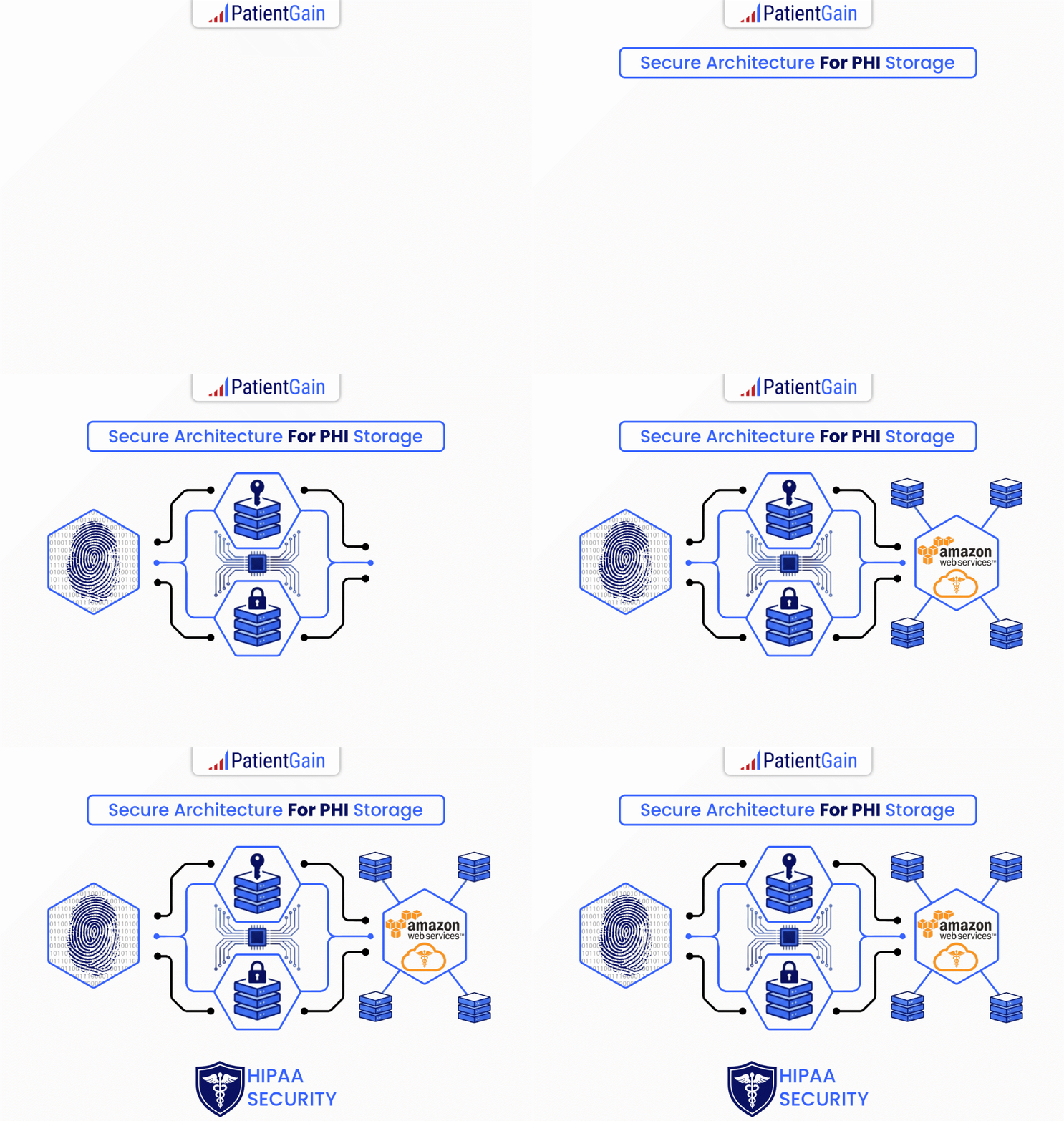
- Staff and Infrastructure: The BAA covers their in-house staff (who undergo regular HIPAA training and background checks) and their use of secure, US-based infrastructure like Amazon Web Services (AWS) and Google Cloud Platform.
Requirements for Protection
To maintain protection under the BAA, PatientGain specifies that customers must also comply with HIPAA guidelines and PatientGain’s security policies. For example, adding non-compliant third-party tools like a standard Meta Pixel, any analytics that does not conform to HHS guidelines for HIPAA and PHI, to a PatientGain website could still result in a HIPAA violation.
 Send Text
 How may I help you?