

Healthcare Website HIPAA Compliance
For a multi-location healthcare practice, a website must be fully HIPAA-compliant the moment it collects, stores, or transmits patient data for any of your clinic locations.
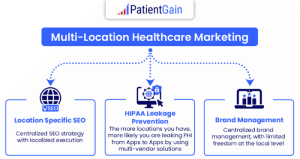
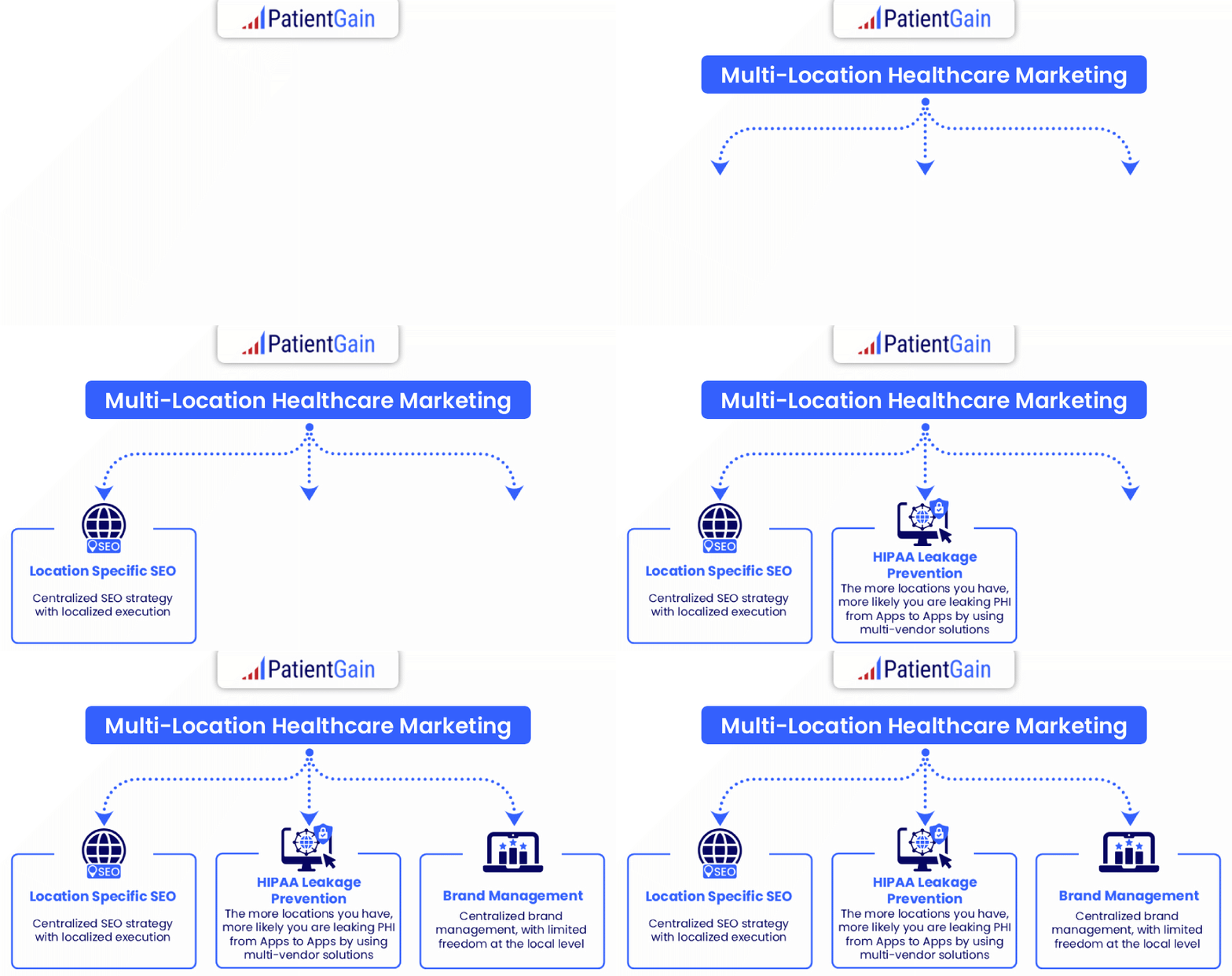
Use Case: I am a practice manager of healthcare practice focused on fertility and IVF with 12 locations what are steps I can take to audit my service providers for my digital marketing + website’s privacy and HIPAA compliance?
Auditing digital marketing and website privacy across 12 fertility locations requires mapping your data flows, auditing third-party tracking pixels, and verifying vendor agreements to prevent Protected Health Information (PHI) leaks.
1. Map Infrastructure & Active Tracking Technologies
- Perform a Forensic Tag Audit: Use browser developer tools or tag scanners to inventory every tracking script (Meta Pixel, Google Tag Manager, GA4, session-replay tools like Hotjar) across all 12 location landing pages and booking flows.
- Identify ePHI Exposure: Under HHS OCR guidance, an IP address paired with web activity on service-specific pages (e.g., IVF or egg-freezing consultation forms) constitutes ePHI. Confirm tracking pixels do not capture or transmit these data pairs.
2. Review Business Associate Agreements (BAAs) & Tech Proxies
- Verify BAA Coverage: Ensure signed BAAs exist for every digital vendor handling ePHI, including your CRM, form builders, email software, and web hosts.
- Address Non-Compliant Platforms: Major ad platforms (Meta, Google Ads) will not sign BAAs. Confirm your agency routes data through a BAA-backed customer data platform or privacy proxy (such as Freshpaint or PatientGain) to strip ePHI before transmitting conversions.
3. Inspect Web Forms & Technical Safeguards
- Audit Form Architecture: Ensure contact and booking forms transmit data via TLS 1.2+ encryption, use POST methods (preventing PHI from appearing in URL query strings), and disable browser autocomplete.
- Block Session Recording on Sensitive Routes: Completely remove session replay tools or screen recorders from pages that handle patient intake, chat, or scheduling.
4. Evaluate Ad Account Hygiene & Access Control
- Inspect Audience Lists: Ensure your marketing agency has not uploaded patient lists or targeting segments that imply health conditions directly into ad platforms.
- Enforce Access Protocols: Require Multi-Factor Authentication (MFA) and role-based least-privilege access for all agency personnel on your CRM, CMS, and tag manager accounts.
5. Establish Ongoing Governance
- Gate Tag Deployment: Implement a process requiring IT or compliance approval before marketing teams or agencies can add new tracking scripts or website plugins.
- Retain Documentation: Keep all vendor risk assessments, tag audit logs, and signed BAAs on file for at least six years to satisfy HIPAA administrative rules.
As a practice manager with marketing responsibilities, I have many operational issues to deal with, we have 7 different firms for marketing related programs, how can I consolidate with a single vendor, one BAA and it must be US based company with healthcare and HIPAA Experience?
As a practice manager, you have 2 main options. A) Use a platform with one BAA or B) Use an agency model – Where you hire an agency that answers to you, but they typically sub-contract or buy software apps, hosting etc from someone else.
Platform Model – Vendor Consolidation (PatientGain)
For a 12-location fertility practice, a single-vendor, HIPAA-compliant marketing fees typically costs $10,000 to $14,000 per month in total management and software fees, along with a one-time setup and website build fee of $0 Zero dollars – example is PatientGain’s multi-location service, which is $800/month/per location – so it is $9600 per month, one BAA and more than 10+ services included.
Agency Model – Traditional Healthcare Agency Model
For a 12-location fertility practice, there single-vendor, HIPAA-compliant marketing retainer typically costs $16,000 to $24,000 per month in total agency management and software fees, along with a one-time setup and website build fee of $15,000 to $40,000. Also note that since agencies usually are not software or hosting companies, they are using someone else’s apps and services. And they have to bill you for these.
| Service Component | Estimated One-Time Setup | Estimated Monthly Cost (12 Locations Combined) |
| Multi-Location Custom Web Build & Hosting | $15,000 – $35,000 | $500 – $1,500 |
| HIPAA Analytics & Privacy Proxy Setup | $2,500 – $5,000 | $1,000 – $2,500 |
| PPC Campaign Management (Google & Meta) | Included in onboarding | $3,000 – $6,000 (or 15–20% of ad spend) |
| HIPAA Email Marketing (36 localized sends/mo) | $1,000 – $2,000 | $1,500 – $3,000 |
| Google Business Profile Posts (12 Profiles) | Included in onboarding | $1,200 – $2,400 ($100–$200/location) |
| AI SEO & Content Additions (Monthly) | Included in onboarding | $4,000 – $9,000 |
| HIPAA SMS Texting Platform & Automation | $500 – $1,000 | $500 – $1,200 |
| Reputation Management Apps (12 Locations) | $500 – $1,000 | $600 – $1,800 ($50–$150/location) |
| Total Estimated Investment | $19,500 – $44,000 | $16,000 – $29,400 / month |
Privacy & Tech Pass-Throughs: Higher-tier retainers directly bundle third-party software licenses (such as Freshpaint privacy proxies, Paubox encrypted email gateways, and enterprise reputation platforms like Birdeye or Podium) under a BAA – This is a Pass-Through BAA, preventing separate software billings. Traditional agency model does not own its apps, there could be 5 BAAs under 1 Pass-Through BAA.
Use Case: If I use PatientGain multi location service, pricing is $800 per month per location VS one of the agency models (traditional agency model) what are the costs?
| Cost Component | PatientGain ($800/mo/loc) | Agency Model + 5 SaaS Apps | Cost Difference |
| Upfront Web Build & Setup | $0 | $25,000 | Agency Model +$25,000 |
| Monthly Agency Management Retainer | Included in fee | $14,000 / month | — |
| Monthly Third-Party SaaS Fees | Included in fee | $8,000 / month | — |
| Total Combined Monthly Outlay | ~$10,000 / month | $22,000 / month | + $12,000 / month |
| Year 1 Total Cost | $115,200 | $241,000 | ~ $125,800 |
| Year 2 Total Cost | $115,200 | $216,000 | ~ +$100,800 |
| Year 3 Total Cost | $115,200 | $216,000 | ~ +$100,800 |
| 3-Year Total Cost of Ownership | $345,600 | $673,000 | ~ +$327,400 (+95%) |
Use Case: We prefer least amount of headaches – we current already have agency providing similar services – the problem is that they keep on pointing fingers at each other.
The significant price gap between PatientGain and Agency Model stems from fundamental differences in their business models, technology ownership, and labor deployment (Use of AI Agents, rather than manual labor)
| Operational Metric | PatientGain (Platform + Service) | Traditional Agency Model |
| Technology Stack | Native, proprietary app suite (zero marginal software cost) | 5 third-party SaaS tools stacked together ($8,000/mo pass-through) |
| Delivery Engine | Productized software, AI automation, and standardized workflows | Human-intensive manual labor (developers, strategists, designers) |
| Web Build Economics | Modular, pre-tested cloud AI based deployments ($0 upfront fee) | Bespoke web engineering (100–200+ human dev hours = $25k setup) |
| Profit Margins | Single profit margin on integrated software/service | Multi-layered: agency margin + margins of 5 software companies |
The 4 Structural Reasons for the Cost Difference
- Proprietary Software vs. SaaS Layering: PatientGain built its own internal CRM, SMS, forms, Email marketing, and reputation apps, HIPAA compliant analytics and many more. Because they own the software, their incremental cost to serve your 12 locations is near zero. Full Media acts as a strategic integrator using third-party enterprise tools (like Freshpaint, Paubox, and Birdeye). You are paying retail SaaS prices plus software company profit margins across all 12 branches ($8,000/mo) on top of Full Media’s retainer.
- Productized Workflows vs. Custom Human Hours: Traditional Agency Model sells custom human labor—dedicated copywriters, web developers, account managers, and media buyers who manually tailor campaigns. PatientGain operates a “Software-with-a-Service” model, relying heavily on AI agents, automated workflows, proven campaign frameworks, and centralized dashboards to serve hundreds of practices efficiently.
- Web Architecture & Upfront Amortization: Traditional Agency Model builds custom websites from scratch, requiring extensive wireframing, custom design, and manual coding, which justifies the $25,000 upfront build fee. PatientGain deploys practices onto standardized, A/B-tested cloud layouts, these have already proven to work for hundreds of other practices, that are similar to yours. Because the web framework already exists, they waive setup fees and amortize setup overhead into your monthly location rate. A/B Tested designs produce higher ROI and better conversion rates than custom setup, scientifically proven. However PatientGain offers custom services also, about 90% of the customers decide on A/B tested designs, rather than custom, non A/B tested designs. PatientGain offers full ownership of assets at the end of your contract, which allows you not to put up thousands of dollars upfront.
- Overhead & Sales Models: Traditional agencies carry high sales and administrative overhead—dedicated business development teams, custom sales pitch decks, and account leadership—whose costs are factored into retainer rates. Product-led software platforms (like PatientGain) keep client acquisition costs low and pass those structural savings directly to the client.
An objective 3-year ROI model compares PatientGain and Full Media using a conservative baseline of $15,000 net revenue per patient cycle across your 12 fertility locations (excluding variable Google/Meta ad spend, which remains equal for both).
3-Year Financial & Volume Hurdle Comparison
| Financial Metric | PatientGain (Platform Model) | Agency Model (Agency + 5 SaaS Apps) | Variance |
| Upfront Web & Setup Fee | $0 | $25,000 | +$25,000 |
| Year 1 Total Outlay | $115,200 | $241,000 | +$125,800 |
| Year 2 & 3 Annual Outlay | $115,200 / year | $216,000 / year | +$100,800 / year |
| 3-Year Total Cost (TCO) | $345,600 | $673,000 | +$327,400 (+95%) |
| Annual Break-Even Hurdle | 7.7 patients / year | 15.0 patients / year | +7.3 patients / year |
| Monthly Hurdle (All 12 Locs) | 0.64 patients / month | 1.25 patients / month | +0.61 patients / month |
Break-Even & Volume Hurdle Analysis
- PatientGain Hurdle: The practice must acquire 7.7 patients per year practice-wide (roughly 0.65 patients per location per year) to fully cover marketing infrastructure costs.
- Agency Model Hurdle: The practice must acquire 15 patients per year practice-wide (roughly 1.25 patients per location per year) to break even.
- The Incremental Performance Delta: Full Media costs an extra $109,133 per year ($327,400 over 3 years). Full Media’s custom web build and agency team must generate 7.3 additional completed cycles per year over PatientGain across all 12 branches combined just to cover the cost difference.
3-Year Net Profit Projections (Scenario: 30 New Patients / Year Practice-Wide)
Assuming marketing generates 30 new IVF cycles annually across all 12 clinics ($450,000 annual revenue / $1,350,000 over 3 years):
- PatientGain Net Return: $1,350,000 revenue − $345,600 TCO = $1,004,400 Net Profit (Marketing ROAS: 3.9x)
- Agency Model Net Return: $1,350,000 revenue − $673,000 TCO = $677,000 Net Profit (Marketing ROAS: 2.0x)
Use Case: Fertility Practice’s CEO Perspective
Even if PatientGain just performs like the current agency, do we still win?
CEO’s strategic logic is financially and operationally spot on. Even if PatientGain performs at an average baseline, eliminating multi-vendor administrative bloat and reducing internal staff overhead from two FTEs to one FTE saves the practice $582,400 over three years while vastly reducing HIPAA exposure.
3-Year True Cost of Ownership: 2-FTE Agency Stack vs. 1-FTE PatientGain
| Expense Category | Agency Model (Agency + 5 SaaS Apps + 2 FTEs) | PatientGain (Platform + 1 Retained FTE) | Net Practice Savings |
| Upfront Web Build / Setup | $25,000 | $0 | $25,000 |
| Agency / Platform Retainers (3 Yrs) | $360,000 | $345,600 | $14,400 |
| Third-Party SaaS Pass-Throughs (3 Yrs) | $288,000 | $0 (Included) | $288,000 |
| Internal Labor Overhead (Loaded Cost) | $510,000 (2 FTEs @ $85k/yr) | $255,000 (1 FTE @ $85k/yr) | $255,000 |
| 3-Year Total Practice Outlay | $1,183,000 | $600,600 | $582,400 Saved (-49%) |
Why CEO’s “Baseline Performance” Logic Holds Up
- Massive Financial Margin of Safety: Agency Model’s combined stack must outperform PatientGain by 39 additional completed IVF cycles over three years ($582,400 ÷ $15,000 average cycle revenue) just to break even on its higher cost structure. Matching baseline performance on PatientGain automatically creates half a million dollars in practice margin.
- Replaced Vendor-Management with Patient Conversion: Instead of your staff spending hours coordinating between Media company, Birdeye, Freshpaint, and MailChimp, Podium, your 1 retained internal FTE uses PatientGain’s centralized dashboard (Single Point of Conversion / SPOC app) to focus strictly on scheduling consultation calls across all 12 clinics.
- The Website Details Validate the Productized Approach: PatientGain’s platform bundles ~20 native apps—including HIPAA-compliant CRM, A/B-tested websites, 2-way texting, local SEO engines, review tools, and automated email campaigns—under a single BAA. They avoid SaaS add-on fees because they built the software tools in-house.
Executive Summary for CEO
- Bottom Line Savings: Transitioning to PatientGain and rightsizing to 1 internal coordinator cuts total marketing operations expense by 49% ($582,400 over 3 years).
- Risk Reduction: Consolidates legal liability from 6 BAAs down to 1 single master BAA covering technology, website hosting, and account management.
- Operational Clarity: One vendor handles software fixes, agency updates, and form delivery; 1 internal employee manages the patient pipeline.
Use Case: What if PatientGain produces 20% more than current agency, What are projections?
If PatientGain delivers a modest 20% increase in patient acquisition while cutting direct marketing and staff overhead, the financial impact compounds rapidly due to high-value fertility treatments ($15,000 average cycle value).
3-Year Financial Impact of a 20% Patient Acquisition Lift
(Comparing Current Agency Model vs. PatientGain + 1 Retained Internal Coordinator across 12 Locations)
| Baseline Practice Volume (All 12 Clinics) | Baseline 3-Yr Revenue | PatientGain 3-Yr Revenue (+20% Lift) | 3-Year Operational & Staff Savings | Total 3-Year Net Financial Gain |
|---|---|---|---|---|
| 10 Cycles / Mo (120 / year) | $5,400,000 | $6,480,000 (+$1,080,000) | $582,400 | +$1,662,400 |
| 20 Cycles / Mo (240 / year) | $10,800,000 | $12,960,000 (+$2,160,000) | $582,400 | +$2,742,400 |
| 30 Cycles / Mo (360 / year) | $16,200,000 | $19,440,000 (+$3,240,000) | $582,400 | +$3,822,400 |
Why a 20% Conversion Lift is Realistic (Without Magic Promises)
Sales reps claiming they will “double” new patient volume ignore local market realities and clinic capacity. PatientGain’s multi-location data demonstrates 15% to 25% conversion bumps through systemic technical fixes rather than ad-spend gimmicks:
- Sub-4-Second Mobile Speed: Hosting location pages on high-performance cloud infrastructure prevents the 30% drop-off typical of bloated, slow-loading agency sites.
- Unified Domain Authority: Pooling domain authority into a single hub website allows newer satellite branches to rank in local search results much faster than standalone sites.
- Automated AI Agents and Proven Velocity: Automated AI Agents are the core of the automation, running in HITL (Human-In-The-Loop) format.
- All apps speak to each other.
CEO Executive Summary
Even if PatientGain produces zero additional patients, rightsizing staff and consolidating vendors saves $582,400 over three years. Achieving a modest 20% performance lift—adding just 2 to 4 completed cycles per month practice-wide across all 12 locations combined—delivers a $1.6M to $3.8M net financial advantage.
 Send Text
 How may I help you?