

HIPAA-Compliant Ad Tracking for Healthcare Practices
HIPAA-compliant ad tracking is a privacy-compliant way for medical and dental practices to measure the performance of online advertising campaigns while protecting patients’ sensitive health information.
It helps practice owners, practice managers, and healthcare marketing teams understand which advertising campaigns generate website visits, patient inquiries, phone calls, appointment requests, and ultimately new patients—without improperly sharing protected health information (PHI) with advertising platforms such as Google Ads or Meta.
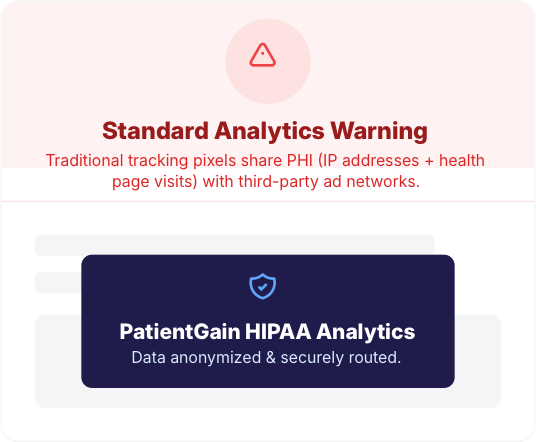
For healthcare practices, the goal is straightforward: Understand which advertising dollars generate new patients without compromising patient privacy or violating HIPAA.
This is particularly important for urgent care clinics, primary care practices, dental offices, dermatology practices, mental health providers, and multi-location healthcare organizations.
1. Why traditional advertising tracking can create HIPAA risks
Most digital marketing agencies use tracking technologies to measure advertising performance. These may include Google Analytics 4 (GA4), Google Ads conversion tags, Meta Pixel, Google Tag Manager, call-tracking software, and website analytics scripts. These tools are not automatically prohibited on healthcare websites. However, how they are configured, what information they collect, and where that information goes can create significant compliance risks.
For example, imagine a patient clicks a Google Ad promoting treatment for depression. The patient visits the clinic’s website and completes an appointment form containing their name, email address, and reason for seeking treatment. If tracking technology transmits identifying information together with appointment details or sensitive health information to an advertising vendor without an appropriate legal basis, the practice could have an impermissible PHI disclosure.
HHS specifically warns that tracking technologies can collect information about appointments, symptoms, medical services, and patient identities. HHS.gov
Examples of advertising tracking risks
| Tracking activity | Potential HIPAA concern |
|---|---|
| Google Ads conversion tracking | Appointment details or identifiers may be transmitted through conversion events |
| Meta Pixel | Sensitive health-related interactions may be disclosed to Meta |
| Google Analytics 4 | Identifiable health information could be collected through URLs, events, or user properties |
| Call tracking | Recordings, transcripts, or caller details may contain PHI |
| Appointment form tracking | Names, contact details, symptoms, and appointment reasons may be exposed |
| Advertising remarketing | Patient-related health information could be used to build advertising audiences |
 Send Text
 How may I help you?