

Is Community Engagement and Strong Signage are Essential for Local Visibility for Urgent Care Clinics?
5 things you can do to achieve essential presence in your community.
The problem with urgent care clinics is that patients do not think about their local urgent care clinic unless they need one. So this creates a different type of marketing challenges for urgent care centers. In marketing, this phenomenon is known as trigger-based demand or “just-in-time” purchasing. Unlike a primary care physician whom patients visit for routine, scheduled checkups, or a gym that people think about proactively, urgent care clinics are transactional and situational. Because patients rarely think about urgent care until an unexpected medical event occurs (like a deep cut, sudden fever, or sprain), healthcare marketers face highly specific challenges.
The Unique Marketing Challenges Created by Trigger-Based Demand Like Urgent Care and Walk-In Clinics
- Fierce Hyper-Local Competition: When a trigger event occurs, patients do not browse options for days. They choose based on two immediate factors: proximity and immediate availability. If a competitor is two blocks closer, the original brand loses the patient.
- Low Brand Retention: A patient can have an excellent experience at a clinic, get treated, and completely forget the name of the facility a month later because the immediate “crisis” has passed.
- Zero “Pre-Need” Intent: Traditional top-of-funnel marketing (like generic billboards or social media awareness campaigns) has low conversion rates. A consumer will glance at an urgent care ad and think, “I don’t need that right now,” immediately filtering it out.
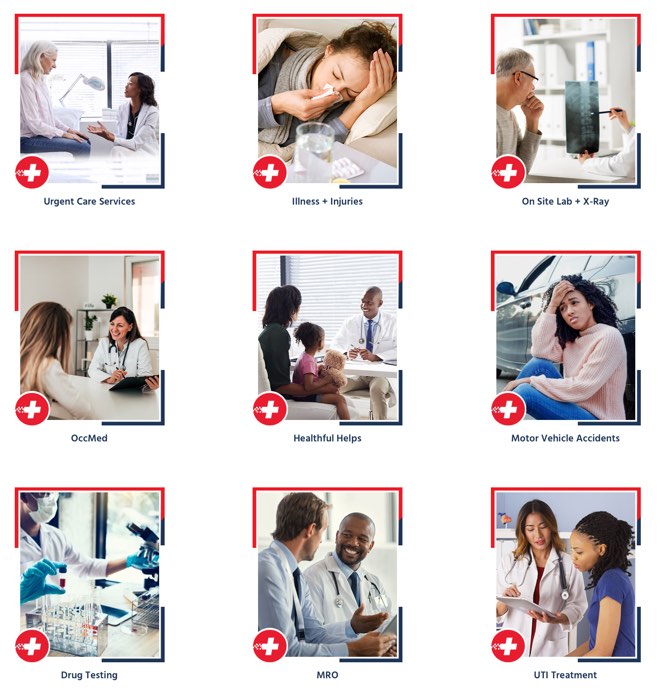
1. Driving “Top-of-Mind” Awareness Before Emergencies
Urgent care is a need-based service. People rarely look for a clinic until they actively require medical attention.
- The Billboard Effect: Clear, bright exterior signage acts as a permanent daily advertisement for thousands of passing drivers.
- Mental Mapping: When a minor emergency occurs, locals do not want to research options. Constant visual exposure ensures your clinic is the first location that comes to mind.
- Trust Through Familiarity: Seeing a clinic’s branding daily creates a psychological sense of stability and institutional permanence.
2. Capturing High-Urgency, Impulse Patient Volume
When a patient cuts their hand or suffers an acute allergic reaction, panic sets in, and decision-making time shrinks to minutes.
- Immediate Wayfinding: High-visibility signage—especially illuminated, street-facing pylons—guides stressed, distracted drivers safely into your parking lot.
- Answering Immediate Questions: Signage that explicitly states “Walk-Ins Welcome” or “Open 7 Days” instantly removes the friction of a patient wondering if they need an appointment.
- Capturing Travelers: Out-of-town visitors, commuters, and delivery drivers who do not know the local landscape rely entirely on physical road visibility during unexpected medical events.
3. Countering the “Cold Institutional” Healthcare Persona
Medical facilities often feel intimidating, sterile, or driven purely by corporate profit. Community engagement breaks down these barriers.
- Humanizing the Staff: When your doctors or nurses hand out free first-aid kits at a neighborhood block party, they transition from “faceless medical workers” to friendly neighbors.
- Creating Emotional Safety: Patients feel vulnerable when sick or injured. Interacting with your brand in a positive, stress-free community environment lowers their anxiety about visiting your clinic later.
- Word-of-Mouth Amplification: Neighbors talk. A positive interaction with your team at a local school event creates vocal brand advocates who will recommend your clinic in local social media groups.
4. Securing Lucrative B2B and Institutional Partnerships
An urgent care clinic cannot survive on consumer walk-ins alone. Active community outreach unlocks highly profitable business-to-business revenue streams.
- Occupational Medicine: Directly engaging with local business owners, construction firms, and factories positions your clinic as their preferred partner for drug screenings and workers’ comp evaluations.
- School and Sports Leagues: Partnering with school districts and youth sports leagues makes your clinic the mandatory hub for seasonal sports physicals.
- Local Government Integration: Working alongside local police, fire departments, and public health initiatives builds institutional credibility that independent competitors cannot easily match.
5. Feeding the Digital Local SEO Ecosystem
Physical visibility and community involvement directly boost your visibility on search engines like Google and Bing.
Generating High-Value Backlinks: Sponsoring a charity 5k or hosting a blood drive earns your clinic links from local newspaper websites, chamber of commerce directories, and school domains (.edu), which dramatically boosts your local map rankings.
Driving Direct Searches: When people see your physical sign daily, they are far more likely to type your exact brand name into Google rather than generic phrases like “medical clinic near me.”
 Send Text
 How may I help you?