

Patient Privacy Apps For Healthcare Providers and Healthcare Websites
What are Patient Privacy Apps For Healthcare Providers and Healthcare Websites?
In the modern digital landscape, Patient Privacy Apps (often referred to as Consent Management Apps or HIPAA-compliance widgets) are specialized software tools integrated directly into a healthcare provider’s website.
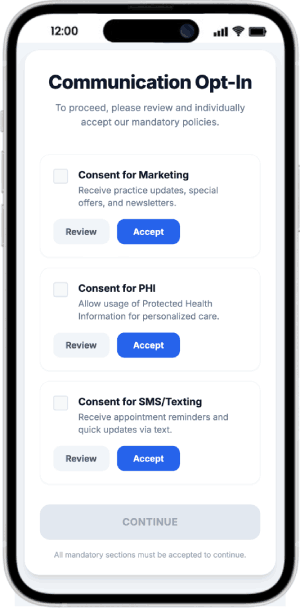
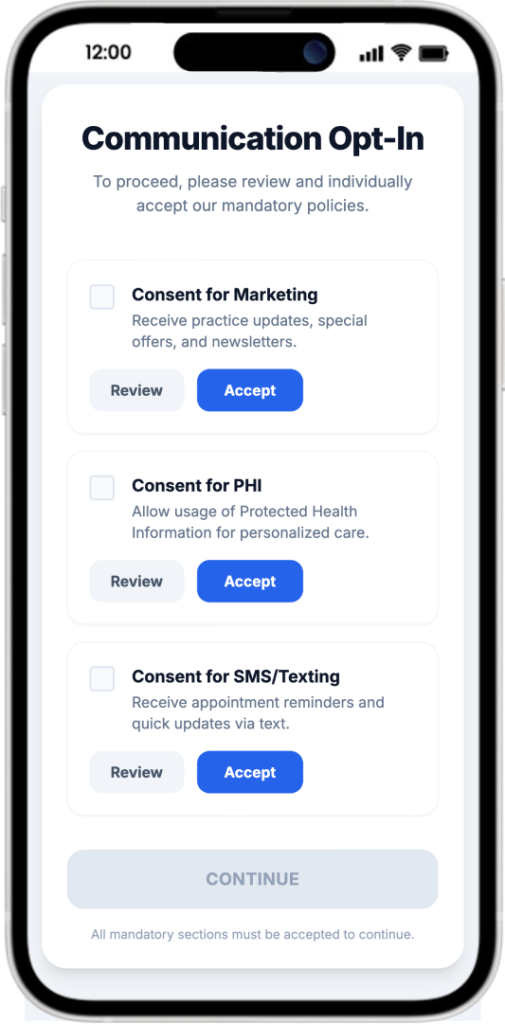
Their primary purpose is to ensure that every time a patient interacts with your website—whether they are booking an appointment, filling out a form, or simply browsing a page about a specific medical condition—their data is legally protected, encrypted, and compliant with strict healthcare privacy laws like HIPAA.
Instead of paying tens of thousands of dollars to completely rebuild a non-compliant website from scratch, practices can use these “apps” as a secure overlay on their existing website.
1. Explicit Consent Management
When a patient contacts your practice through your website, you legally need explicit consent before you can start sending them text messages, marketing emails, or capturing their Protected Health Information (PHI).
- What the App Does: It presents a clear, legally sound opt-in prompt before the patient can submit a form or start a web chat. It explicitly outlines your privacy policy and asks for permission to communicate with them securely.
2. Creating an Unalterable Audit Trail
If the Department of Health and Human Services (HHS) audits your clinic, you must be able to prove that a patient consented to data collection.
- What the App Does: A true privacy app logs the exact date, time, and IP address of the patient when they clicked “I Consent.” In the United States, federal regulations generally require you to keep patient consent records for at least 6 years. These apps store this audit trail in an encrypted, tamper-proof database.
3. Blocking Unauthorized Tracking Pixels
As discussed earlier, if a patient visits a page about “HIV Testing” or “Weight Loss Injections,” and a standard Meta (Facebook) or Google Analytics pixel captures their IP address and sends it to the ad network, it is a HIPAA violation.
- What the App Does: The privacy app acts as a firewall. It actively blocks all third-party tracking scripts from loading in the background until the patient explicitly accepts your privacy terms.
4. Secure Data Routing
A standard website “Contact Us” form typically sends an unencrypted email directly to your front desk’s inbox, which is highly unsecure.
- What the App Does: Privacy apps intercept the form submission. Instead of sending an email, they encrypt the data and route it securely into a HIPAA-compliant CRM or dashboard.
 Send Text
 How may I help you?