
Why a medical or dental practice should send monthly newsletters every month to patients?
Sending monthly newsletters is a highly effective strategy for medical and dental practices to maintain a continuous connection with patients between their semi-annual or sporadic visits. A monthly cadence strikes the ideal balance of staying top-of-mind without overwhelming patients’ inboxes.
Data consistently shows that email marketing remains one of the highest-converting, most profitable tools a medical or dental practice can use. In fact, Email marketing routinely boasts an ROI of around $31 to $40 for every $1 spent.
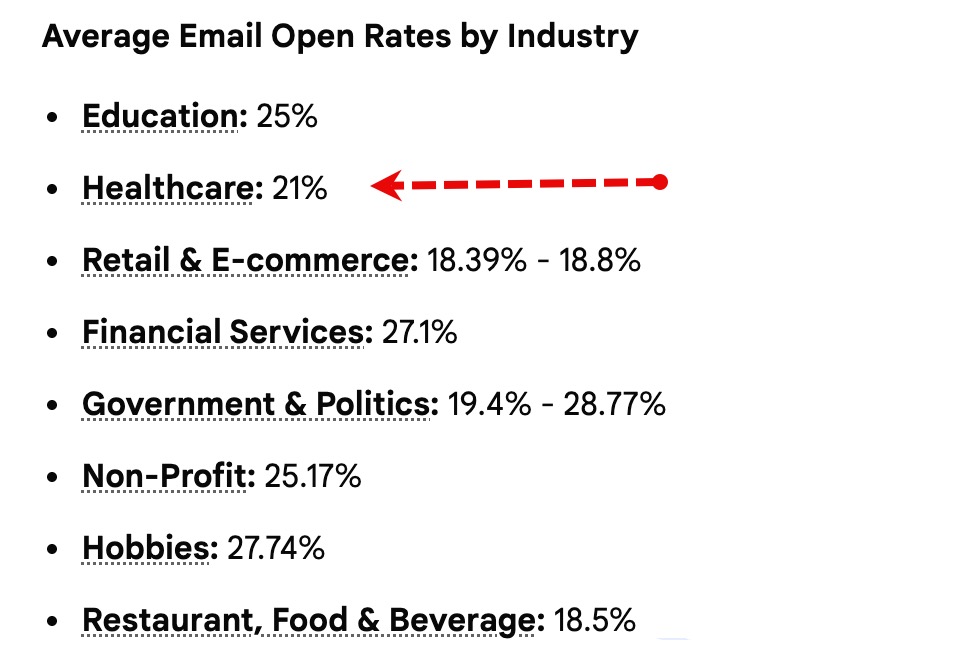
Average open rates for healthcare industry are around 21%.
What is a good open rate for email marketing?
A good, healthy average open rate for email marketing is generally between 20% and 30%, though this varies by industry and business size. While top performers often exceed 35-40%, a rate over 20% indicates that your subject lines and sender reputation are resonating with your audience, with many industries falling in the 15-25% range
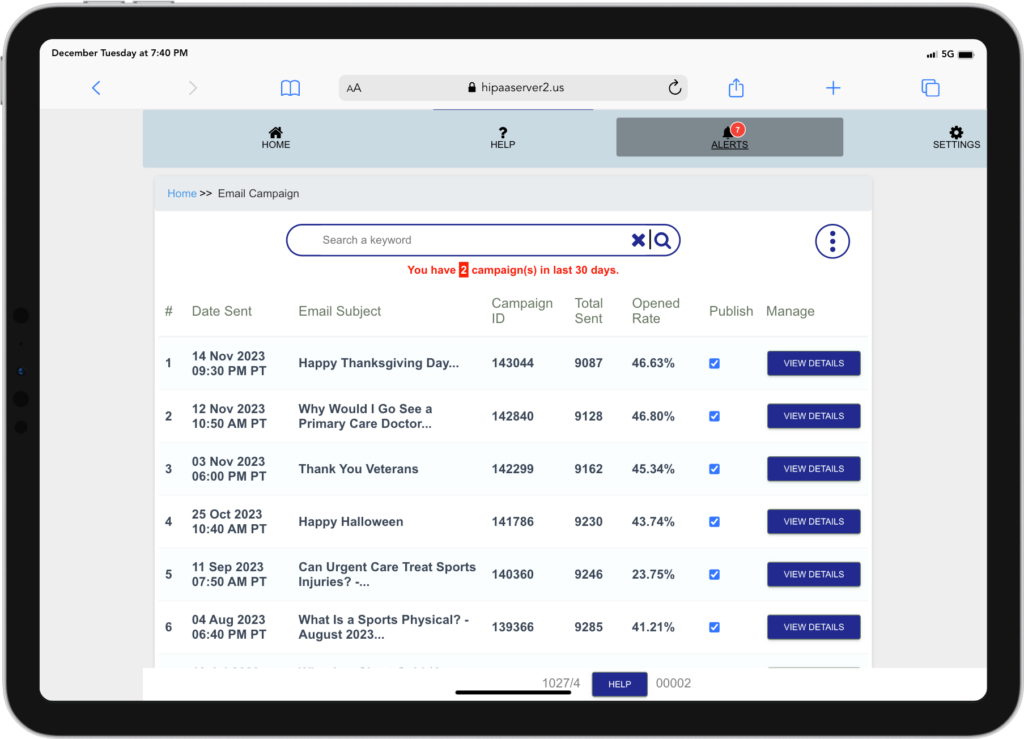
In the example below: You can see that Email marketing campaigns for this Primary care + Urgent care practice has approximately 39% open rates. This customer is using PLATINUM service.
Here is exactly why a monthly newsletter is a critical growth and retention tool for your practice.
1. The “Top-of-Mind” Effect (Patient Retention)
Patients often forget about their dentist or doctor until they are in pain. If a patient hasn’t been to your dental clinic in over a year and suddenly chips a tooth, you want them to call you, not google “dentist near me” and go to a competitor. Sending a monthly newsletter ensures your practice’s name, logo, and contact info consistently appear in their inbox. It builds a gentle, ongoing relationship so that when they need care, you are the obvious first choice.
2. Promoting High-Margin, Elective Services
Your patients might love you for their routine cleanings or primary care checkups, but they might not realize you also offer Invisalign, Botox, or specialized weight-loss programs. A newsletter is the perfect place to gently cross-sell these high-margin, elective services. Highlighting a “Service of the Month” or offering a newsletter-exclusive promotion can drive immediate bookings from your existing patient base without spending a dime on Google Ads.
3. You Own the Audience (Algorithm-Free)
If you post an update on your practice’s Facebook or Instagram page, only about 2% of your followers will actually see it because social media algorithms limit organic reach to force you to buy ads. With an email newsletter, you own the list. If you send an email to 4,200 patients, it lands in 4,000 inboxes, and at 32% open rate, . It provides a direct, uninterrupted line of communication to 1280 patients.
4. Patient Education and Clinical Authority
Trust is the currency of healthcare. By sharing valuable, preventative health tips—such as “How to protect your skin this summer,” “3 Stretches for Lower Back Pain,” or “Why flossing prevents heart disease”—you position yourself not just as a clinician, but as a trusted health authority. Patients who understand the “why” behind their care are much more likely to adhere to treatment plans and show up for their appointments.
5. Reducing Call Volume for Administrative Updates
If your practice hires a new provider, changes its weekend hours, or starts accepting a new insurance plan, a newsletter is the most efficient way to communicate this en masse. It prevents your front desk from having to answer the same administrative questions over and over again on the phone.
The HIPAA Caveat
The only catch in healthcare is that you must use a HIPAA-compliant email marketing platform (like PatientGain or certain secure configurations of Mailchimp) to send these newsletters, and patients must have explicitly opted in to receive marketing communications.
Example newsletter of a wellness practice. For aesthetics and med spa type of practices, the newsletters are typically designed to be attractive. For medical type of practices they are designed to be more informational based.


 Send Text
 How may I help you?