

Healthcare Website Design Companies With 2 Strategies – Custom VS ROI Based
Building a custom healthcare website is fundamentally different from building a site for a retail store or a local restaurant. In healthcare, a website is not just a digital brochure; it is a highly regulated piece of medical software and the first touchpoint of the patient’s clinical journey.
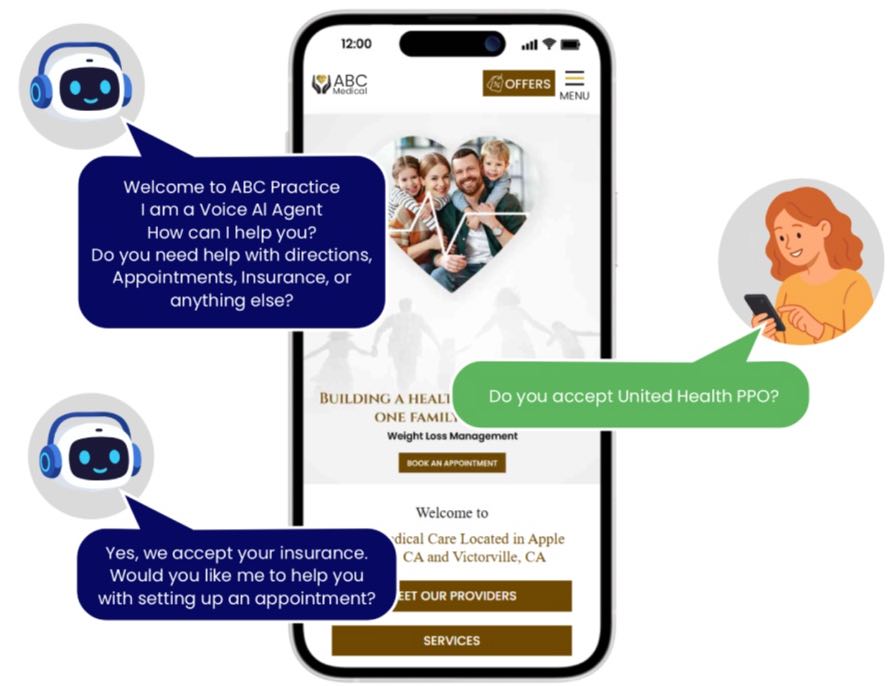
A Custom Healthcare Website Design is specifically tailored to meet the needs of healthcare providers while ensuring a user-friendly experience for patients, maintaining HIPAA compliance, and being search engine optimized (SEO) for greater online visibility. Creating a healthcare website that meets these requirements involves addressing both functional and regulatory concerns, as well as providing an intuitive, accessible platform for patients to interact with the practice.
Why does a beautifully designed custom healthcare website may not perform?
It is one of the most frustrating experiences for a practice owner: you spend $10,000+ on a high-end design agency, the website looks like a modern art masterpiece, but your phone hardly rings. This happens because designers are not always conversion strategists. A beautifully designed website often prioritizes aesthetics over the actual psychology of how a patient contacts a healthcare practice.
If a beautifully designed custom healthcare website looks stunning but fails to perform, it is almost always suffering from one of these five items:
1. The “Heavy Art” Problem (Slow Load Times)
Beautiful custom healthcare website often rely on massive, high-resolution background videos, complex fade-in animations, and custom typography.
- The Reality: These elements require massive amounts of code and data to load. If your site takes 4 seconds to load because of a beautiful background video, 50% of your mobile traffic will simply hit the “back” button and go to a competitor.
- The Google Penalty: Google’s algorithm actively penalizes slow websites. If your site is sluggish, you will be pushed down on SEO rankings, rendering your beautiful design invisible.
2. Aesthetic Minimalism Over SEO (Thin Content)
A massive trend in modern web design is “minimalism”—lots of white space, very few words, and sleek images.
- The Reality: Search engines and AI models (like ChatGPT or Gemini) do not have eyes; they read text and code. If your designer stripped out the detailed paragraphs explaining your medical services because “it looked too cluttered,” Google has no idea what you actually do.
- The Result: You will not rank for high-intent searches like “cost of dental implants near me” because your site lacks the necessary “E-E-A-T” (Experience, Expertise, Authoritativeness, and Trustworthiness) text to prove you are a medical authority.
3. “Mystery Meat” Navigation & High Friction
A designer might create a unique, hidden hamburger menu or a clever, unconventional layout to make the site look unique.
- The Reality: When patients visit a medical website, they are often anxious, in pain, or in a hurry. They do not want to go on a scavenger hunt.
- The Fix: If a patient cannot find “How To Contact” Call To Action Button, button within 4 seconds of landing on your homepage, the design has failed. The user experience (UX) must be completely frictionless. One of best things you can do is to have all contact information in one place. Give them options.
4. Weak Calls to Action (CTAs)
A beautiful custom healthcare website acts like a digital brochure: it tells the patient who you are, but it doesn’t tell them what to do next.
- The Reality: If your primary button just says “Learn More,” it is a weak Call to Action.
- The Fix: A high-performing website operates like a sales engine. It guides the user’s eye directly to a bright, high-contrast button that says exactly what they will get, such as “Book a Free Consultation” or “Schedule a Same-Day Appointment.”
5. Lack of Trust Signals
A sleek design can sometimes feel too corporate or sterile, removing the human element that patients crave in healthcare.
- The Reality: A patient won’t “Contact” just because your color palette is nice. They book because they trust you.
- The Fix: If the beautiful design pushes patient testimonials, doctor biographies, insurance accepted, and before-and-after photos to the bottom of the page (or hides them entirely), the site will fail to convert.
What is the difference between a typical custom healthcare practice website and PatientGain.com’s PLATINUM ROI based websites for healthcare practices?
The difference between a typical custom healthcare practice website and PatientGain.com’s PLATINUM ROI-based websites lies primarily in functionality, patient conversion optimization, automation, and data-driven results. While both serve the purpose of representing the practice online, PatientGain’s PLATINUM service is designed to drive measurable business outcomes and return on investment (ROI), whereas a typical healthcare website may focus more on presentation without specific conversion goals or marketing integration.
When practice owners ask for a “custom website,” they are usually thinking about aesthetics—they want a site that looks beautiful and unique.
PatientGain’s PLATINUM service takes a completely different approach. They view the website not as a digital art project, but as the user interface for a high-performance, ROI-driven sales engine. The difference between a typical custom website build (usually done by a traditional boutique agency) and the PLATINUM service comes down to A/B tested conversion vs. aesthetic customization, and integrated software vs. vendor sprawl.
The Side-by-Side Comparison
| Feature | Typical Custom Healthcare Website | PatientGain PLATINUM Website |
| Primary Focus | Brand aesthetics and unique visual design. | Data-driven patient conversion and high ROI. |
| Design Method | Built from scratch based on a designer’s “gut feel” or the doctor’s personal taste. | “Semi-Custom” & A/B Tested. Layouts are based on scientific data from thousands of medical sites. |
| Average Conversion Rate | 2% – 4.2% (Industry average). | 10% – 15%+ (Driven by AI tools and frictionless UX). |
| Technology Stack | Vendor Sprawl. You must stitch together WordPress, CallRail, Mailchimp, and 5 other third-party plugins. | All-in-One Ecosystem. 20+ HIPAA-compliant apps (including the SPOC dashboard) are natively built-in. |
| HIPAA Compliance | High Risk. You must manage multiple BAAs for every separate tool, risking “HIPAA leakage.” | End-to-End. One single BAA covers the entire platform, including built-in Consent Management. |
| Upfront Setup Costs | $5,000 – $20,000+ in one-time design/build fees. | $0 (Waived with a 12-month subscription contract). |
| Monthly Cost | $3,000 – $6,000+ (Paying separate agencies for SEO, hosting, and software). | $1,399 / month (All-inclusive software, hosting, and managed SEO). |
The 4 Core Differences Explained between a typical custom healthcare practice website and PatientGain.com’s PLATINUM ROI based websites
1. “A/B Tested Conversions” vs. “Blank Canvas”
If a custom agency builds you a wholly unique, never-before-seen layout, you are essentially the guinea pig. If that layout confuses patients, your conversion rate plummets.
- The PLATINUM Approach: PatientGain uses a “semi-custom” model. The branding, colors, and imagery are customized to your practice, but the layout (where the “Book Now” button goes, how the mobile menu functions) is strictly based on rigorous A/B testing. They use the mathematical frameworks proven to generate the highest number of booked appointments.
2. The “Ecosystem” vs. “Patchwork IT”
A typical custom website is just a front-end shell. If you want patients to text you, schedule online, or chat with a bot, your web developer has to buy those tools from other companies and try to wire them together. When an update breaks the connection, you lose leads.
- The PLATINUM Approach: The website is just the tip of the iceberg. Beneath the surface is the SPOC (Single Point of Conversion) app and a massive, proprietary CRM. Because PatientGain built the website and the texting app and the chatbot, they communicate flawlessly with zero “lead leakage.”
3. Managed SEO vs. Static Brochures
Once a custom website launches, the agency’s job is usually done unless you pay them a massive monthly retainer to write blog posts. Otherwise, the site sits stagnant and slowly drops in Google rankings.
- The PLATINUM Approach: The $1,399/month fee acts as payroll for a managed marketing team. The platform includes a “Social Auto Pilot” that automatically posts to your Google Business Profile 20 times a month, and a proprietary AI Agent and human medical writers generate fresh, “Reverse SEO” content page(s) every month to actively grow your organic traffic.
4. Automated ROI Tracking
With a custom site, tracking ROI requires manually matching Google Analytics data to your front desk’s schedule—a process that often results in accidental HIPAA violations if standard tracking pixels are used.
- The PLATINUM Approach: Every single lead (whether they called, texted, or filled out a form) is tracked to its exact source (e.g., organic search vs. a specific Google Ad) using HIPAA-compliant Data Obfuscation. You get a live dashboard showing exactly how much revenue your marketing dollars are generating.
The Verdict
A custom website is like building a bespoke sports car from scratch; it’s expensive, takes 6 months to build, and requires constant specialized maintenance. PatientGain’s PLATINUM service is like leasing a high-performance commercial jet; the layout is standardized for maximum efficiency, the maintenance and compliance are fully handled by their crew, and its only job is to get you to your destination (higher revenue) as fast as possible.
 Send Text
 How may I help you?