

Best healthcare website designs – Based on A/B testing and ROI based results
What are some strategies and examples used by healthcare websites designed to serve existing patients and new patients? Healthcare website strategies prioritize trust, frictionless access, and AI-driven personalization to serve both new and returning patients.
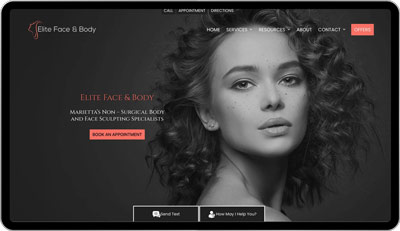
Strategies for New Patient Acquisition
- Establish Instant Trust: Use “hero” sections that highlight provider credentials, professional awards, and authentic, non-stock imagery of diverse patients and facilities.
- Find-a-Provider Tools: Implement robust directories with filters for specialty, location, insurance, gender, and languages spoken.
- Local SEO and AI Search Optimization: Optimize clinical pages with Q&A-style content and structured data to appear in 2026 AI-generated search summaries and “near me” local results.
- Reputation Management: Feature recent, peer-verified patient reviews and testimonials prominently to build credibility for high-stakes medical decisions.
- Convenience-First Messaging: Explicitly state “digital front door” features, such as real-time insurance verification or “booking in under 10 seconds,” to attract patients prioritizing convenience.
Strategies for Existing Patient Retention
- Unified Patient Portals: Integrate portals directly into the main site flow, allowing patients to book follow-ups, refill prescriptions, or view lab results without switching systems.
- Personalized Dashboards: Use AI to offer returning users personalized summaries, reminders for upcoming appointments, or tailored health tips based on their medical history.
- Omnichannel Communication: Expand retention efforts through automated SMS and email nurturing sequences for appointment reminders and post-care follow-ups.
- Secure IoT Integration: Provide dashboards where patients can track health metrics from wearable devices, allowing for remote monitoring of chronic conditions.
Core Design & Technical Standards (2026)
- Compliance & Accessibility: Ensure all sites meet WCAG 2.2 or 3.0 standards for accessibility (mandatory by May 2026 in some jurisdictions) and utilize HIPAA-ready hosting and encryption for all data.
- Mobile-First, Low-Latency Performance: Prioritize fast load times (under 3 seconds) and touch-friendly interfaces, as over 80% of patients access medical information via mobile devices.
- Minimalist & Calming Aesthetics: Use clean layouts, ample white space, and soft color palettes (like muted blues) to reduce cognitive load and anxiety for stressed users.
- Health Literacy (Jargon-Free): Replace medical terminology with plain language (e.g., using “walk” instead of “ambulate”) to improve understanding and trust.
What is a HERO section of medical or a dental website ?
Hero Section of a medical or dental website is the visually dominant, “above-the-fold” area at the top of the homepage that users see immediately upon landing. It serves as a digital “front door,” designed to establish immediate trust, communicate a core value proposition, and guide patients to their next step in seconds.
Core Components
- Hero Visual: High-resolution imagery or video. In 2026, the trend is toward authentic photography of the actual team and facility rather than stock photos to build human connection.
- Headline also called Tagline: A bold, 5–7 word statement of what the practice does and how it benefits the patient (e.g., “Gentle Dental Care for a Brighter Smile”).
- Subheadline: Supporting text that adds context, such as mentioning specialties or accepted insurance.
- Primary Call-to-Action (CTA): High-contrast buttons for immediate action, such as “CONTACT” button, that stays in one place every where on the website, regardless of os the page. Example is a PLATINUM website from PatientGain – where CONTACT is an app, added to your healthcare website, and it is connected and fully integrated to SPOC app, so there is consistent “Contact” experience regardless of how patient wants to contact the healthcare practice.
- Trust Signals: Small, impactful badges or text such as “500+ 5-star reviews with average rating of 4.8 rating” or “Insurance verified instantly” using our simple Insurance App.
Key features of your strategy
| Feature | Medical Website Focus | Dental Website Focus |
|---|---|---|
| Visual Tone | Calm & Professional: Muted blues and whites (e.g., Pantone’s Cloud Dancer) to reduce anxiety. | Warm & Approachable: Spa-like or hotel-inspired aesthetics with biophilic (nature) touches. |
| Action Focus | Information & Access: Direct links to Patient Portals, telehealth portals, or symptom checkers. | Conversion & ROI: Prominent “New Patient Specials” (e.g., $149 exam) or “Smile Gallery” previews. |
| Technology | AI Personalization: Dynamic content showing the patient’s next scheduled checkup. | High-Tech Care: Highlights of 3D printing for same-day crowns or laser dentistry. |
Key Technical Standards
- Mobile-First Design: Hero sections must be optimized for smartphones, where over 80% of healthcare searches occur, ensuring “lightning-fast” load speeds.
- Compliance: All hero elements must meet WCAG 3.0 accessibility standards (e.g., high text-to-background contrast) and be hosted on HIPAA-compliant servers.
- Minimalism: Modern website favors “quiet” designs with generous spacing to avoid overwhelming stressed patients.
 Send Text
 How may I help you?