

Examples of AI Agents For Healthcare Practices
Are there any examples of AI agents for medical and dental practices from PatientGain?
Yes, PatientGain offers several AI agents for medical and dental practices, primarily focusing on marketing, patient engagement, and administrative automation. In addition to using AI agents, PatientGain uses automation, expert humans and specific focus on HIPAA and PHI compliance. Healthcare is different from other industries. AI cannot solve all of the business problems, it requires constant human oversight, and checks to make sure that every step of automation and AI is “logged” and is available for HIPAA audit. In addition all tasks cannot be performed by “anyone”. There are specific requirements and restrictions on who can see certain information. So it must be based on roles.
4 Good Examples of PatientGain’s AI Agents
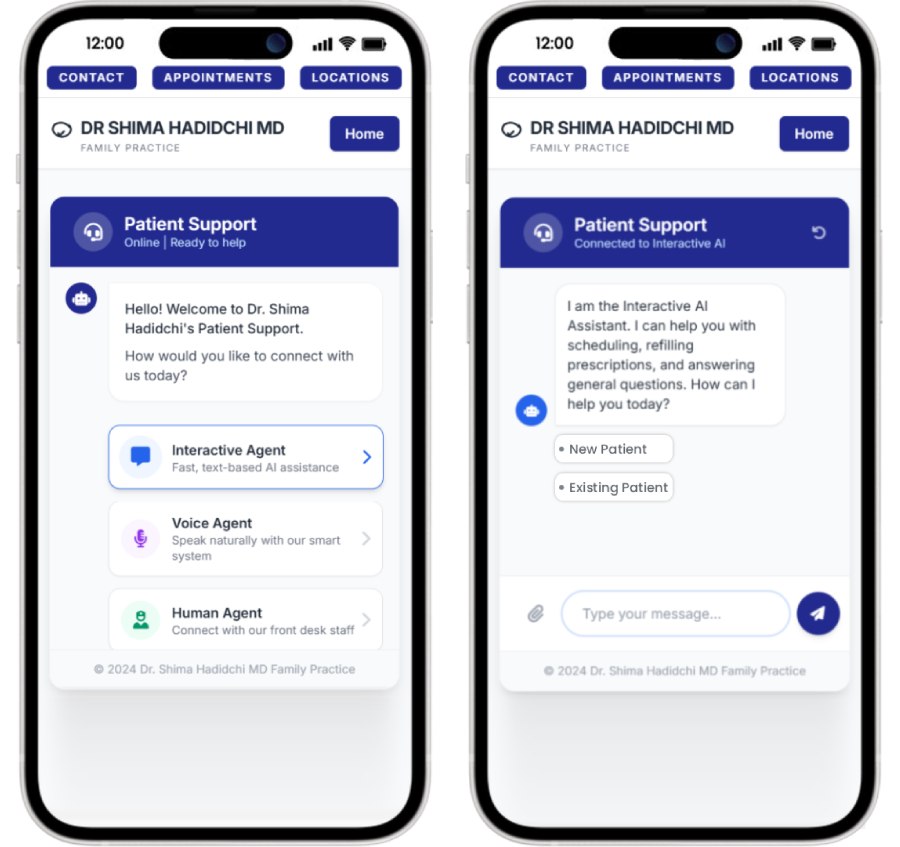
Example 1. AI Interactive Agent – As patients visit your website (mobile or desktop) The Patient Support Interactive agent is designed to interact with patients and help them get “booked” with your practice.
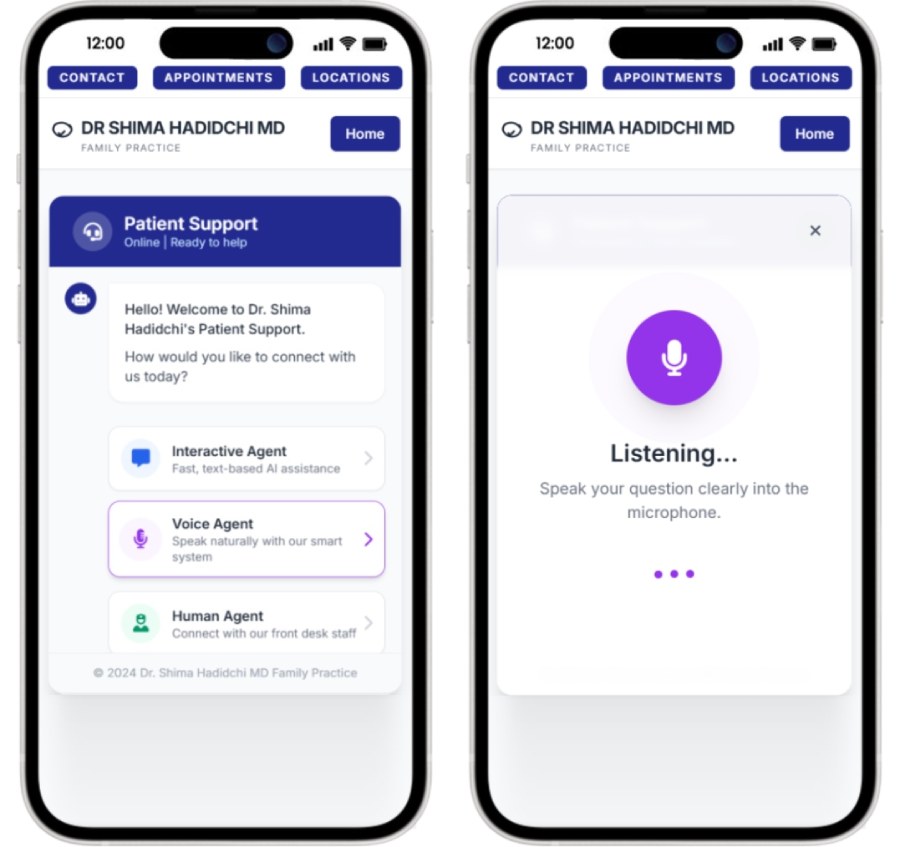
Example 2. AI Voice Agent – As patients visit your website (mobile or desktop) The Patient Support Voice agent is designed to interact with patients and help them get “booked” with your practice.
3. Social AutoPilot AI Agent
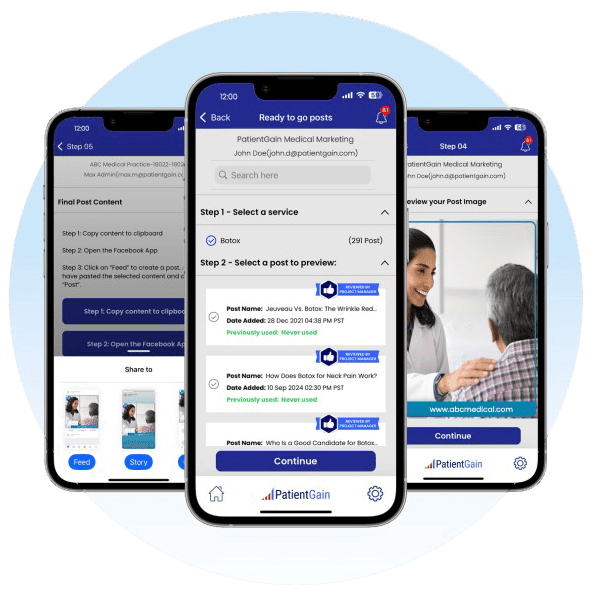
This Social Auto Pilot app is designed to make it easier for medical and dental practices to post on Facebook, Instagram and Google Business Profile (GBP). PatientGain’s Social AutoPilot is an AI-powered app for healthcare practices (doctors, dentists) that automates and manages their social media presence, creating and scheduling content for platforms like Facebook, Instagram, and Google Posts to save staff time, boost patient engagement, and maintain an active online image, all within a HIPAA-compliant system. It uses AI to generate posts relevant to the practice’s services, which are then reviewed and approved by a human project manager before publishing.
Key Features & Benefits:
- AI Content Creation: Generates monthly posts about services, providers, and health topics, tailored to the practice.
- Multi-Platform Management: Handles content for Google My Business (GMB), Facebook, and Instagram from one dashboard.
- Human Oversight: Content is reviewed by a project manager, ensuring accuracy and relevance before posting.
- Time-Saving: Reduces the burden on staff to create social media content regularly.
4. Reverse Search Engine AI Agent
PatientGain’s “reverse search engine” is an AI-driven, healthcare-specific SEO strategy that analyzes how patients search for symptoms and treatments to create highly targeted content, rather than just using generic keywords. It reverses the standard SEO process by focusing on user intent first, leading to high-conversion, locally optimized, and regularly updated content.
Instead of starting with a list of high-volume keywords, the algorithm begins by analyzing how potential patients describe their problems in natural language.
- Patient Pattern Analysis: The AI identifies common phrasing for symptoms, questions, and conditions (e.g., “how to treat knee pain” instead of just “orthopedic surgeon”).
- Intent-Based Optimization: It evaluates the context and intent behind queries, such as “urgent care near me,” to ensure a practice’s website provides precise, helpful information that matches those specific needs.
- Conversion Benchmarking: Patterns that achieve a conversion rate of 70% or higher are used as the foundation for creating ongoing monthly content for the practice.
- Dynamic Content Creation: Medical content specialists and AI agents use this data to generate specialized service pages, FAQs, and infographics that directly answer the identified patient questions.
- Local SEO Synergy: The system integrates these patterns into Google Business Profile (formerly Google My Business) optimization, ensuring the practice ranks for highly specific local searches like “female pediatrician in [city]”.
Key Benefits for Medical Practices
- Targeted Lead Generation: By addressing specific medical conditions and treatments, it attracts high-intent patients who are more likely to book an appointment.
- Continuous Improvement: The algorithm is constantly refined based on changing patient behavior and competition, with new content added every month to maintain rankings in standard search and newer AI-driven search agents.
 Send Text
 How may I help you?