

How to Solve Chaotic Process of Patient Inquiries, Insurance Check, Phone Calls & Intake for Medical and Dental Practices
To solve the chaos of patient inquiries, insurance checks, calls, and intake, healthcare practices should implement technology and standardize processes. Solutions include using digital, pre-visit application of your medical or dental practice’s website. Truth is that over 93% of the patients visit your website to learn about your practice and to contact your practice in some form. And a majority of these patients are on mobile devices.
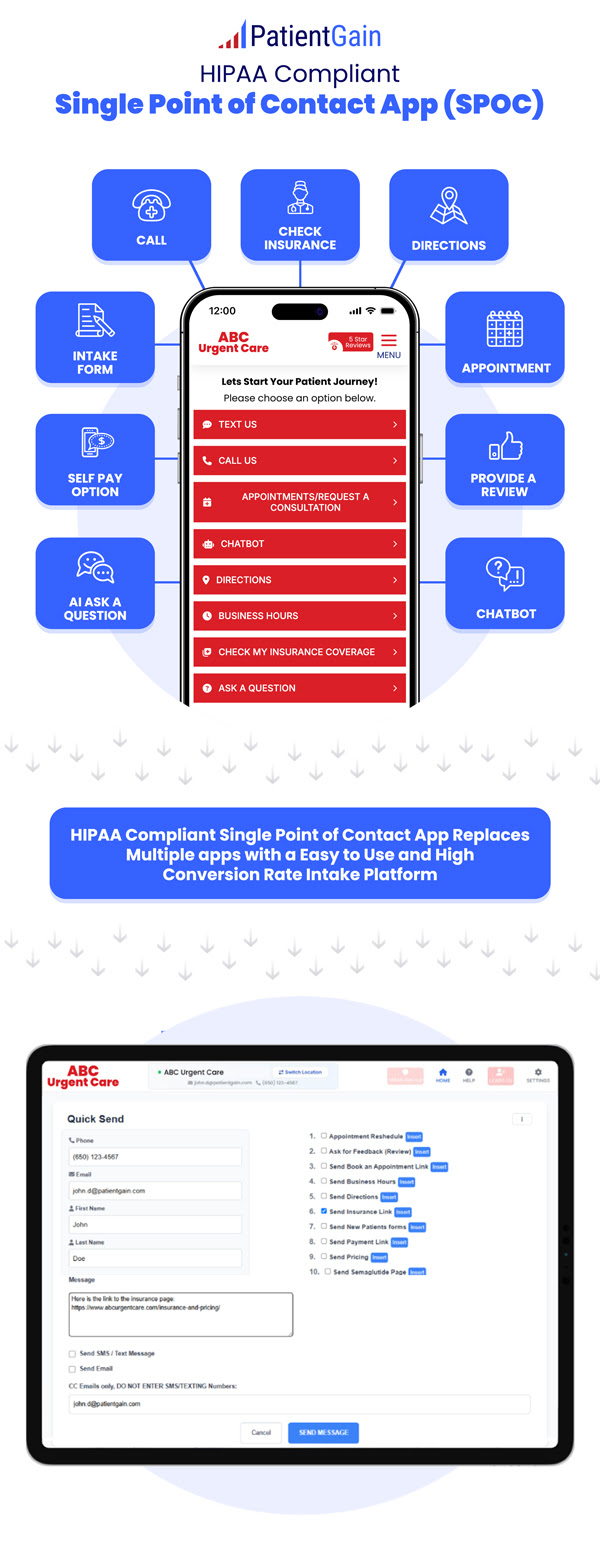
SPOC application (Single Point Of Conversion) is the answer for medical and dental practices. It is a simple app that can be added to any website, and converts your existing website into an automated contact center, backed with your front desk. Hence automating over 90% of the inquiries.
What type of inbound questions & inquires take place on a typical day in the life of a medical or dental practice?
In a typical day, a medical or dental practice receives a wide array of inbound questions and inquiries, which can be categorized into several key areas:
Appointments and Scheduling
- New Patient Inquiries: Questions regarding the process for establishing care, required paperwork, and first-visit logistics.
- Appointment Booking: Patients (new and existing) frequently call to schedule new appointments, inquire about availability.
- Appointment Rescheduling: Patients frequently call to change existing ones, or inquire about availability for rescheduling.
- Appointment Cancellations: Calls to cancel appointments due to illness or other conflicts.
- Waitlist Inquiries: Patients asking to be placed on a cancellation list for an earlier appointment slot.
- Confirmation Calls (Inbound): While many practices make outbound confirmation calls, patients may call to confirm their appointment time/date independently.
Insurance and Billing
- Basic Insurance Coverage: Questions like “do you accept my insurance” , “do you accept Blue-Shield insurance”?
- Coverage Verification: Questions about whether a specific procedure, service, or provider is covered by a patient’s insurance plan.
- Insurance Updates: Calls to provide updated insurance information or notify the office of a change in coverage.
- Billing Statements: Inquiries regarding an itemized bill, unexpected charges, or discrepancies in a statement.
- Payment Options: Questions about accepted forms of payment, like VISA/Master card for insurance deductibles. How much is my deductible? What is my “out-of-pocket” cost for the MRI for next week?
- Self-Pay Options: Questions about self-pay pricing, self-pay payment plans, or self-pay discounts.
- Referral Status: Checking if a necessary referral from a primary care physician has been received by the specialist’s office.
Clinical and Medical Advice
- Symptom Questions: Calls from patients experiencing new or worsening symptoms, seeking advice on whether they need an urgent visit, emergency care, or home management.
- Medication Refills/Questions: Requests for prescription refills or questions about dosages, side effects, or interactions of current medications.
- Lab/Test Results: Inquiries about when they can expect test results and what they mean.
- Post-Procedure Care: Questions regarding recovery instructions, wound care, or expected discomfort following a procedure.
- Form Completion: Requests for the office to fill out forms for school, employment, FMLA, or disability.
Operational and General Information
- Directions/Hours: Simple logistical questions about the clinic’s location, parking availability, and operating hours.
- Staff Availability: Questions about when a specific doctor, hygienist, or specialist is available for appointments.
- Website/Portal Help: Technical difficulties or questions about using the online patient portal for communication or accessing records.
- Medical Records Requests: Inquiries about the process and associated fees for obtaining copies of their medical history.
The majority of these calls are handled by front desk staff, medical assistants, or dedicated billing specialists, requiring significant coordination to route the calls to the appropriate department quickly and efficiently. However, SPOC app from PatientGain is designed to automate responses and accomplish 3 goals for your medical or dental practice.
- Provide timely and correct responses and information to your patients
- Save your staff hours of work each month – so they can spend the same time helping the patients.
- Improve the ROI (Return On Investment) and operational efficiency of your practice.
Medical advice and certain type of questions cannot be and should not be “automated” so SPOC app from PatientGain provides safeguards. HIPAA compliance and disclosure of PHI is another concern for healthcare practices. All communication is documented and log files are created so a practice manager can review the responses from the SPOC app and your staff.
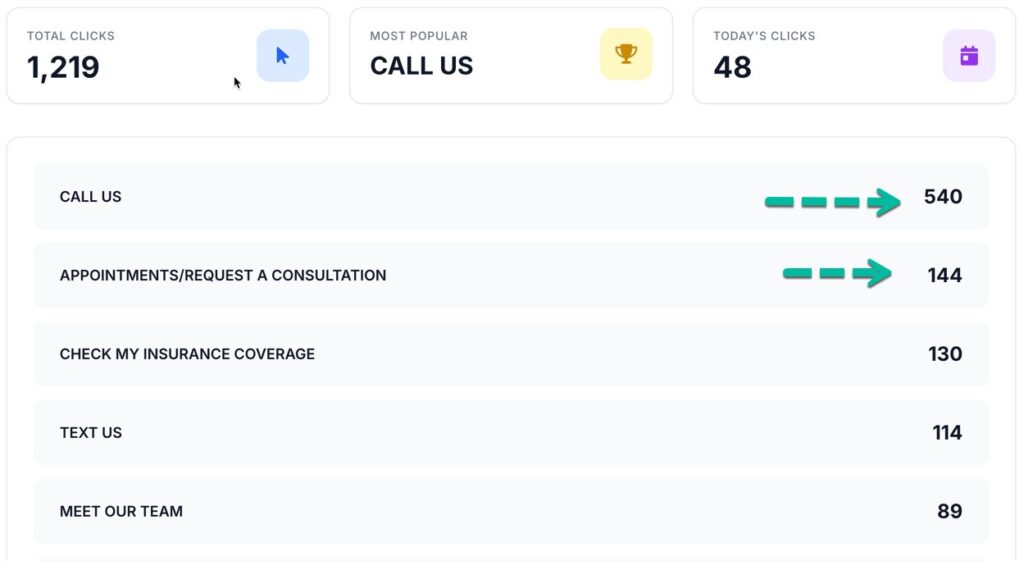
An example of a SPOC dashboard for the practice managers. You can see that during the last week, there are 540 new patient calls and 144 requests of appointments initiated.
 Send Text
 How may I help you?