

Does ZocDoc compete with your healthcare practice for Organic SEO, Paid Ads and Google My Business?
Yes, Zocdoc actively competes for visibility across the Google Search results page through Organic SEO, Paid Ads, and strategies that leverage Google Business Profile (formerly Google My Business) features.
From PatientGain’s perspective, Zocdoc competes with your practice’s local SEO by dominating search engine results pages (SERPs) through a massive, platform-based strategy that individual practices cannot match. While Zocdoc presents itself as a partner for patient acquisition, it simultaneously functions as a powerful, centralized marketplace that pulls potential patients away from a practice’s own brand and website.
Is ZocDoc a leads sales company?
Yes, Zocdoc functions as a lead generation and sales platform for healthcare providers, connecting them with patients seeking care, but it’s more of a patient acquisition service/marketplace where doctors pay for visibility and bookings (leads/patients) rather than a traditional B2B “leads sales” company, focusing on high-volume patient delivery. They generate massive patient traffic (leads) for providers through Google SEO search, Google PPC ads, Google Business Profile (And they compete with your practice), then sell access to these patients to doctors. The data gathered from these interactions creates another financial source for ZocDoc.
ZocDoc’s methods for competing with your local SEO
- Dominating local search results: Zocdoc uses its high domain authority and aggressive SEO strategy to rank for a huge volume of “city + specialty” search terms. This pushes individual practices’ organic listings further down the page.
- Example below: A patient is looking for EKG test in Orange City FL. You can see a Google PPC ad from ZocDoc. The objective of this ad is to drive traffic to ZocDoc platform. Imagine the cost of the click is $5.65 and if the patient books on one of ZocDoc listsings, they charge $96.00 for the booking fee. This means that ZocDoc’s strategy of diverting potential patients to their listing is working. However, if you have a practice in this area, now you are competing with ZocDoc for the same patients.

- Competing in paid search: Zocdoc invests heavily in paid advertising, often buying ads for the same high-volume, generic search terms that a practice would use. These Zocdoc ads frequently appear above the individual practice’s ads and organic listings, diverting traffic to the Zocdoc marketplace.
- Funneling traffic to its marketplace: When a patient clicks a Zocdoc ad, they are sent to the Zocdoc website, not the individual practice’s site. This puts the practice in direct competition with other providers listed in the Zocdoc marketplace.
- Undermining brand experience: The patient’s initial interaction is with the Zocdoc brand, not the provider’s practice. This reduces the practice’s ability to build its own brand loyalty and relationship with the patient.
- Creating self-competition: For a practice that advertises on both Google and Zocdoc, there is a risk of competing against its own ads. A patient might see both, but a click on the Zocdoc ad results in a platform booking fee, even though the patient was already aware of the practice.
- Influencing Google Business Profiles (GBPs): Zocdoc can create a “sneaky control feature” through partner syndication feeds that integrate its booking service directly into a practice’s GBP listing. This funnels potential patients into the Zocdoc platform, potentially without the practice fully understanding the dependency it creates.
- Centralizing reviews: While Zocdoc profiles include patient reviews that can be used for local SEO, they also centralize that content on the Zocdoc platform, further reinforcing its authority and marketplace function.
The PatientGain counter-strategy
To regain control and compete effectively with ZocDoc, PatientGain would advise practices to focus on building their own sustainable, long-term SEO assets:
- Own your patient acquisition channel: PatientGain’s approach emphasizes directing all marketing efforts toward the practice’s own website and brand. This avoids expensive transactional fees and reinforces the practice’s brand identity.
- Enhance your Google Business Profile (GBP): Optimize your GBP with accurate information, high-quality photos, and regular posts. Actively encourage patient reviews directly on Google, as this is a powerful local SEO signal that you control. DO NOT ADD ZocDoc Book Now on your Google Business Profile (GBP).
- Invest in a strong website and content: Create valuable, patient-centered content, such as blog posts and detailed service pages, that are optimized for local search terms. This builds your own website’s authority and relevance with search engines.
- Develop a transparent marketing funnel: With a platform like PatientGain, all marketing efforts are directed to your own website, allowing you to clearly measure ROI without the added fees and brand dilution of a marketplace.
- Focus on long-term value: Instead of paying high, one-time patient acquisition costs to a platform like Zocdoc, a practice should invest in assets like its own website that will continue to generate value over time.
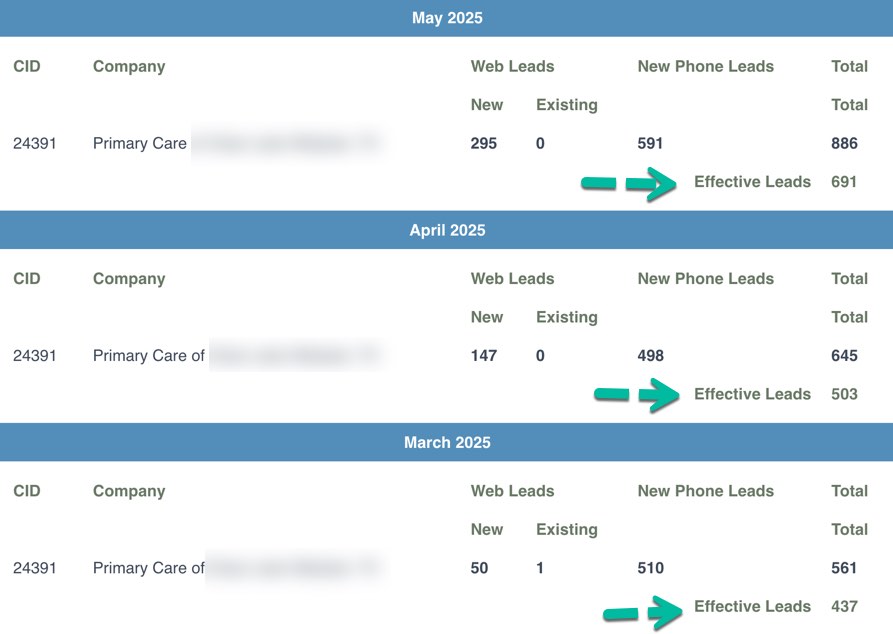
Example of a primary care practice leads funnel: Majority of the new website inquiries, leads, referrals, contact-us, appointments and new patient calls are from Website SEO. There is no ZocDoc app. You own and control all of your appointments.
Conclusion
- Do not add ZocDoc button “book now” to your website.
- Do not add ZocDoc button “book now” to your Google Business Profile.
- Ask ZocDoc to produce new patients directly from their own website, where they list your practice, providers and your competitors. So you can see real results from ZocDoc.
- Stop paying $45 to $166 per appointment – 19% of these patient appointments don’t show up, and you still have to pay for the appointment.
- ZocDoc claims that no-show rate is 6.9% – however Reddit users report 40% to 30%. So based on our own analysis we believe that 19% of these patient appointments don’t show up, and you still have to pay for the appointment. So basically if you pay for 100 appointments, 19% of these no show, but you still have to pay for the appointments.
If you need assistance in increasing new patients to your practice, look at the ROI data of PLATINUM service and contact us.
Examples of how ZocDoc competes with your medical or dental practice:
This competition primarily exists between Zocdoc and other healthcare platforms, individual medical practices, and hospitals all vying for the same patient traffic on Google’s platform.
- Organic SEO (Search Engine Optimization): Zocdoc employs an aggressive SEO strategy, leveraging its high domain authority to rank prominently for high-volume, generic search terms like “dentist near me” or “[city] + specialty”. By optimizing its own extensive directories, Zocdoc often pushes the organic listings of individual practices further down the results page.
- Paid Ads (Google Ads): Zocdoc invests heavily in Google Ads, bidding on many of the same keywords that individual medical practices use. Zocdoc’s paid advertisements frequently appear at the very top of search results, diverting potential patient traffic to the Zocdoc marketplace rather than a specific practice’s website.
- Google Business Profile (GBP): Zocdoc integrates directly with the Google Business Profile ecosystem through the “Reserve with Google” program.
- While Zocdoc doesn’t have a physical GMB location itself, it competes for the user’s attention on the results page.
- Zocdoc enables practices to link their Zocdoc availability and reviews to their own official GBP listing, allowing patients to book an appointment directly through Google Search or Maps using the Zocdoc booking service.
- Bookings made this way are free to the provider, but the integration creates a point of competition with the practice’s own direct booking methods by channeling the user experience through the Zocdoc platform infrastructure.
 Send Text
 How may I help you?