

What is Google Search Advertising For Healthcare Practices?
High-intent Google Search advertising is a patient acquisition strategy that focuses your advertising budget on people who are actively searching for a doctor, medical treatment, specialist, or healthcare appointment and are more likely to take action.
Capturing high-intent Google Search traffic is the difference between paying for someone casually researching their symptoms and acquiring a patient who is ready to book a consultation right now. To maximize ROI and minimize wasted budget, healthcare practices must build campaigns that prioritize immediate needs while strictly navigating healthcare advertising policies. Here is the blueprint for a high-intent, high-converting Google Ads strategy.
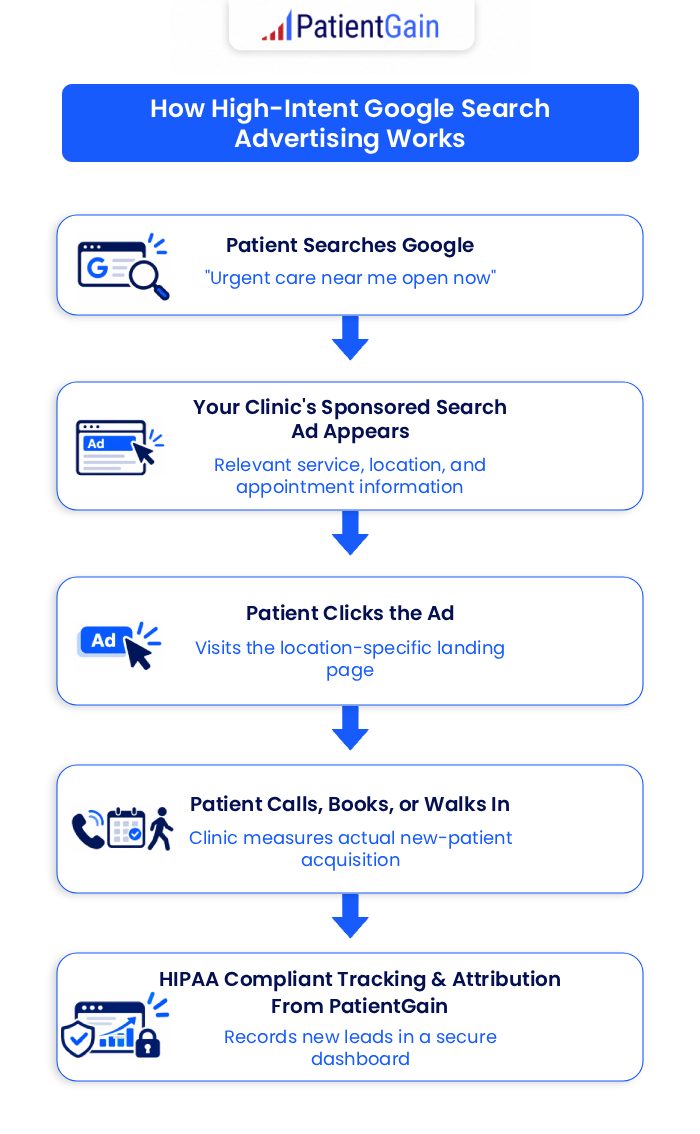
High-intent Pay-Per-Click (PPC) keywords for medical practices are search phrases typed by patients who are actively ready to book an appointment or visit a doctor, rather than just researching symptoms.
Examples of high-intent healthcare searches
Imagine someone searching Google for the following:
| Google search keyword | Patient intent | Priority |
|---|---|---|
| “Urgent care near me” | Wants immediate medical care | Very high |
| “Walk-in clinic open now” | Ready to visit a clinic | Very high |
| “Same-day doctor appointment” | Wants to schedule today | Very high |
| “DOT physical near me” | Looking for a specific paid service | Very high |
| “Pediatric urgent care near me” | Searching for a specific provider | High |
| “How much does urgent care cost?” | Comparing options before visiting | Medium |
| “What causes a sore throat?” | Researching symptoms | Low |
The first five searches represent patients with a strong likelihood of taking action. The goal is to capture patient demand when someone is ready to choose a provider.
Not every Google search has the same likelihood of producing an appointment.
Consider these examples:
| Google search | Patient intent | Advertising priority |
|---|---|---|
| “What causes knee pain?” | Informational | Low |
| “Best treatment for knee pain” | Researching options | Medium |
| “Orthopedic doctor near me” | Looking for a provider | High |
| “Orthopedic appointment San Jose” | Seeking an appointment | Very high |
| “Same day orthopedic appointment near me” | Immediate care need | Very high |
The last two searches generally indicate stronger appointment intent, but they do not guarantee that a patient will book.
The distinction is important because a practice should evaluate advertising performance based on qualified patient acquisition, not simply clicks or website visitors.
Goals and Objectives of Google Search Advertising For Healthcare Practices
Setting up Google Search Advertising (PPC) for a healthcare practice requires clear, highly disciplined goals and objectives. Unlike e-commerce or B2B marketing, medical marketing deals with high patient trust, localized travel radiuses, strict data privacy rules (like HIPAA), and high-intent decision-making.
The primary goals and objectives of Google Search Advertising for healthcare practices can be categorized into foundational, operational, and financial targets:
1. Primary Strategic Goals
- Capture High-Intent “Bottom-of-Funnel” Patients: The core goal is to intercept patients who are done researching symptoms and are actively looking to book care right now (e.g., searching for “cardiologist near me”, “emergency dental clinic open Saturday”, or “schedule knee pain consultation”).
- Drive Immediate Practice Visibility and Patient Volume: While Search Engine Optimization (SEO) takes months or years to compound, Google Search Ads place a clinic at the very top of search results within hours. A key objective is filling vacant provider schedules, ramping up a brand-new location (de novo), or boosting seasonal services (like flu shots or sports physicals).Cardinal Digital Marketing
2. Operational & Campaign Objectives
- Isolate High-Value Service Lines:Practices typically structure campaigns around specific, high-margin service lines (e.g., orthopedics, dental implants, dermatology, or physical therapy) rather than generic “catch-all” medical terms. This allows the practice to control budgets granularly based on which procedures drive the most revenue.CMG | Connective Media Group
- Hyper-Local Geographic Targeting: Because medical consumers rarely travel far for routine or specialty care,an essential objective is to restrict ad delivery to a tight physical radius (typically a 5 to 15-mile radius or specific ZIP codes around the clinic) to avoid wasting ad spend on out-of-market clicks.
- Maintain Strict Compliance (HIPAA & Google Policies): Unlike other industries, healthcare search objectives must factor in rigid legal limits. Objectives include ensuring ad copy, keywords, and landing pages avoid diagnosing users, making prohibited medical guarantees, or leaking Protected Health Information (PHI) back into ad platforms.
3. Conversion & Performance Metrics (The Key Scorecard)
Instead of measuring success by vanity metrics like total clicks or impressions, successful healthcare search campaigns evaluate performance against strict conversion targets:
- Lowering Cost Per Lead (CPL) / Cost Per Acquisition (CPA): Tracking exactly how much ad spend is required to generate a phone call, form submission, or a confirmed appointment.
- Maximizing Conversion Rate (CR): Driving traffic to dedicated, friction-free landing pages (featuring mobile click-to-call buttons, clear doctor credentials, and insurance acceptance lists) to ensure a high percentage of visitors actually convert.CMG | Connective Media Group
- Achieving Positive Return on Ad Spend (ROAS): Ensuring that the long-term lifetime value (LTV) of the newly acquired patients significantly outweighs the combined cost of the Google ad spend and agency management fees.
How does PatientGain services help me achieve advertising goals?
PatientGain’s services align with and support the core goals of Google Search Advertising (PPC) for healthcare practices by bridging the gap between getting a click and securing a compliant, booked appointment.
Running Google Ads in healthcare requires more than just driving traffic; it demands strict legal safeguards, high-converting destination pages, and rapid lead response times. PatientGain’s platform addresses these specific objectives through several key mechanisms:
1. Achieving High-Intent Capture Without HIPAA Violations
- The Goal: Intercept bottom-of-funnel patients searching for immediate care while avoiding legal penalties.
- How PatientGain Helps: Standard Google Ads tracking scripts and Google Analytics can accidentally leak Protected Health Information (PHI). PatientGain substitutes these with a secure tracking and analytics layer (paired with a signed Business Associate Agreement, or BAA). This ensures that your high-intent ad campaigns optimize properly using conversion data without violating patient privacy laws.PatientGain+ 1
2. Maximizing Quality Score via Dedicated Landing Pages
- The Goal: Lower your Cost Per Lead (CPL) and make your ad spend go further by sending clicks to relevant,high-converting pages rather than a generic homepage.
- How PatientGain Helps: They build and deploy dedicated, mobile-optimized medical service pages tailored to specific keywords (e.g., specific treatments or local procedures). These landing pages feature integrated friction-free contact options and visible trust signals, directly boosting Google Ads Quality Scores and reducing bounce rates.PatientGain
3. Preventing “Lead Leakage” (Speed-to-Lead)
- The Goal: Ensure that expensive ad clicks actually turn into booked appointments rather than bouncing away because the front desk was busy.
- How PatientGain Helps: Every ad lead is funneled directly into their centralized SPOC (Single Point of Conversion) dashboard and CRM. Features like the QuickSend missed-call text-back and HIPAA-compliant AI chatbots engage prospective patients immediately, keeping response times down while ad traffic is hot.
4. Tracking True ROI and Patient Acquisition Costs
- The Goal: Move past vanity metrics (like clicks and impressions) to accurately measure return on ad spend (ROAS) and cost per acquisition (CPA).
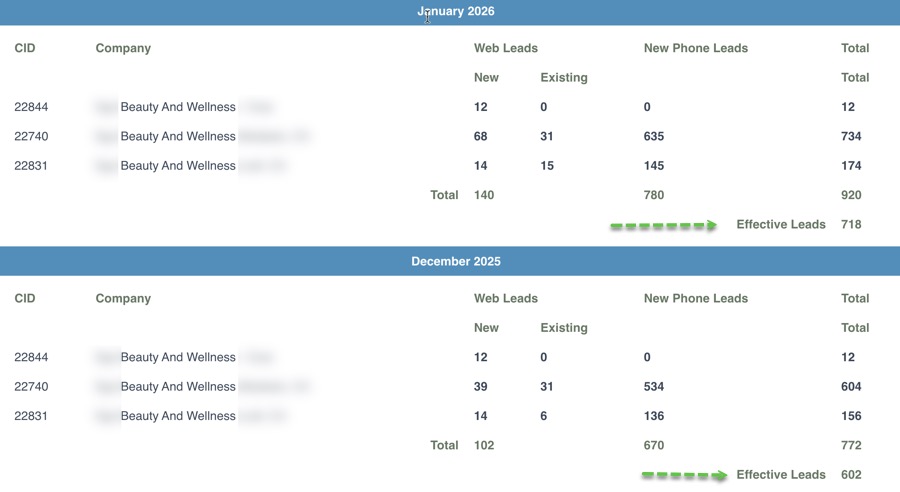
- How PatientGain Helps: Their platform tracks the full journey—linking a prospective patient’s initial Google search ad click all the way through to form fills, call-tracking numbers, and final appointment logs inside a unified dashboard.
Example of performance dashboard of a wellness practice
 Send Text
 How may I help you?