

How To Improve Healthcare Online Reputation & Local SEO
Improving a healthcare practice’s online reputation and local SEO requires a coordinated strategy that signals trust to both search engines and prospective patients. Search algorithms, particularly Google’s Local Pack, rely heavily on your practice’s reviews, directory consistency, and localized content to determine rankings.
There are 3 important areas
- Google Business Profile (GBP) Optimization and Posting
- Constantly acquiring new patient reviews
- Your practice website’s alignment with your GBP
PatientGain has helped thousands of providers over the last 10+ years, and based on our experince and data: If these 3 are addressed, and you stay on top of these 3 areas, the chances of success are very high.

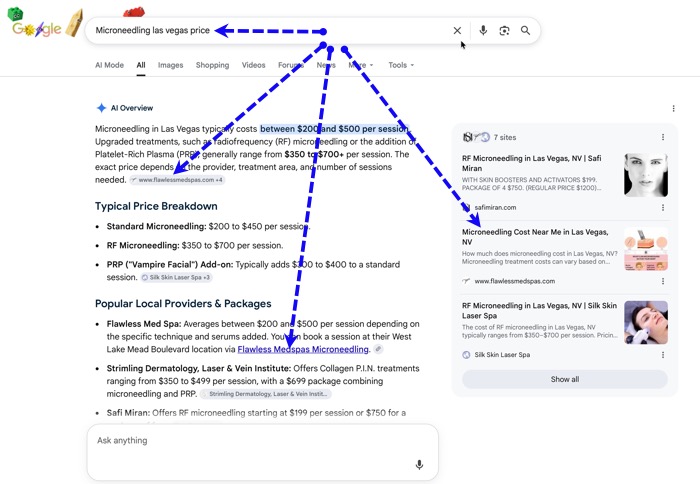
Ten proven actions to improve healthcare reputation and Local SEO
1. Fully optimize your Google Business Profile
Verify your practice location, select accurate medical specialty categories, maintain correct business hours, add professional photos, and keep appointment and website links current. Optimize each eligible location separately.
2. Consistently generate authentic patient reviews
Implement a policy-compliant review request process using suitable email, SMS, InLobby tablet app, or QR codes. Invite patients to share genuine experiences without incentives or selectively requesting positive reviews. However, heavy automation must be handled carefully to avoid triggering search engine spam filters. for example if your healthcare practice typically receives 8 reviews per month, and all of sudden you get 30 new reviews, GBP , Yelp and other review websites are very likely flag them.
3. Respond professionally to positive and negative reviews
Create a consistent review response workflow. Thank reviewers generally, address concerns privately, and never publicly confirm a patient’s identity, appointment, diagnosis, or treatment.
4. Align your website with your Google Business Profile
Keep practice names, addresses, phone numbers, specialties, physicians, and locations consistent. Connect your GBP to the relevant location or specialty page on your website.
5. Publish helpful, medically accurate local SEO content
Build pages for the services and conditions you actually treat. Address patient questions, explain treatment options, include appropriate safety guidance, and have medical content reviewed by qualified professionals.
6. Strengthen local citations and healthcare directory listings
Maintain accurate profiles on relevant platforms such as Healthgrades, Vitals, insurance-provider directories, and established local directories. Avoid duplicate and outdated listings. However, the most important place, website is the GBP page. Next to your own practice website, this is the most important asset for your healthcare marketing.
7. Add high-quality photos and useful GBP updates
Showcase your facility, staff where authorized, accessibility information, services, and office updates. Focus on useful information rather than assuming frequent posting directly increases rankings.
8. Improve the patient conversion experience
Offer a fast, mobile-friendly website, prominent contact options, convenient appointment booking, clear insurance information, and an easy path from local search to inquiry.
9. Monitor local rankings and patient acquisition
Track Google Maps visibility, GBP interactions, phone calls, website visits, lead quality, and appointments. Use analytics configured for applicable healthcare privacy requirements.
10. Use patient feedback to improve operations
Look for recurring complaints about scheduling, wait times, communication, and billing. Resolve operational problems that contribute to poor reviews instead of concentrating solely on ratings.
Protect HIPAA compliance while improving your reputation
Healthcare practices face risks that ordinary retail businesses often do not. Reputation management and local marketing platforms may handle patient contact information, appointment-related data, feedback, and website behavior. Those workflows should be reviewed for HIPAA applicability, permitted data use, appropriate safeguards, and Business Associate Agreement requirements where applicable.
For example, HHS cautions that regulated healthcare entities must not impermissibly disclose protected health information through website tracking technologies.
A reputation management platform being described as HIPAA-compliant does not automatically make every configuration, review request, or public reply compliant.
Improving healthcare online reputation and Local SEO requires a coordinated strategy built around patient trust, Google visibility, privacy, and conversion performance.
A medical practice with accurate business listings, genuine positive reviews, helpful website content, and an easy appointment experience and easy contact is better positioned to compete locally. Google’s official guidance supports maintaining complete business information, responding to reviews, and building an authentic review profile. The goal is not simply to achieve a five-star rating or rank first on Google. The goal is to help more patients discover your practice, trust your services, and confidently schedule an appointment.
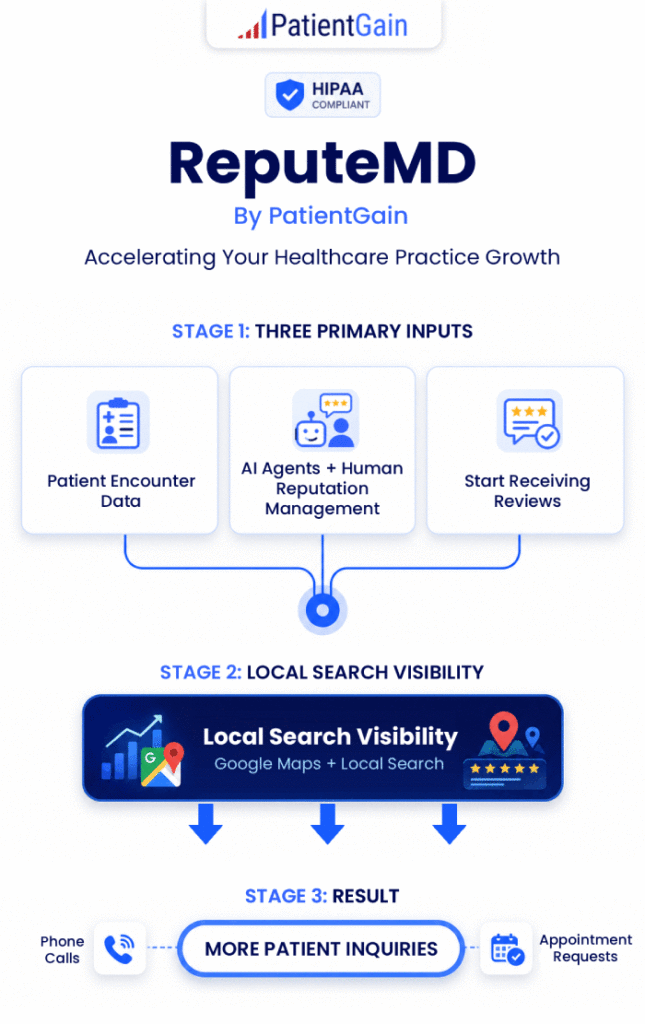
What type service is offered by PatientGain to help practices with reputation management and local SEO?
PracticeGrowPro™ is a hybrid software-and-service bundle (often called a “managed service”) built specifically for medical clinics to handle their local marketing, patient communication, and online reputation in one place. Instead of a clinic buying a software tool and forcing their front-desk staff to learn and run it, PatientGain provides the software and does the actual daily work of running it. Typical pricing is $500 per month (per location):
1. A Software Consolidation Tool
It replaces the need for a practice to buy four or five separate software subscriptions. It provides a single dashboard where staff can log in to:
- Send HIPAA-compliant two-way texts and emails to patients.
- See leads coming in from Google.
- Monitor website analytics. (HIPAA compliant)
2. A “Done-For-You” Marketing Agency Service
You aren’t just buying access to a dashboard; you are paying PatientGain’s team (and their AI tools) to execute repetitive local marketing tasks. Specifically, they:
- Optimize your Google Business Profile (GBP).
- Write and publish 20 updates/posts to your Google profile every month to keep it active for search engines.
- Automatically send out review requests to patients to build your online reputation.
3. A HIPAA Compliance Wrapper
Standard tools like free Google Analytics or generic texting apps can violate healthcare privacy laws. PracticeGrowPro’s entire suite is shielded by a Business Associate Agreement (BAA), meaning the tools are legally certified to handle Protected Health Information (PHI) like patient names, phone numbers, and appointment details securely.
In essence: It is an all-in-one outsourced local marketing department designed to make a clinic look great on Google, easily text patients, and stay HIPAA compliant, without the clinic having to do the busywork.
 Send Text
 How may I help you?